


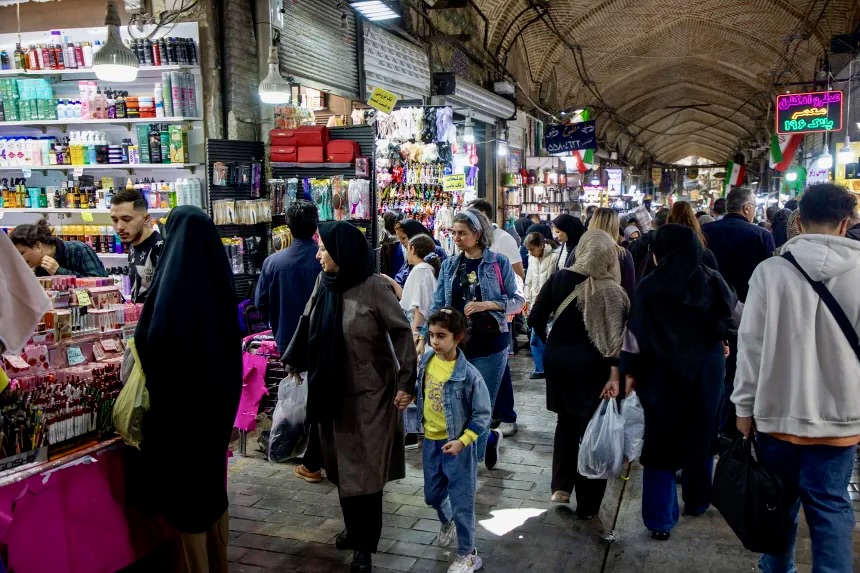
TEHRAN (Realist English). Iran’s economy, already in dire straits before the war with the United States and Israel, has now completely collapsed. In just two months of hostilities, tens of thousands of enterprises have been damaged, millions have lost their jobs and inflation has reached 72%. People are losing their income, cannot access the internet and have no idea what tomorrow will bring.
‘Everything stopped overnight’
Asal, a freelance designer in her 30s living in Tehran, used to receive regular orders from abroad. After nearly two months without internet, she told CNN by phone: “No new projects, no replies. Everything just stopped overnight.”
Her income no longer covers even her basic expenses. Asal is one of millions of Iranians for whom the war has become a deeply personal tragedy. Oil refinery workers, textile factory staff, truck drivers, flight attendants and journalists have all lost their jobs.
Figures of catastrophe
Before the conflict, Iran’s economy had already been devastated by inflation, corruption and sanctions: national income per capita fell from about 8, 000 in 2012 to 5,000 in 2024.
According to the UN Development Programme (UNDP), up to another 4.1 million people could be pushed below the poverty line because of the war. Thousands of airstrikes have caused mass displacement. According to EcoIran, more than 23,000 factories and firms have been hit. Deputy Minister of Labour and Social Welfare Gholamhossein Mohammadi reported that 1 million jobs have been lost directly, while the Iranian publication Etemad Online estimates that another 1 million people have lost work due to indirect consequences.
Prices skyrocket, factories shut down
The official inflation rate reached 72% in March (much higher for basic goods). Israeli airstrikes on huge petrochemical complexes have left thousands of workers on unpaid leave. Major steel plants have also been hit; Mobarakeh Steel and Khuzestan Steel deny laying off any employees, but the scale of damage is felt throughout the supply chain. Trailer‑maker Maral Sanat laid off 1,500 workers because of a steel shortage. The largest textile firm, Borujerd, laid off 700 people. Many dairy plants have suspended operations because of a shortage of packaging materials.
‘Our contracts ended in March, we won’t get paid’
A senior flight attendant, Soheila, told the independent news site Fararu: “On 28 February, I was about to leave for a flight when my colleague called and said everything had been cancelled. Our contracts ended in March, so until flights resume, we won’t get paid.”
Official data show a sharp jump in unemployment insurance claims: 147,000 applicants over the past two months — about three times higher than last year. According to Hadi Kahalzadeh of the Quincy Institute think tank, the heaviest burden falls on informal workers and low‑ and middle‑skilled workers in the formal sector, who have the least protection and political influence.
Internet down, women hardest hit
The lack of internet access is especially hard on women working from home. Somayeh, 50, from Isfahan, has been teaching German online for years.
“Nothing works properly anymore,” she told CNN by phone. “Students can’t all get online at the same time, platforms keep crashing.” Since the war began, women have filed one‑third of all unemployment claims.
Government prepares for a war economy
The social security system is overwhelmed as state revenues dwindle. Iran’s Chamber of Commerce has called for preserving jobs as the country’s top economic priority and urged companies to act “with compassion and sacrifice.”
The conservative newspaper Ettelaat wrote on 27 April that the country is in a “dire and complicated situation” and that the government “may soon need special programmes for a wartime economy.”
Before the war, harsh economic conditions had already sparked nationwide protests that were brutally suppressed. German teacher Somayeh from Isfahan sums up: “The drop in income is bad, but what’s worse is the constant uncertainty. You never know what’s going to happen next.”