


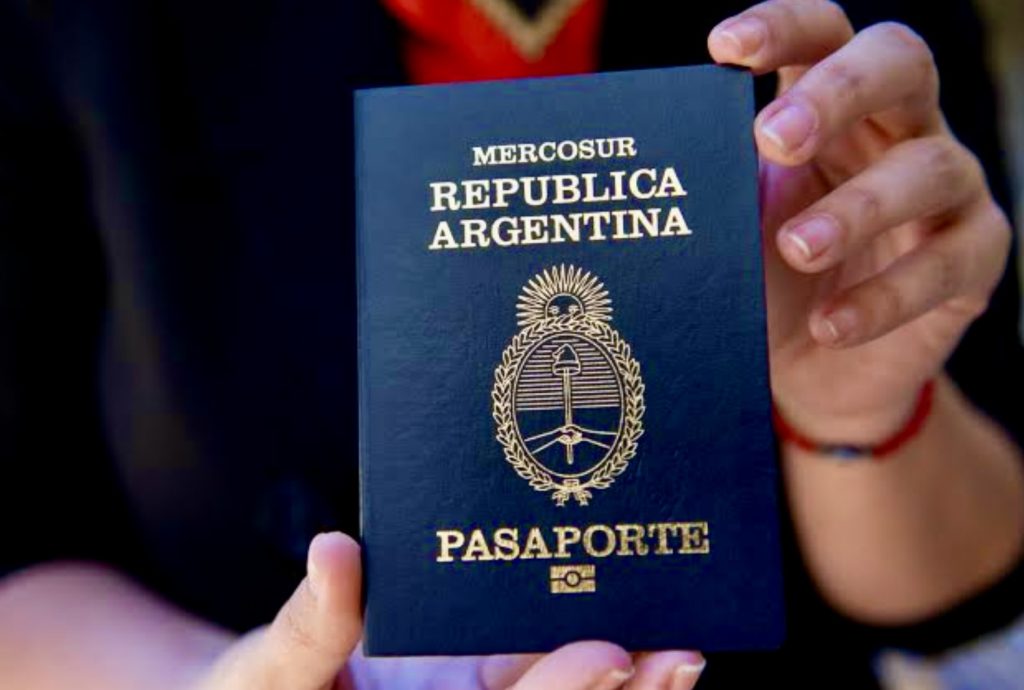
BUENOS AIRES (Realist English). The Argentine government is developing a “golden passport” program — a scheme offering citizenship in exchange for significant financial contributions.
According to the Financial Times, citing two informed sources, President Javier Milei’s administration plans to launch the initiative as early as 2026. It is expected to help the country attract tens of billions of dollars to service its debt obligations in the coming years.
The Essence of the Program: Donation or Bonds
The program, which could make Argentina one of the largest countries in the world offering citizenship for investment, provides two main participation options:
- An irrevocable donation to the state budget of approximately $500,000.
- The purchase of government bonds (zero-coupon sovereign bonds) worth roughly $1 million.
The final parameters of the program are still being discussed and may be adjusted. The launch of the initiative will be part of Milei’s libertarian reforms aimed at deregulating the economy and attracting foreign capital.
Appeal to Investors
The Argentine passport offers visa-free access to nearly 170 countries worldwide — more than any other similar offering on the investment migration market. By this measure, it ranks 16th globally.
As the FT notes, the program could appeal to wealthy citizens of the US and Europe concerned about political polarisation, tax disputes and the risks of military conflict. Argentina offers “remoteness from conflict zones” and a strategic location.
Among the informal “ambassadors” of the project is tech magnate Peter Thiel, co-founder of PayPal, who temporarily moved to Buenos Aires and met with Milei and members of his cabinet. As Eric Mayor, executive director of Latitude Group, which advised the government, stated: “There is simply nothing like Argentina on the investment citizenship market.”
The Debt Crisis
The initiative comes amid attempts by Milei’s government to reshape the country’s image and find alternative sources of foreign currency. Argentina has not accessed international capital markets since its debt restructuring in 2020 and is seeking various ways to attract dollars.
The country’s national debt exceeds $400 billion, of which approximately $43 billion is owed to the International Monetary Fund. At the same time, according to FT sources, official expectations from the program amount to “tens of billions of dollars.”
Criticism and Risks
The initiative has already raised concerns among experts. “Golden passport” programs have repeatedly been criticised by organisations promoting transparency, which warn of security and corruption risks. Similar schemes have been banned in the European Union, while the United Kingdom closed its analogous program in 2022.
The key question, according to experts, is whether such initiatives will attract long‑term investments that generate economic activity, or whether they will merely bring in funds in exchange for a passport.
Paula C Carello, President of the Institute of Migration Law at the Rosario Bar Association, emphasised that the institutional design of the program will be decisive for its success or failure.
The “golden passport” program could become an unconventional tool for Argentina to address its debt problem. However, its implementation will require a delicate balance between attracting investment, international reputation and compliance with financial transparency standards.
If approved, Argentina would become the first country in South America to offer such a scheme.