


BEIJING (Realist English). China’s economy in April 2026 demonstrated resilience in the manufacturing sector while continuing to show weakness in domestic consumption, as reflected by the official manufacturing PMI of 50.3 points. Manufacturers have been rushing shipments amid fears of rising costs linked to the Middle East crisis.
China’s foreign trade in early 2026 recorded its strongest growth in five years, rising by 15.0% to reach 11.84 trillion yuan. This sharp increase was driven by logistics restructuring and growing demand for high-tech goods.
Exports Driven by Technology Goods
China significantly increased exports of advanced electrical equipment.
- Machinery and electronics. Trade volume reached 4.34 trillion yuan. According to China Daily, growth amounted to 18.3%, making this category the main engine of overall trade expansion.
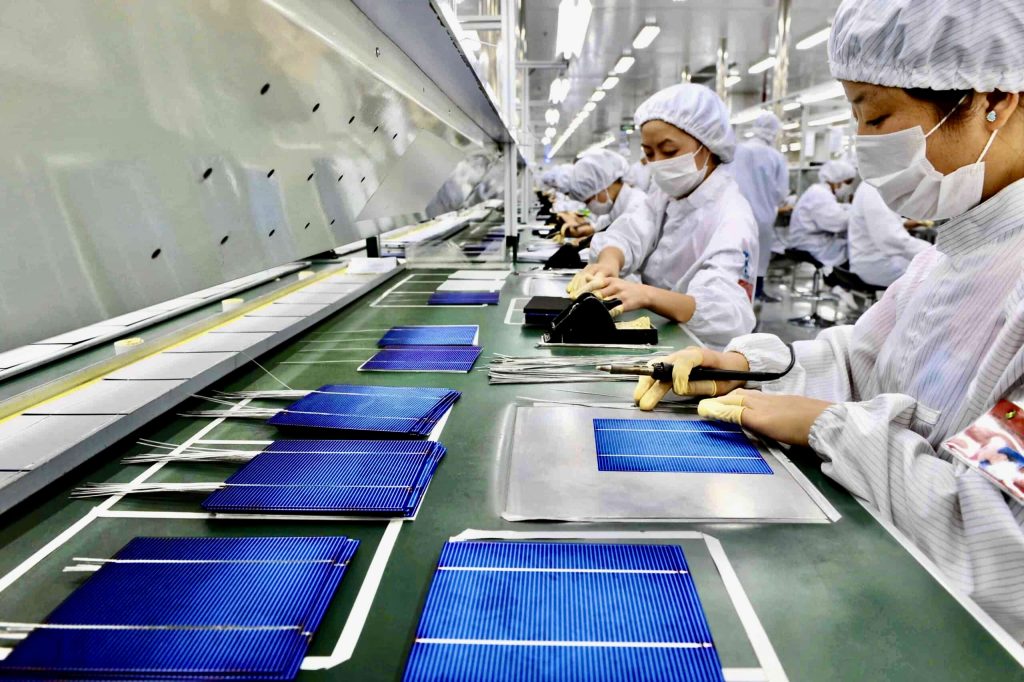
- Green technologies. China maintained global leadership in electric vehicle exports, while demand for solar panels also rose sharply.
- Tariff concerns. Manufacturers accelerated shipments ahead of potential new tariffs, artificially inflating trade figures during the first months of the year.
Imports Outpaced Exports by 7.7%
Several global factors contributed to faster import growth.
- Energy security. Imports increased amid tensions in the Middle East, with Beijing actively purchasing oil to build strategic reserves.
- Raw materials sector. China sharply increased purchases of rare metals needed by factories to meet rising order volumes.
- Domestic market. Higher imports do not yet indicate a recovery in consumer demand; rather, they reflect a business response to external risks.
Expert Opinions
Analyst Julian Evans-Pritchard of Capital Economics believes that April’s momentum was entirely export-driven, supported by demand for semiconductors and green technologies.
Zhiwei Zhang of Pinpoint Asset Management argues that China’s industrial sector remains resilient to external shocks, while accommodative monetary policy helps offset higher energy costs.
Experts at Nomura warn about the fragility of a growth model overly dependent on manufacturing and external demand.
The World Bank expects China’s economy to grow by 4.2% in 2026.
Trade with Russia and the United States
Trade turnover between China and Russia increased by 14.8%, according to the Russian Embassy in Beijing.
China continues to actively import Russian energy resources, while exporting machinery and equipment in return.
In the first quarter of 2026, trade between China and Russia reached $61.25 billion, while trade with the United States fell by 16.6% to $128.68 billion due to reciprocal tariffs.