


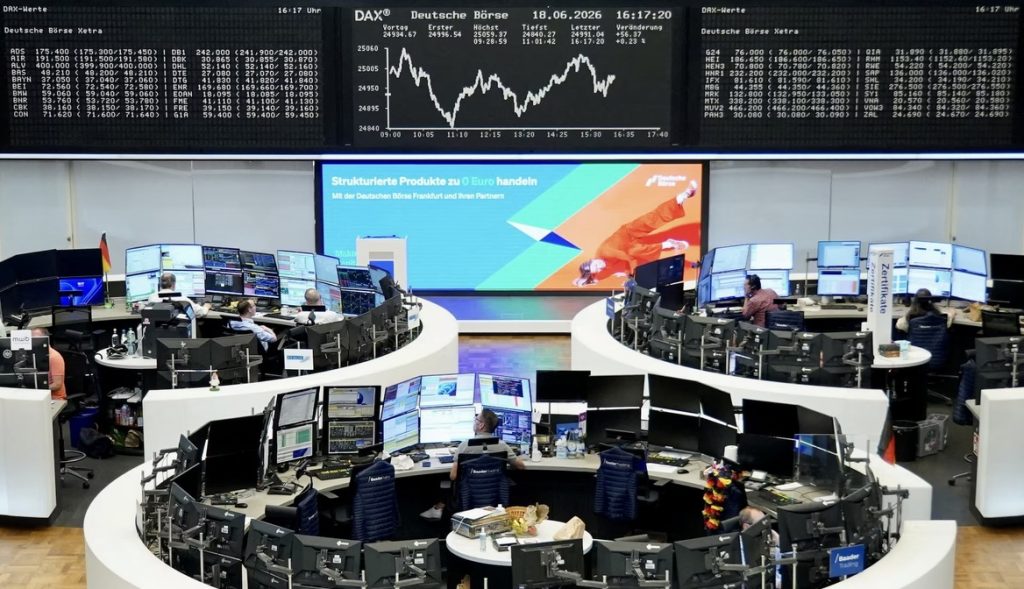
FRANKFURT (Realist English). European stock markets ended the week with solid gains, posting their best performance since mid‑May. The pan‑European Stoxx 600 rose 0.7% to 652.35 points, hitting a new all‑time high.
The rally, now in its fourth consecutive week, was driven by utilities and technology sectors, along with defence and cyclical stocks.
Behind the facade of record highs, however, the market is gripped by doubt: investors are debating whether the artificial‑intelligence‑driven rally has gone too far. According to Morgan Stanley, 70% of the year‑to‑date gains in the European MSCI index have been driven by AI infrastructure spending.
Bank of America estimates that high‑momentum stocks have outperformed low‑momentum stocks by 40% on an annualised basis — the strongest style factor in at least 20 years.
“Fundamentals remain very strong, and the market is still underestimating them,” said Tim Mo, a strategist at Goldman Sachs. However, BofA warns: “Expectations priced into the winning stocks look excessive.”
Analysts also point to a nearly 20% decline in the AI token spending index from its May peak, raising questions about the justification for more than $700 billion in capital expenditure on AI infrastructure.
German Banks Gear Up for Crypto Revolution
Against this backdrop, Germany’s largest financial institutions are preparing for a major push into the cryptocurrency market. DZ Bank, Germany’s second‑largest bank, has received BaFin approval under MiCAR regulations to launch its platform “meinKrypto.” Through the cooperative banking network of Volksbanken and Raiffeisenbanken, retail clients will gain access to digital asset trading.
Germany’s savings banks (Sparkassen), serving more than 50 million clients, also plan to launch crypto services in 2026. According to Chainalysis, Germany’s crypto economy has grown by 54%.
ECB: ‘We Are Not Entering a New Hiking Cycle’
Bank of France Governor and ECB Governing Council member François Villeroy de Galhau stated that the central bank is in a “good position” following the June rate hike of 25 basis points to 2.25%. “We are not entering a new hiking cycle,” he stressed.
According to ECB President Christine Lagarde, the June rate hike was necessary; otherwise, inflation could have remained above the 2% target until 2028. Falling oil prices are easing inflationary pressures in the eurozone, and the risk balance is “in a normal state.”
Traders are now pricing in 23 basis points of ECB rate cuts by the end of the year.