


MOSCOW (Realist English). The conflict in the Middle East, triggered by a joint US-Israeli military operation against Iran, has led to an unprecedented rise in energy and fertilizer prices.
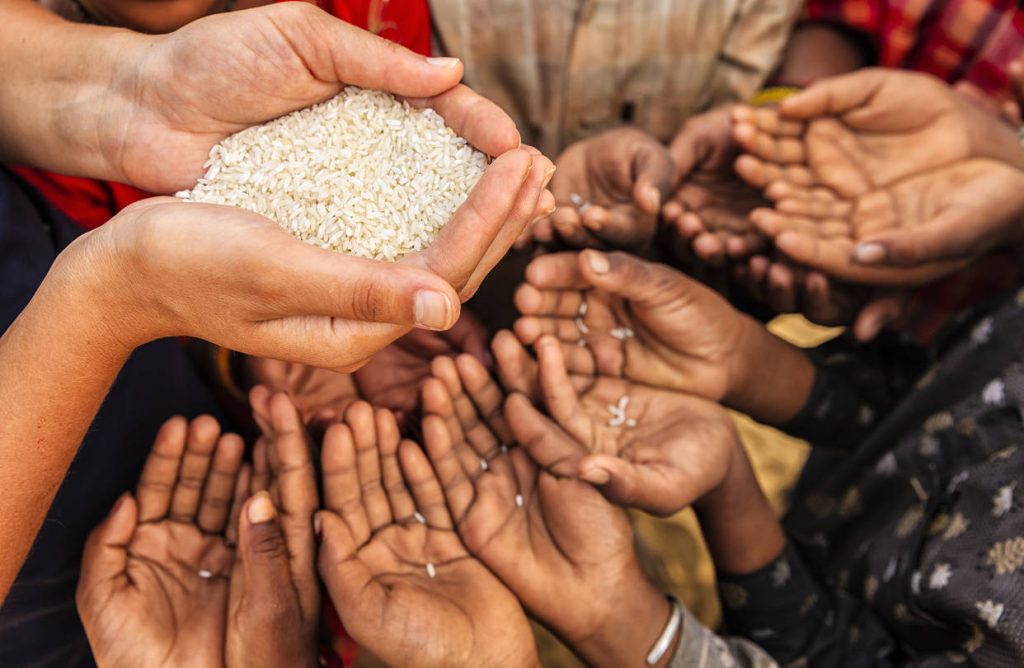
This has dealt a devastating blow to the developing economies of Asia and Africa, exacerbating social inequality — both between countries and within them. Millions of people are on the brink of famine, and the gap between rich and poor is widening rapidly.
Numbers of the Catastrophe
The figures cited by experts are shocking:
- Oil: Brent crude has risen more than 50% since the start of the year, exceeding $100 per barrel, and at certain moments reached $120.
- Fertilizers: Prices are set to rise by 31% due to supply disruptions through the Strait of Hormuz (which handles about a third of global maritime shipments). Urea prices could skyrocket by 60%.
- Inflation: In developing economies, inflation is projected to reach 5.1% in 2026 (compared to 4.7% in 2025). Some African countries are expecting 4.8%.
- Hunger: About 45 million people could be pushed to the brink of acute hunger due to rising food prices.
- Burden on the Poorest: Low-income households spend about 52% of their budget on food (in rich countries, it’s about 10%). A 10% rise in food prices cuts their real income by 5.2%.
Why the Poor Suffer Most: A “Regressive Tax”
The poorest countries in Asia and Africa are net energy importers. The blockade of the Strait of Hormuz (35% of global seaborne oil supply) is dealing them a devastating blow.
- The Philippines: The country imports 95-98% of its oil from the Persian Gulf. Fuel reserves have collapsed (from 57 to 45 days’ supply per month), and a state of emergency in the energy sector has been declared. The IMF revised its GDP growth forecast downward from 5.6% to 4.1% — one of the sharpest declines in Asia.
- Qatar: Even oil exporters are suffering. Qatar’s exports have fallen by 90% due to infrastructure strikes. The economy could contract by 9% in 2026.
Fertilizers and food deliver a double blow. In African and Asian countries, the share of transport costs in the final price of products is higher due to poor infrastructure. Global grain markets are “thin”: only 25% of wheat and 14% of corn cross borders. Even a minor supply disruption causes prices to collapse. Egypt, which imports 56% of its wheat, finds itself in a stranglehold.
The “Double Whammy” of the Dollar and Disappearing Money
All commodities (oil, food) are traded in dollars. During a crisis, the dollar strengthens, creating a “double whammy”:
- The global price in dollars rises.
- The local currency weakens against the dollar.
If wheat prices rise by 15% and the local currency weakens by 10%, then the cost of imports in the national currency rises by 26%. Food becomes unaffordable.
Simultaneously:
- Remittances from migrant workers in the Persian Gulf region (over $100 billion per year) are shrinking due to the economic downturn and unemployment — this is critical for Egypt, Bangladesh, and the Philippines.
- International aid is not increasing; aid budgets in OECD countries are being cut.
The Spiral of Chaos and Inequality
Experts are sounding the alarm: this is not just another price spike, but a structural stress test.
World Bank President Indermit Gill stated that the conflict is exerting cumulative pressure: energy prices → food → inflation and rising interest rates → debts become unpayable. Developing countries lack the “fiscal space” to protect their populations.
Andy Sumner, Professor of International Development at King’s College London, warns of a “self-perpetuating spiral”: global chaos → price spikes → rising inequality → political conditions for new chaos.
A Blow to the Poor as a Regressive Tax
The war in Iran has dealt a devastating blow to the poorest populations of Asia and Africa. Rising energy and food prices act as a regressive tax: the poor pay a disproportionately higher share, while their governments are unable to protect them. The reduction in foreign aid and remittances worsens the situation.
We are witnessing not just an economic shock, but a structural shift that could lead to the long-term entrenchment and deepening of global inequality. The coming months will show whether international institutions can break this dangerous spiral.