


STUTTGART (Realist English). The German automotive industry continues to experience tectonic shifts.
On July 9, Porsche AG reported a 16% drop in global sales in the first half of 2026 to 122,306 vehicles — the worst first-half result since 2020.
Declines were recorded in all regions worldwide, with the deepest falls hitting key markets — North America and China.
China Collapsed by a Third, America Lost Its Tax Incentive
The main trouble spot for Porsche was China: sales there plummeted by almost a third — down 32% to 14,501 vehicles. The company attributes this to a “difficult market environment” and a deliberate focus on “value-oriented sales.”
North America, which remains Porsche’s largest market with 37,712 vehicles, fell 13%. Reasons include the expiration of tax incentives for electric and hybrid vehicles in the US, as well as the discontinuation of the 718 model with an internal combustion engine.
In Europe (excluding Germany), the decline was 14%, on other markets — 18%, and in Germany itself — 6%.
Light at the End of the Tunnel: The 911 Model Breaks Records
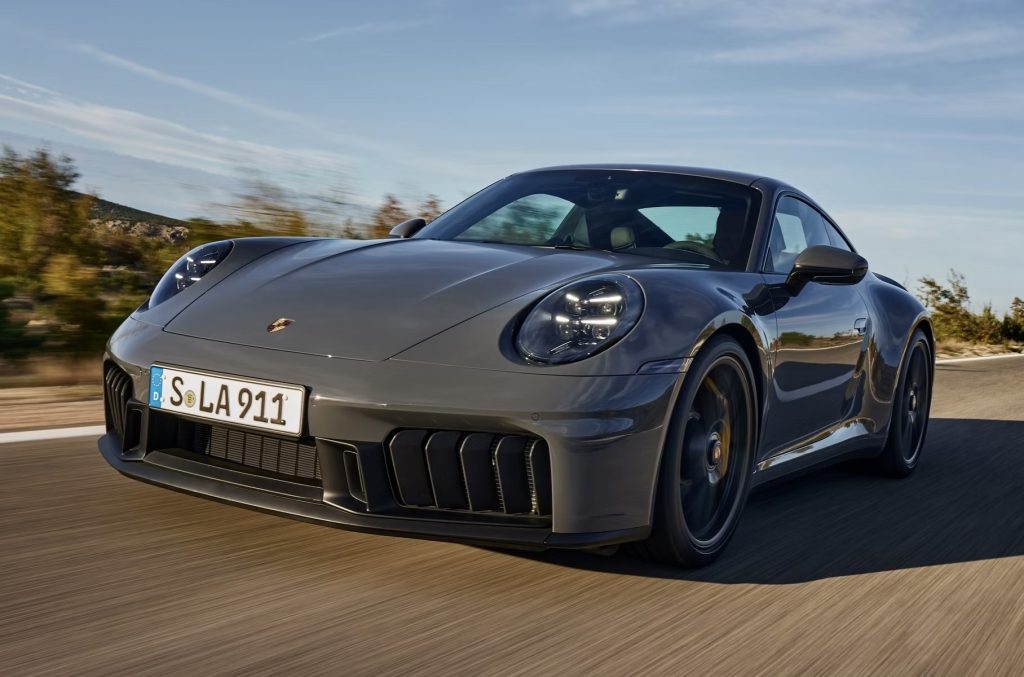
The only ray of hope for the company remains the iconic 911 model, whose sales rose by 19% to 30,534 vehicles. Drivers of this growth were sustained demand and the phased introduction of various modifications last year.
The most popular model line remains the Cayenne with 38,141 vehicles delivered, although sales here also fell by 9%. Sales of the Macan totalled 35,315 vehicles, of which 19,695 were petrol‑engined.
Porsche’s Board Member for Sales and Marketing, Matthias Becker, said: “With around 122,000 customer deliveries in the first half of 2026, we are below last year’s level, but we are in line with our expectations.”
He also noted that deliveries of the Cayenne Electric began at the end of June, and the company is receiving positive feedback. Later this year, Porsche will also unveil the 911 GT3 S/C and the E‑Shift system for the Taycan with virtual gear shifting.
Industry Crisis: Mercedes Also Suffering
Porsche is not the only German manufacturer facing difficulties. The day before, on July 8, Mercedes-Benz reported an 8% drop in second‑quarter sales due to fierce competition in China.
This points to a systemic crisis in the German automotive industry, driven by structural changes in key markets.
The Paradox of German Exports: Iran War No Obstacle
Against the backdrop of gloomy industry news, the overall picture of the German economy unexpectedly turned out to be more optimistic. On the same day, the Federal Statistical Office (Destatis) reported that exports in May rose by 0.9% compared with April, reaching €137.9 billion — the highest level in 3.5 years. The growth was the fourth consecutive monthly increase and exceeded market expectations, which had forecast a 0.3% decline.
The main driver was a sharp recovery in US shipments — they grew by 23.1% from April to €14.1 billion. The US market remains the largest destination for German exports. On an annual basis, exports to the US rose by 15.4%.
Exports to China also rose by 7.1% to €6.2 billion. At the same time, shipments to EU countries unexpectedly fell by 1.1%.
As Handelsblatt notes, the main reasons for the growth were increased demand from the US and China. Germany’s trade surplus widened to €19.1 billion in May from €14.7 billion in April. Chancellor Friedrich Merz called the data “encouraging signals.”
The ECB’s Dilemma: Export Data May Push for Another Rate Hik
Unexpectedly strong export and industrial production figures could become an argument for the European Central Bank to raise interest rates further. Industrial production rose 0.9% in May, and factory orders also beat expectations. ING analysts note that some German companies even benefited from the Middle East conflict, as their Asian competitors suffered more from the closure of the Strait of Hormuz.
At the same time, the Foreign Trade Directorate of the German Chamber of Industry and Commerce (DIHK) had earlier revised its 2026 export growth forecast downward from 4.3% to 2.5%. The German government expects the economy to grow by just 0.5% this year due to the war in Iran.
Against the backdrop of a general downturn in the automotive industry and Porsche’s worst sales slump in six years, the German economy as a whole is showing unexpected resilience thanks to recovering demand in the US.
However, long‑term prospects remain uncertain, and the ECB is likely to continue tightening monetary policy, which could add further pressure on exporters.