

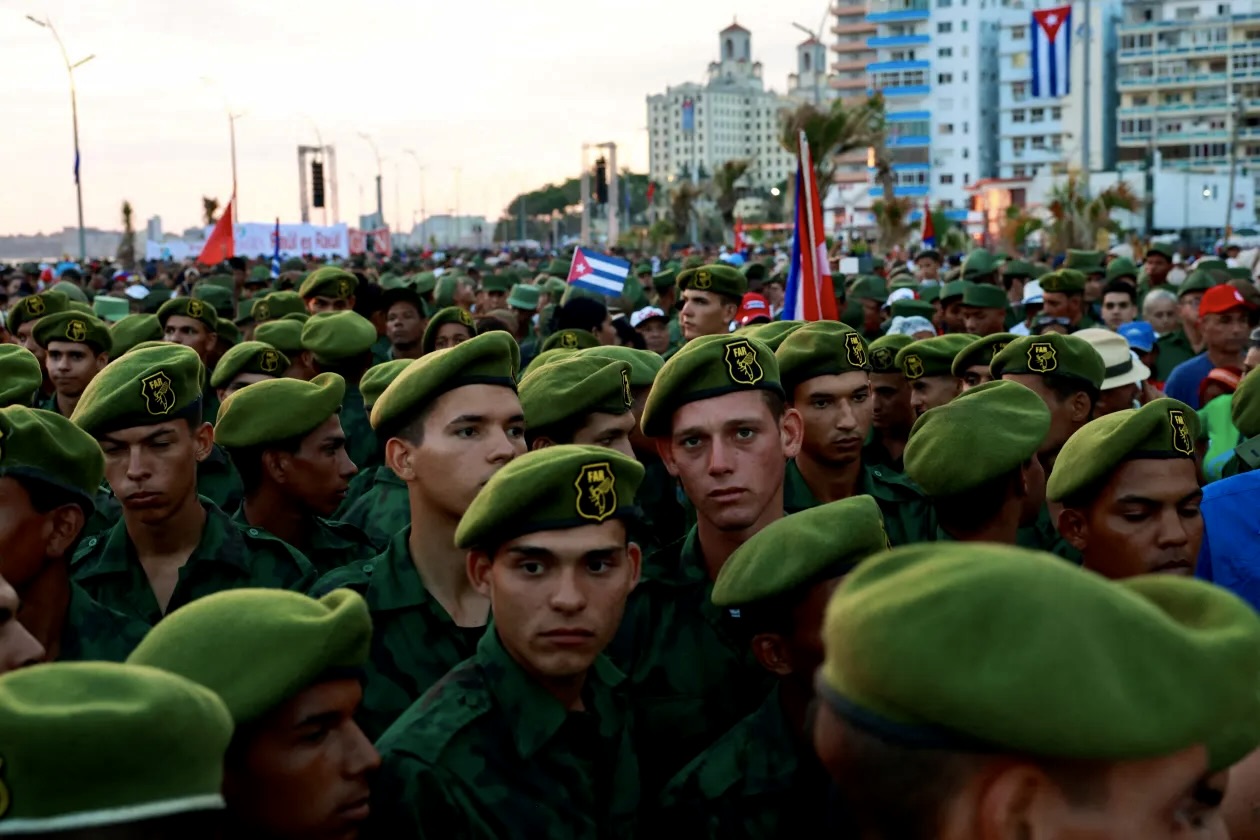
HAVANA (Realist English). Since the January 2026 abduction of Venezuelan President Nicolás Maduro by US special forces, Washington has been applying unprecedented pressure on Cuba. The island’s economy, already reeling from the “maximum pressure” sanctions of Trump’s first term, the pandemic and the lack of reforms, received a lethal blow after it lost access to discounted Venezuelan oil.
The de facto oil blockade imposed by the White House five months ago (only one Russian tanker has been allowed through) has pushed the country to the brink: daily blackouts, collapse of basic services, growing desperation among the population.
The authors of an article in Foreign Affairs – Michael J. Bustamante, Professor of Cuban and Cuban-American Studies at the University of Miami, and Ricardo Herrero, Executive Director of the Cuba Study Group – analyse the current crisis and conclude that Cuba has only one sensible path left: to strike a deal with the Trump administration.
Secret Contacts and CIA Ultimatum
In spring 2026, the White House, through unofficial channels (including contacts with Raúl Castro’s grandson), tried to persuade Havana’s leadership to embark on economic and political openness rather than a radical change of regime. Havana responded by projecting confidence and trying to buy time, hoping that the US‑Israeli war with Iran would divert Washington’s attention.
But time is running out. In mid‑May, CIA Director John Ratcliffe made an unexpected visit to Havana and issued an ultimatum: sever security ties with Russia and China. At the same time, the US is preparing an “extraction” operation that could replicate the capture of Maduro – this time involving Raúl Castro on charges brought in a US court.
Why Havana Resists, but Is Doomed
The authors note that the Cuban leadership has for decades placed internal control and external patrons above political and economic reforms. Negotiating with Washington under pressure is seen as incompatible with sovereignty. Yet the current administration is unpredictable, and the responsibility for averting catastrophe now falls on Cuba itself. The longer the leaders treat the problem as a matter of “revolutionary dignity” rather than national survival, the grimmer the outcome will be.
Outline of a Possible Deal
A deal that Havana could plausibly accept is already visible:
- Political concessions: liberalising laws on freedom of speech and assembly, releasing political prisoners (including those detained after the 2021 protests), genuine market reforms, reducing the economic footprint of the military conglomerate GAESA, legalising private investment (including from the diaspora).
- Geopolitical break: ending intelligence and military cooperation with Russia and China, including shutting down their listening stations on Cuban territory.
- Property issues: working with the US and neutral arbitrators to establish a fair compensation system for US private property nationalised in 1959‑1960.
In return – also in stages – the US could:
- remove Cuba from the state sponsors of terrorism list;
- rescind the May executive order imposing secondary sanctions on foreign companies;
- allow US investment in tourism, mining, energy, agriculture and small business;
- suspend Title III of the Libertad Act (which allows US claimants to sue foreign investors on nationalised property).
The Rubio Factor and Historical Irony
Secretary of State Marco Rubio, long the most hawkish Cuba critic, could be the figure to “sell” a deal – much as Richard Nixon went to China. But Rubio serves an unpredictable president who oscillates between isolationist disengagement and theatrical escalation.
The authors recall a historical parallel: in 1901, delegates to Cuba’s first republican constitution were forced to accept the Platt Amendment, limiting sovereignty, in order to end the US military occupation. That was not a capitulation, but an attempt to preserve the country and leave the door open for fuller independence later.
Today’s situation is not identical, but the choice is the same: chaotic unraveling, violent foreign intervention, or a step‑by‑step transformation in which Havana still has a say.
Time is Running Out
Cuba’s economy is in collapse. A lack of external financing, huge imbalances, an ageing population and mass emigration are realities that reforms cannot postpone. Even if Havana makes concessions, no miracle will occur: modernising the power grid and infrastructure requires tens of billions of dollars that neither Russian patrons nor the diaspora can provide. Access to multilateral institutions (IMF, World Bank) is closed without Washington’s blessing.
Cubans deserve a viable future. The most logical – if cruelly ironic – path for the country to save itself is to negotiate with the very power inflicting economic damage. Because that same power is the only one that can realistically sponsor recovery.