
Realist: news and analytics

Русский / English / العربية

  • News
  • Russia
  • Caucasus
  • Opinion
  • Interviews
  • Experts
No Result
View All Result
Realist: news and analytics
  • News
  • Russia
  • Caucasus
  • Opinion
  • Interviews
  • Experts
No Result
View All Result
Realist: news and analytics

Energy chiefs warn Iran war risks global fuel shortages

Industry leaders say disruptions to oil and LNG flows are underpriced, with shortages likely in Asia and Europe if conflict continues.

   
March 29, 2026, 15:15
Business & Energy
Ukraine negotiations stall as Middle East war reshapes agenda

HOUSTON (Realist English). Executives from some of the world’s крупнейшие oil and gas companies warned that the war involving Iran is causing a far deeper disruption to global energy supplies than markets currently reflect, raising the risk of fuel shortages and long-term economic consequences.

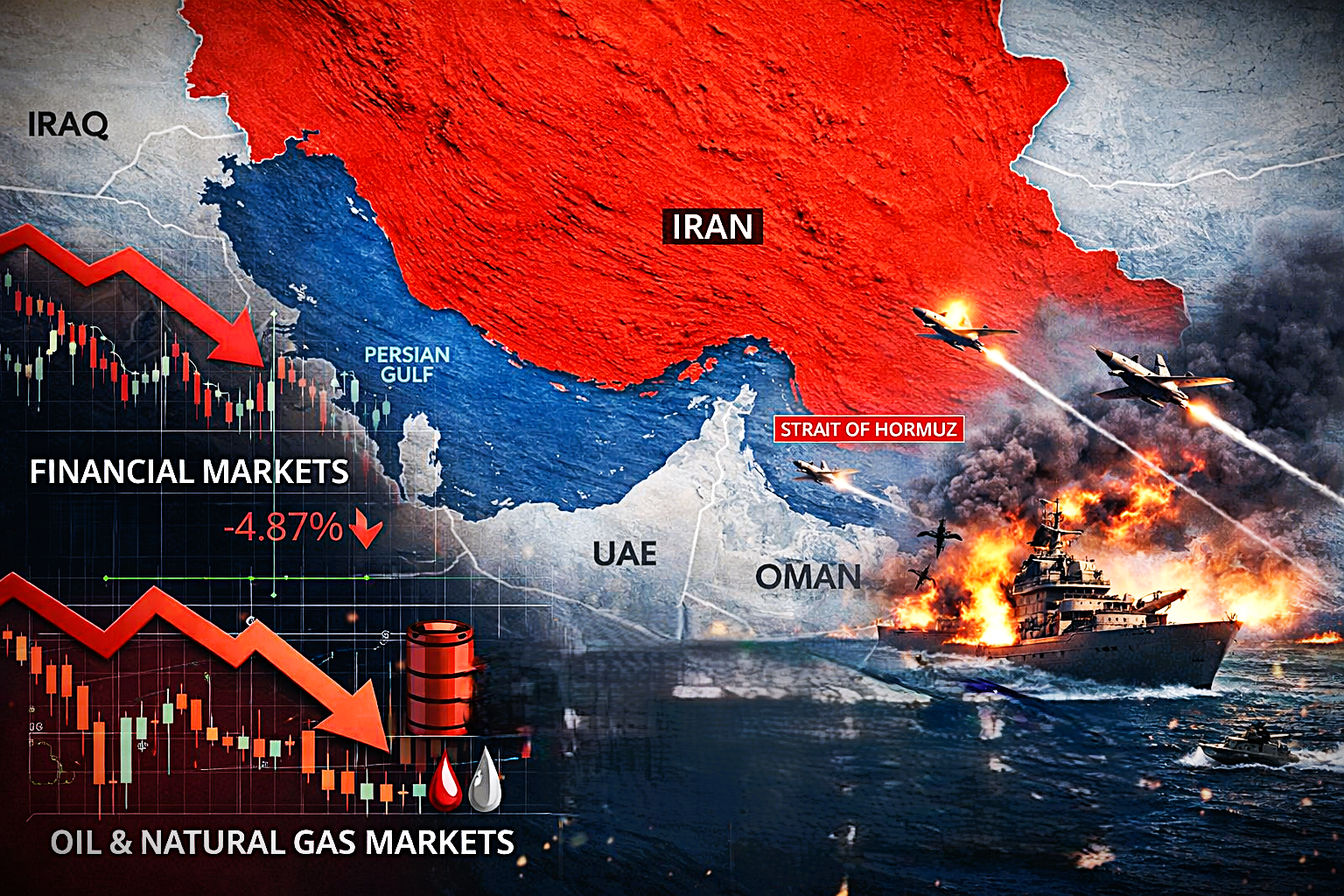
Speaking at the CERAWeek energy conference in Houston, industry leaders said the effective closure of the Strait of Hormuz — a critical route for global oil and liquefied natural gas — has removed up to 8–10 million barrels per day of oil and around 20% of global LNG supply from the market.

“You just can’t take that volume off the world stage without significant repercussions,” said Ryan Lance, chief executive of ConocoPhillips, warning that supply shortages could hit Asia and Europe if the conflict persists.

The Strait of Hormuz, which connects Gulf producers to global markets, remains a central point of disruption. Sheikh Nawaf al-Sabah, CEO of Kuwait Petroleum Corporation, described the situation as a de facto blockade affecting not just regional producers but the global economy. “This is an attack that is holding the world’s economy hostage,” he said.

Analysts at the conference compared the current crisis to the 1973 oil embargo, with Paul Sankey of Sankey Research calling it the most severe energy shock in decades. He said the effective control of the strait by Iran represents an “extremely grave” situation for global supply chains.

Despite these warnings, market pricing has remained relatively contained compared with the scale of disruption. Executives from companies including Shell and Chevron said futures markets are not fully reflecting tightening physical supply conditions.

“It’s physical flows that matter,” said Wael Sawan, CEO of Shell, emphasizing that energy demand depends on actual supply availability rather than financial expectations.

Oil prices have surged sharply since the start of the conflict. U.S. crude has risen about 49% to nearly $100 per barrel, while Brent crude has climbed more than 55% to above $112, marking the highest levels in more than three years.

Industry leaders warned that prices are unlikely to return to pre-conflict levels soon. Production in Gulf states could take three to four months to fully recover, as some oil fields have been shut due to security risks and logistical disruptions.

The impact is already spreading beyond crude oil. Executives said jet fuel and diesel supplies are tightening, with price increases of up to $200 per barrel for jet fuel and $160 for diesel reported in recent days. Countries including China and Thailand have introduced measures such as export restrictions and fuel rationing.

Companies are also facing operational risks. ConocoPhillips said it has evacuated non-essential staff from facilities in Qatar following attacks on energy infrastructure, while LNG producers are operating at or near maximum capacity to meet demand.

The U.S. administration has sought to reassure markets, with Energy Secretary Chris Wright describing the disruption as temporary. However, industry leaders have called for increased military protection of energy assets and shipping routes.

Analysts and former officials warned that the conflict may not end quickly. Iran is seeking broader concessions, including economic compensation and strategic guarantees, while U.S. military operations remain limited in scope. Former Defense Secretary Jim Mattis said the conflict risks escalating further and warned that securing maritime routes would be a complex and resource-intensive task.

Analytically, the crisis underscores the vulnerability of global energy systems to geopolitical chokepoints, with physical supply disruptions now outweighing financial market signals.

The key question is whether the Strait of Hormuz can be stabilized in time to prevent cascading shortages, or whether prolonged disruption will trigger a broader global economic slowdown driven by sustained high energy prices.


Gas MarketIran WarOil Market
Previous Post

Pentagon weighs limited ground operations in Iran, report says

Related Posts

Oil prices hit three-year high as Hormuz tensions persist
Business & Energy

Oil prices hit three-year high as Hormuz tensions persist

28 March, 2026
Europe loses LNG cargoes to Asia amid Middle East war
Business & Energy

Europe loses LNG cargoes to Asia amid Middle East war

26 March, 2026
Iran war exposes global reliance on fragile energy routes
Business & Energy

Iran war exposes global reliance on fragile energy routes

23 March, 2026
Trump threatens strikes on Iran power plants over Hormuz
Business & Energy

Trump threatens strikes on Iran power plants over Hormuz

22 March, 2026
Actor and martial artist Chuck Norris dies aged 86
Business & Energy

Global shipping disrupted as Hormuz crossings fall 95%

21 March, 2026
US sees Chinese projects in Latin America as potential military assets
Business & Energy

Nvidia CEO calls OpenClaw “next ChatGPT” as autonomous AI gains momentum

18 March, 2026
Most Popular
Most Popular
Ukraine negotiations stall as Middle East war reshapes agenda

Pentagon weighs limited ground operations in Iran, report says

29 March, 2026

WASHINGTON (Realist English). The Pentagon is preparing contingency plans for limited ground operations in Iran, potentially including raids on key...

Ukraine negotiations stall as Middle East war reshapes agenda

Ukraine negotiations stall as Middle East war reshapes agenda

29 March, 2026

MOSCOW (Realist English). A senior Russian lawmaker has criticized Ukrainian President Volodymyr Zelensky’s visit to Saudi Arabia amid ongoing Iranian...

Traditional power transfer in Russia no longer viable, analyst says

U.S. seeks Iran talks as war timeline extends beyond plans

28 March, 2026

WASHINGTON (Realist English). The United States is seeking to hold talks with Iran as early as this or next week,...

Traditional power transfer in Russia no longer viable, analyst says

Traditional power transfer in Russia no longer viable, analyst says

28 March, 2026

MOSCOW (Realist English). The traditional model of power transfer in Russia is no longer viable, and the country is instead...

Opinion

Star Wars without fiction: how space became the next battlefield

Star Wars without fiction: how space became the next battlefield

27 January, 2026

MOSCOW (Realist English). “Star Wars” stopped being science fiction long ago. Unfortunately, over ten thousand years of civilisation, humanity has...

Armenian monastery Dadivank

Dadivank: The Legacy of Christ’s Apostles in Artsakh

17 December, 2025

YEREVAN (Realist English). In Artsakh, before the ethnic cleansing and forced deportation – simply put, genocide – carried out by...

An unusual phenomenon at the Church of the Holy Savior in Shushi

An unusual phenomenon at the Church of the Holy Savior in Shushi

3 November, 2025

YEREVAN (Realist English). In the distant year 1979, as a third-year university student, I used to visit the Church of...

War with Iran seen as inevitable, Armenia warned of looming regional storm

War with Iran seen as inevitable, Armenia warned of looming regional storm

21 September, 2025

YEREVAN (Realist English). The war with Iran is drawing ever closer. And once again, this pulls Armenia into a zone...

All rights reserved.

© 2017-2026

  • About Us
  • Mission and Values
  • Contact Us
  • Privacy Policy

Follow Realist English

No Result
View All Result
  • News
  • Russia
  • Caucasus
  • Opinion
  • Interviews
  • Experts

Русский / English / العربية