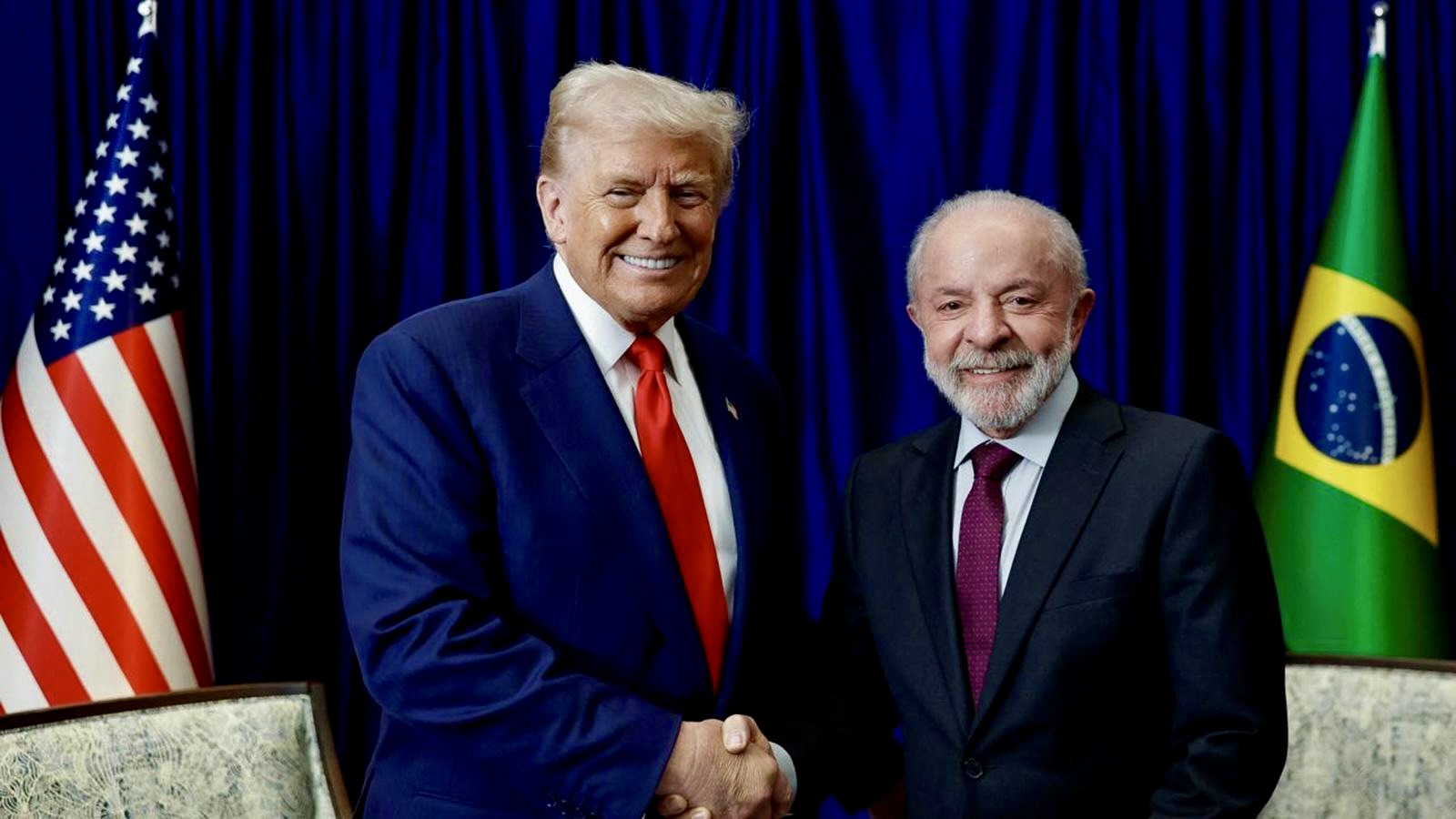
BRASILIA (Realist English). Luiz Inácio Lula da Silva, Brazil’s popular left‑wing president, recently visited the United States. Contrary to sceptical forecasts, the dialogue between Donald Trump and Lula not only proved remarkably constructive but also led the Brazilian leader to declare that “chemistry” had emerged between them.
In other words, love came calling unexpectedly, writes political scientist Tatyana Poloskova in an analysis for Realist English. She examines the hidden motives behind this rapprochement: the struggle for power in Brazil, the push to expel China from Latin America, and a new round of Washington’s geopolitical game in the US “backyard”.
Lula has long had a reputation as a fighter against American imperialism. Yet a few months ago he stated that China had “occupied Brazil with its investments” and expressed concern that the country could effectively become dependent on the PRC.
Presidential elections are scheduled for October in Brazil. Lula intends to run for another term. Last time he won by the narrowest of margins. His main rival and Trump’s personal friend, Jair Bolsonaro, is now in prison. A close relative bearing the same surname will run in his place. The political situation in the country is extremely polarised, and the outcome is far from certain.
In addition, Trump has effectively returned Venezuela to “backyard” status. Chinese businesses were forced to give up their operation of terminals along the Panama Canal and return them to North American owners. The canal itself remains the property of the Panamanian state. As for Cuba, there are no longer any mass anti‑American sentiments there. Instead, there is a well‑known conflict among the elites.
The Cuban authorities’ appeal to the US for help is nothing less than an invitation to bargain. According to informed sources in Havana, heirs to property confiscated during the revolution have been in contact with representatives of the ruling circles to discuss the terms under which those assets might be returned should the political situation change.
Lula is an old and very experienced politician. He has already served time in prison for his political beliefs and does not want to lose power – or his freedom. He understands that Brazil is too juicy a morsel for American monopolies for Washington to simply cede power in the country to the left without a fight again.
Therefore, the main goal of his visit to Trump was not to discuss the situation in Cuba or Iran, but to strike a deal – to satisfy Trump’s appetite so that he would not do to Lula what he did to Maduro. Carrying out such an operation in Brazil would be much easier: the vast majority of the country’s military elite were educated in the United States. And so that Trump does not throw millions of dollars into organising mass protest actions.
The meeting was closed, but its agenda is known: trade, investment, the fight against organised crime. Granting the US access to Brazil’s investment market is a direct hint at squeezing China out of that sphere. Discussion of US access to the development of mineral deposits and the supply of critical metals is the main subject of the deal and of certain guarantees that Trump will not support an alternative candidate. True, Trump is a businessman, and only he knows how he will play his game on the territory of the South American giant.
As Russian official media noted, Lula called his impressions of Trump his “first love” and said that relations would develop. Lula also noted that there had been “a lot of sincerity” in the dialogue and that the two presidents’ teams had already begun work on implementing the agreements.
The results of the meeting and Washington’s overall activity in pushing Beijing out of Latin America have caused serious concern among China’s partners. Judging from private conversations, our Chinese colleagues are very worried about whether Russia will do anything to contain the US in Latin America, and whether it even has the resources for that.
However, the US president’s visit to China began on 13 May, and a visit to China by the Russian president has also been announced for May. This will clarify the intentions of the parties on this issue as well.
Tatyana Poloskova – Doctor of Political Sciences, First Class State Councillor of the Russian Federation