

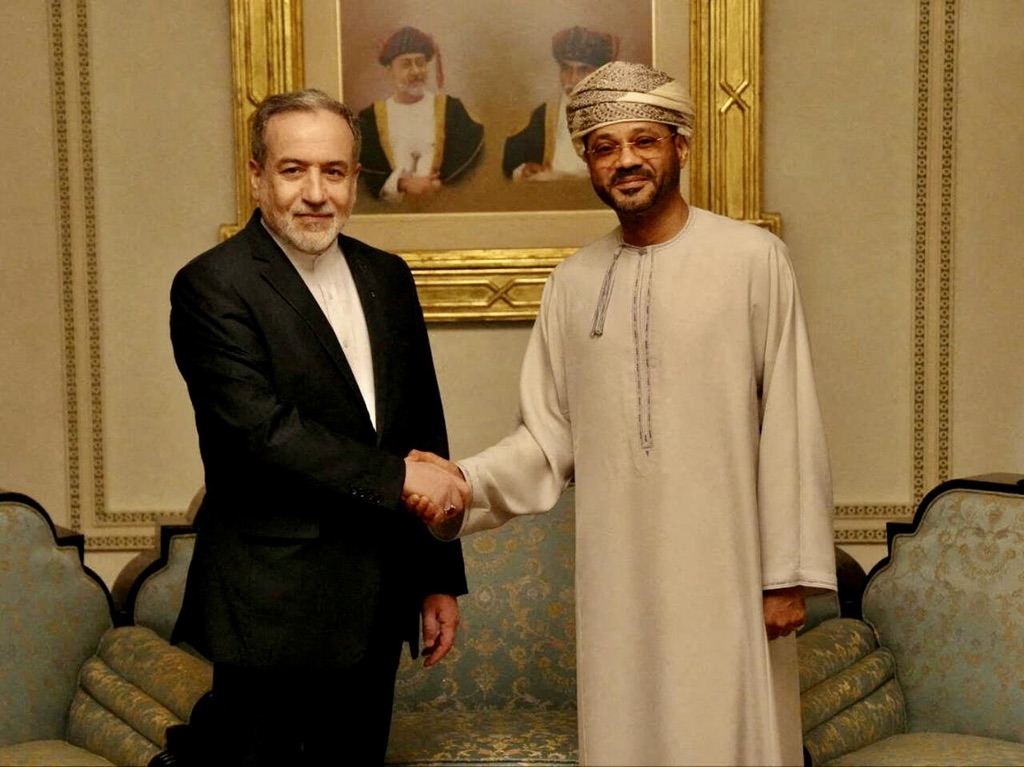
TEHRAN (Realist English). Iran is holding talks with Oman to establish a permanent toll system for ships passing through the Strait of Hormuz, which would allow Tehran to institutionalize its control over the strategic waterway, Bloomberg reports. The proceeds from the new mechanism are planned to compensate for military expenses and damage from the conflict with the United States and Israel.
The initiative, almost certainly in violation of international law, has already drawn a sharp reaction from Washington and created a difficult diplomatic situation for Oman, which finds itself caught between pressure from its neighbor and Western allies.
“Pay and sail”: essence of the initiative and Iran’s goals
Iran is discussing with Oman the creation of a system that would allow the Islamic Republic to formalize control over shipping and effectively legalize fees already being charged de facto.
According to Iran’s ambassador to France, Mohammad Amin-Nejad, ship passage through the strait has supposedly not been interrupted since the start of the conflict, and the IRGC ensured the transit of 26 tankers and other vessels in the past 24 hours. However, this claim has not been independently verified.
Iranian authorities do not hide that “navigation management” requires costs, and those who wish to use the strait must pay for these “services.” Earlier, the Iranian parliament’s National Security and Foreign Policy Committee officially stated that Tehran would introduce fees for “specialized services” under a formal maritime traffic regulation system. It is reported that up to $2 million could be charged per vessel — comparable to the average charter cost for a VLCC from the Gulf to China for all of 2025.
Tehran justifies its actions by the need for post-conflict reconstruction, insisting that the “natural strait” lies within its territorial waters.
Oman’s role: an awkward partner at the center of geopolitics
Oman finds itself in an ambiguous position. On one hand, Tehran publicly declares coordination with Muscat and the need for joint management of the strait. On the other hand, Oman has previously rejected these proposals, stating that imposing tolls contradicts international agreements to which the sultanate is a party.
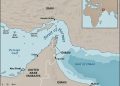
Oman’s role is particularly important given that the narrowest part of the strait (approximately 39 km) lies directly off the coast of the Omani exclave of Musandam, which has historically given Muscat a voice in shipping matters.
No official response from the Omani government to Tehran’s latest statements has yet been forthcoming. At the same time, according to The Guardian, Oman is studying an alternative plan developed by France and the UK with the support of most Gulf states, which is based on the principle of freedom of navigation and does not provide for any payments.
New rules of the game
The key question concerns the legality of such an initiative. Under the UN Convention on the Law of the Sea (UNCLOS), coastal states are not entitled to impede transit passage through international straits or charge fees for it. The Secretary-General of the International Maritime Organization (IMO), Arsenio Dominguez, has called such actions “without legal basis.”
The “Strait of the Persian Gulf Administration” created by Tehran already requires vessels to register for passage permission and sometimes requests payments of up to $2 million.
Iran’s legal position is based on the fact that it has not ratified UNCLOS. Tehran insists it is acting within the framework of customary international law, which provides for the right of “innocent passage,” and that it may restrict navigation when its territorial integrity is threatened.
Economic and market consequences
Iran’s initiative has already destabilized the situation, sharply reducing shipping. In the pre-war period, an average of 120 to 140 vessels passed daily through the Strait of Hormuz (approximately 20% of global oil and LNG traffic), whereas current traffic is no more than 4% of peacetime levels.
Ships are almost completely avoiding the route, preferring to pay huge insurance premiums for alternative routes, while charter costs and oil futures remain at high levels. The strait’s restrictions have triggered a global sell-off of government bonds amid rising inflationary pressures.
Reaction to the initiative and friction of positions
Official Washington is categorically opposed to the creation of a “toll system.” Secretary of State Marco Rubio said it would make any diplomatic agreement “unattainable,” is “completely illegal” and poses a threat to the entire world.
The Trump administration’s position is chaotic and contradictory. Amid tough statements from the White House, ideas have also been floated ranging from a US-Iran joint venture to manage the strait to direct collection of fees by the Americans themselves. This inconsistency only reinforces uncertainty in Washington.
EU and Gulf states are united in their rejection of the new initiative, pointing to the establishment of a “dangerous precedent.”
Iran, exploiting its geographical position, is attempting to consolidate military control over the Strait of Hormuz and turn it into a permanent source of revenue. The talks with Oman are a step toward legitimizing this model in a post-conflict environment. The international community, led by the United States, views the initiative as a gross violation of freedom of navigation. Oman, for now, is balancing between Tehran and the West, maintaining silence and continuing to study alternatives.
The economic costs of effectively closing the waterway have become a catalyst for reviewing global logistics routes, but a long-term solution may only be found on the political plane after a comprehensive peace agreement.