

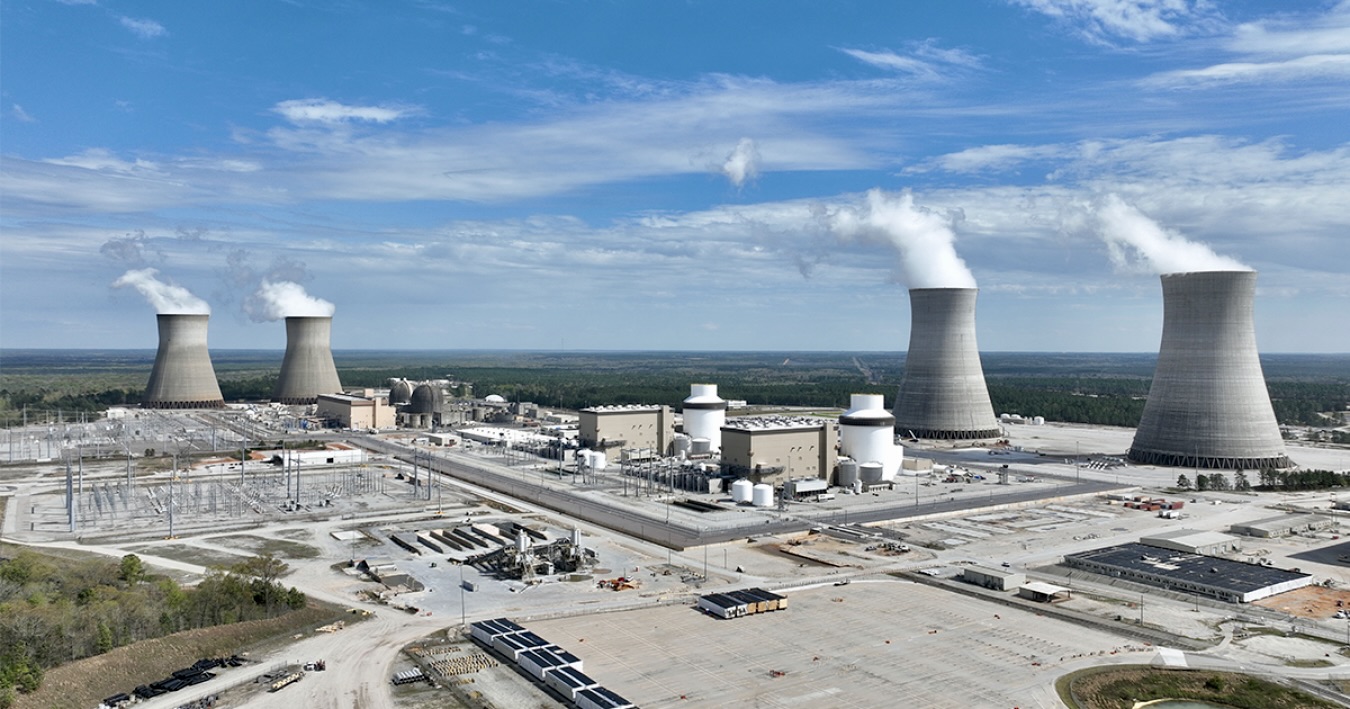
LONDON (Realist English). May 2026 has definitively confirmed nuclear energy’s status as the chief beneficiary of the Middle East crisis.
After decades of stagnation, the industry is entering a phase of sustained growth, driven by three factors: energy security (the Strait of Hormuz remains blocked), the needs of artificial intelligence (data centres require stable baseload power) and the green agenda.
However, behind the loud claims of a “renaissance” lies an inconvenient reality for the West: the lion‘s share of new construction and control over the fuel cycle is provided by Russia.
Global statistics
- Operating reactors: 412-415 reactors are operating in 31 countries, with a total capacity of around 376 GW (IAEA data, beginning of 2026). However, the World Nuclear Industry Status Report (WNISR) counts 404 operating reactors – five fewer than a year earlier.
- Share of electricity generation: nuclear provides about 9-10% of the world‘s electricity and roughly 25% of all low‑carbon generation (second only to hydropower).
- Reactors under construction: 66-72 units in 13-15 countries with a total capacity of 66-78 GW – one of the highest figures in 30 years. Around 120 more units are at the planning stage.
- Completions in 2026: 15 reactors are expected to come online, adding almost 12 GW of new capacity – a sharp turnaround after a contraction of 1.1 GW in 2025.
Key paradox: the IEA notes that 94% of reactors whose construction began in the last decade are of Chinese or Russian design. Growth is occurring mainly in countries that are not members of the G7.
Uranium and share prices
- Spot uranium price (as of 1 May 2026): $86.55 per pound. A rise of 24% over 12 months.
- Bank of America forecast for the second half of 2026-2027: $135 per pound (+56% from current prices).
- Nuclear sector stocks: up an average of 30-50% since the start of 2026, driven by the boom in reactor construction and long‑term contracts with data centres.
Three drivers of the renaissance
In May 2026, experts point unanimously to three key factors that are turning nuclear energy from a “legacy of the past” into a strategic priority.
1. The Middle East crisis and energy security
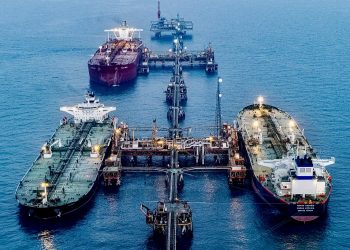
The blockade of the Strait of Hormuz, through which about 20% of world oil and LNG supplies used to pass, has become a powerful catalyst. As IEA Executive Director Fatih Birol said: “I am 100% sure that nuclear power is coming back. It is seen as a safe generating system, and its comeback will be very strong.”
Even Japan, which experienced Fukushima, is revising its position: the government is forecasting a rise in electricity demand for the first time in 20 years and plans to raise nuclear’s share to 20% by 2040.
2. Artificial intelligence and data centres
Goldman Sachs estimates that electricity demand from data centres could rise by 160% by 2030, making stable baseload generation critical. Technology giants are moving from words to deeds: Microsoft has agreed to restart a reactor at Three Mile Island, while Meta, Amazon and Google are signing long‑term contracts for nuclear power.
3. The green agenda and the “tripling pledge”
Nuclear remains the second largest source of low‑carbon electricity after hydro. 33 countries have signed the Declaration to triple nuclear capacity by 2050. The European Commission, which had previously opposed nuclear, has admitted that closing nuclear plants in Europe was a “strategic mistake”.
China and Russia call the shots
China: The absolute leader in bringing new capacity online. It operates 58 reactors (56.45 GW) and is building 29 units with a total capacity of about 31 GW. It launched 9 new reactors in 2025, and in May 2026 completed fuel loading at Taipingling unit 2 and Changjiang unit 3, both Hualong‑1 reactors. Its goal: 100 GW of installed capacity by 2030.
Russia: Rosatom controls more than 90% of the world market for exported nuclear plant construction and about 44% of global uranium enrichment capacity. The state corporation holds contracts for about 40 reactors abroad and has about 40 more under construction domestically. Key projects for 2026: the Akkuyu NPP in Turkey (first unit scheduled for launch in December) and the Rooppur NPP in Bangladesh.
USA: The world‘s largest producer of nuclear electricity (94 reactors with a capacity of 96.95 GW). However, there are no new reactors under construction, and the average age of those in operation exceeds 40 years. The Trump administration is seeking to speed up the deployment of small modular reactors (SMRs) and micro‑reactors, allocating $2.7 billion to support uranium enrichment and streamline licensing.
Japan: A return to nuclear generation after Fukushima. 15 reactors out of 36 have been restarted, with another 10 going through the approval process. The Japanese Prime Minister has stated that the country must be open to nuclear energy.
Other countries: Turkey, Egypt and Bangladesh are building their first NPPs (4-5 GW each) with Rosatom’s involvement. The UK and South Korea also have two reactors each under construction.
Expert opinions
Bullish view (Goldman Sachs, Bank of America, IEA)
Bank of America forecasts that the uranium price will reach $135 per pound in the second half of 2026-2027 (a 56% increase). Analysts at the bank call 2026 a “key year for contracting” and expect utilities to begin “over‑contracting” to rebuild strategic reserves.
Fatih Birol (IEA) has said that the Middle East conflict “created the biggest energy security threat the world has ever faced” and that this will lead to “significant growth in renewables and nuclear energy”.
Grant Isaac, President and COO of Canada’s Cameco, said: “The combination of climate, energy and national security creates excellent conditions for accelerating new nuclear construction.”
Pessimistic view (WNISR, environmental organisations)
The WNISR-2026 report notes that the number of operating reactors has fallen (404 versus 438 in 2002). The organisation stresses that new nuclear capacity (5.4 GW) is 100 times less than new solar and wind capacity (over 565 GW).
Critics point out that 63 of the 66 reactors under construction (95%) are either in nuclear‑weapon states or are built by companies controlled by nuclear‑weapon states, suggesting that growth is political rather than market‑driven.
Environmentalists warn of a “structural uranium deficit”: existing mines are ageing and bringing new ones online takes time.
The global nuclear renaissance so much talked about in May 2026 has a clearly defined geographical face. While the US and Europe spent decades winding down their nuclear programmes, Russia and China not only preserved but expanded their capabilities, seizing a dominant position in the market.
Today, Rosatom is the main beneficiary of the crisis: Western countries, trying to reduce their dependence on Middle Eastern oil and secure stable power for data centres, are forced to turn to Russian (Turkey, Egypt, Bangladesh) or Chinese technologies.
The uranium price forecast by Bank of America of $135 per pound will put extra pressure on Western utilities, but not on Russia, which controls a significant share of global enrichment capacity.
The question is whether the West can create a real alternative to the Russian‑Chinese monopoly in the next 5-7 years – or whether this “nuclear renaissance” will merely entrench the technological leadership of Moscow and Beijing for decades to come.