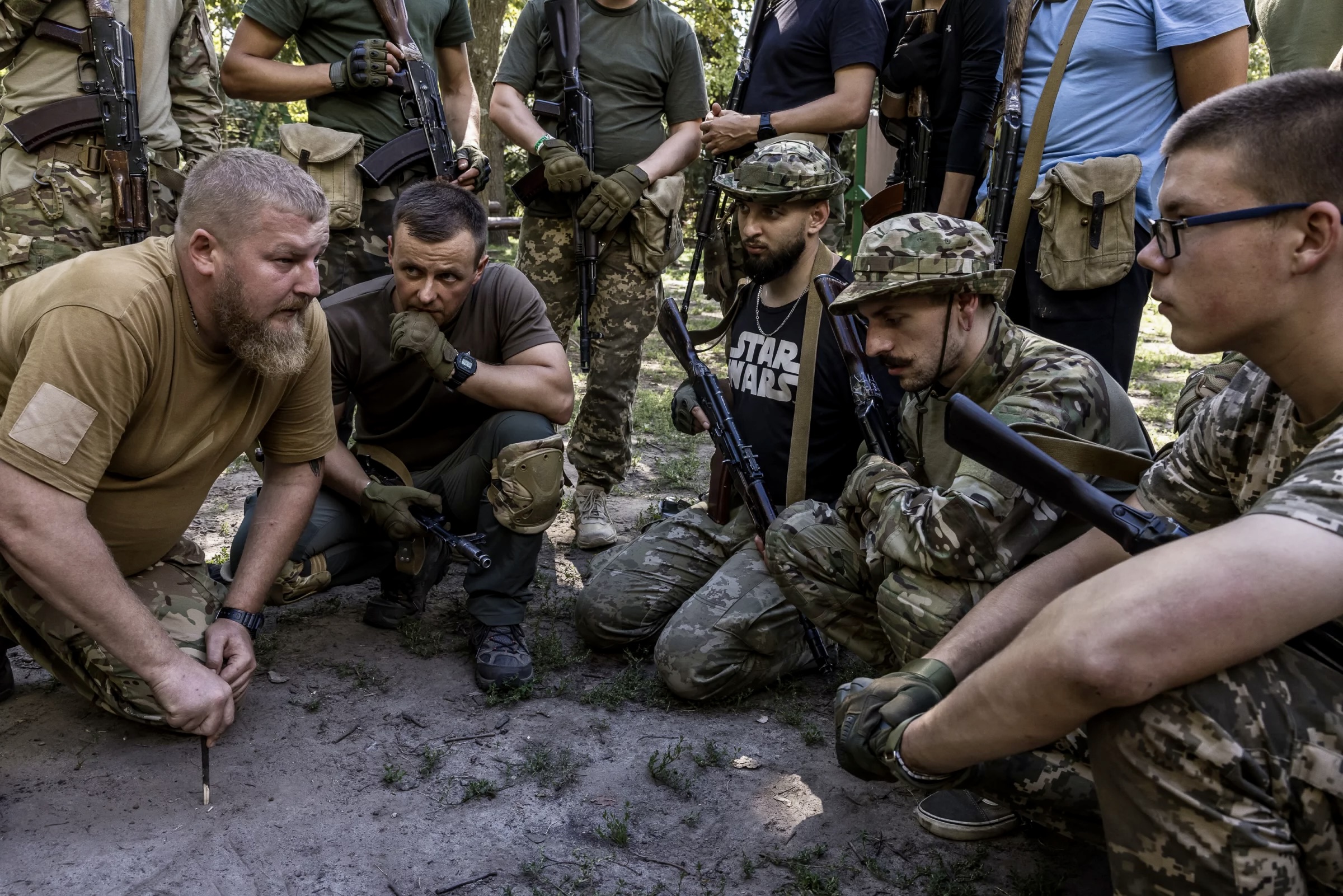
KYIV (Realist English). The Ukrainian army, now in its fourth year of heavy defensive warfare, is facing a systemic crisis: soldiers exhausted by years of service are losing faith that they will ever be able to return to civilian life.
The military reforms announced by Kyiv, intended to boost the combat capability of the Armed Forces of Ukraine (AFU), are met with bitter irony and distrust among those who have been fighting since 2022. Even the promise of partial demobilisation for soldiers who have been fighting since the pre‑war period is met with scepticism. Commanders admit the reforms have come too late.
Crisis of Trust and the ‘One‑Way Ticket’
The main problem facing the Ukrainian army today is not so much a shortage of manpower as a crisis of trust. As Deputy Defence Minister Mstyslav Banyk admitted, many Ukrainians view military service as a “one‑way ticket.”
Potential recruits see that their friends and relatives mobilised in 2022 still have no guarantees of returning to civilian life. This is fuelling widespread draft evasion, desertion and unauthorised absence from units. Servicemen often go absent without leave (AWOL) to get some kind of temporary respite or to try to transfer to another unit.
Many soldiers who spoke to the Financial Times believe the reform has done too little for those who have been fighting for years. The troops have serious doubts that the state will keep its promises. One of their main complaints is that the proposed deferments fall far short of the full discharge from service that many had hoped for.
New Contract System: ‘Disgust’ Instead of Hope
In response to the crisis, Kyiv announced a large‑scale reform intended to “establish clear and understandable rules of the game.” The essence of the reform is the introduction of fixed‑term contracts instead of indefinite service.
The Defence Ministry offers three contract categories: a 10‑month “assault” contract for infantry, a 24‑month “combat” contract for specialists (artillerymen, drone operators, electronic warfare specialists) and a 24‑month “basic” contract for rear‑area personnel.
The contracts come with significant pay increases: frontline infantrymen can now expect 250,000–400,000 hryvnias per month (about $5,700–9,000). However, these measures have drawn bitter scorn from currently serving soldiers. Ukrainian writer Artem Chapay, who joined the defence forces in 2022, called the reform “disgusting,” saying it presents soldiers with a new dilemma: “Either you are content with the crumbs from the master’s table, or you refuse and, being a serf, are yourself to blame.”
Even optimistic forecasts offer little hope. Analysts and Ukrainian officials admit that even a large‑scale recruitment drive under the new contracts will not allow them to completely abandon mobilisation. Money is not the key issue when it comes to reluctance to join the army — people are afraid of ending up with a bad commander, afraid of death, and afraid of uncertainty.
Corps Reform: ‘The Elephant in the Room’
Alongside the contract reform, Ukraine is trying to restructure its entire military structure along NATO lines, moving from a brigade‑based system to a corps‑based one. Here, too, the results have been poor. As Kyiv Independent notes, a year after the reform began, most corps are not functioning as real operational formations.
Azov Brigade Chief of Staff Bohdan Krotevych admitted: “This reform is largely theoretical. None of the corps work as a real operational formation. Many of them have only one or two brigades under their command — far fewer than necessary.”
The problem is compounded by the fact that Ukraine simply does not have enough soldiers to staff all the support units — artillery, engineer, chemical defence — that each corps needs to function properly. One Ukrainian defence analyst posed a rhetorical question: “Where is all this supposed to come from when we don’t even have enough infantry on the frontline?”
Demobilisation and New Brigades: Promises and Reality
Faced with criticism, President Volodymyr Zelensky announced a “phased discharge” of servicemen mobilised in the early stages of the war, based on clear time‑based criteria. However, no specific demobilisation deadlines were given, only increasing scepticism among the troops. One soldier told the FT: “No one will hire you if they know you are still the property of the state.”
Paradoxically, amid an acute manpower shortage, the Ukrainian command recently decided to stop forming new brigades in order to channel all mobilisation resources into supporting existing ones. According to AFU Commander‑in‑Chief Oleksandr Syrskyi, the process is slow and fraught with huge difficulties: “We cannot even move brigades without risking creating gaps in the front line.”