
Realist: news and analytics

Русский / English / العربية

  • News
  • Russia
  • Caucasus
  • Opinion
  • Interviews
  • Experts
No Result
View All Result
Realist: news and analytics
  • News
  • Russia
  • Caucasus
  • Opinion
  • Interviews
  • Experts
No Result
View All Result
Realist: news and analytics

Macron signals openness to stationing French nuclear weapons abroad

French president lays out conditions for extending nuclear deterrence to EU allies amid concerns over future US military commitments.

   
May 15, 2025, 05:31
Security & Defense
Emmanuel Macron

Emmanuel Macron

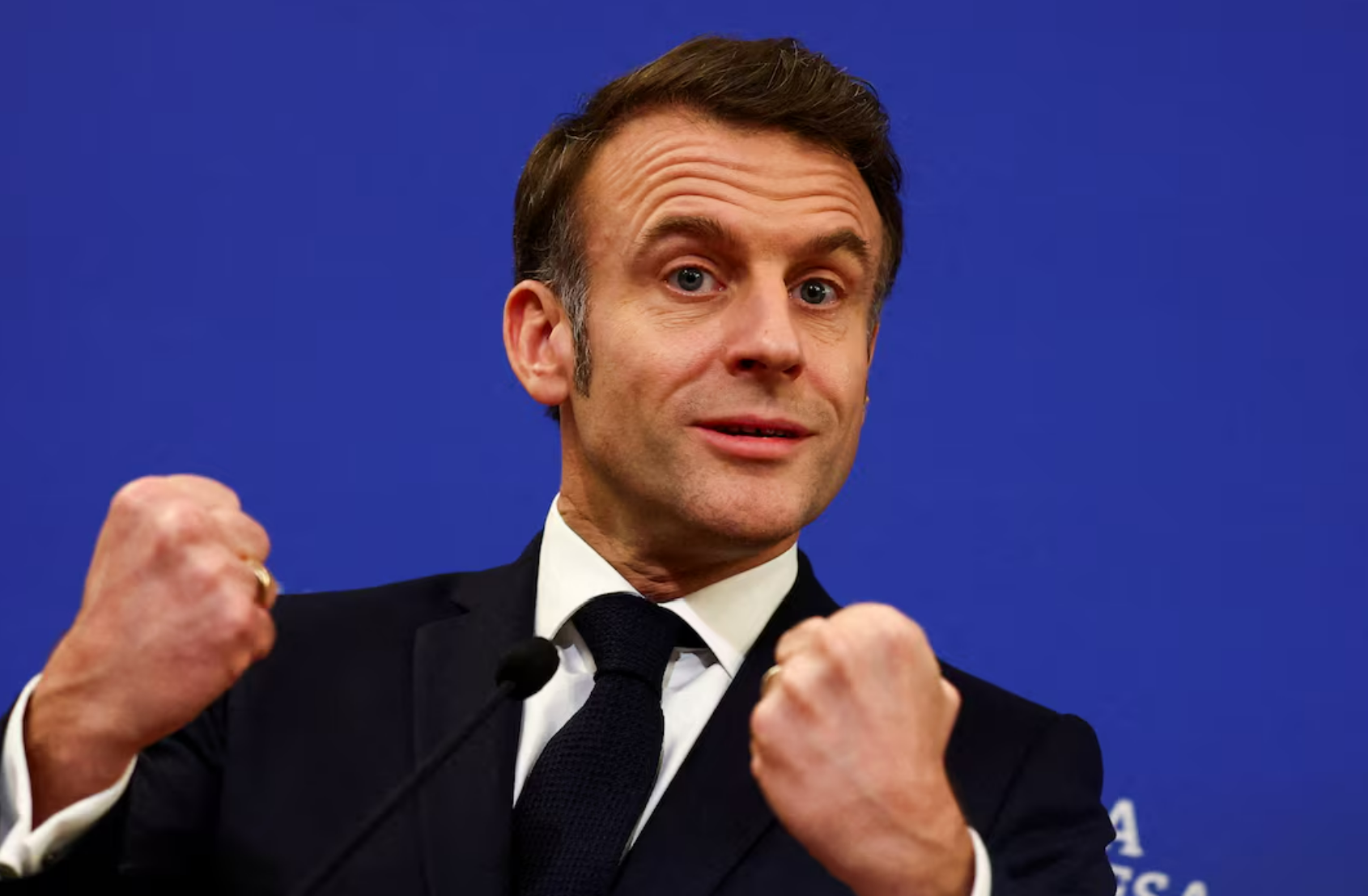
PARIS (Realist English). French President Emmanuel Macron has announced his readiness to initiate formal discussions with European allies about the potential deployment of France’s nuclear weapons on their territory, in what he described as a necessary response to growing geopolitical instability and signs of U.S. retrenchment.

In an interview with broadcaster TF1 on Tuesday, Macron said that exploratory talks are already under way with Germany, Poland, and other European partners, as Paris examines how its nuclear deterrent might be shared to reinforce collective security in the face of a long-term threat from Russia.

“I will define the framework [for these talks] in a very official way in the weeks and months to come, but we have already begun discussions under the conditions I have mentioned,” Macron stated.

The French president outlined three key conditions for any extension of France’s nuclear umbrella:

  • France will not finance the security of other nations;
  • Any deployment must not compromise France’s own nuclear readiness;
  • Operational control over French nuclear weapons will remain exclusively with the French president.

For decades, the United States has been the primary guarantor of European security, maintaining nuclear weapons and aircraft on bases across the continent. Under NATO’s nuclear sharing framework, U.S. atomic weapons are deployed in Europe and are designed to be delivered by jets operated by allies such as Germany, Italy, and Turkey, though command remains in American hands.

Macron’s initiative follows growing unease among European leaders over President Donald Trump’s signals that the U.S. may scale back its military presence in Europe and shift the burden of defense onto allies. Both German Chancellor Friedrich Merz and Polish Prime Minister Donald Tusk have recently urged preparations for a potential post-NATO nuclear scenario.

“Europe was built for peace,” Macron said. “But now, it must be about power.”

Although France’s nuclear stockpile is modest compared to that of the U.S., Paris has long emphasized that its nuclear doctrine has a “European dimension.” However, it has never explicitly defined the scope of those “vital interests,” maintaining strategic ambiguity as a pillar of deterrence.

According to a senior French official, the ongoing discussions are unlikely to lead to a formal shift in France’s nuclear doctrine, but other adjustments could be made to signal French resolve and reassure European partners.

When Chancellor Merz visited Paris last week, both leaders stressed that any French nuclear consultations would be designed to complement, not replace, NATO’s existing security architecture. European officials remain cautious, wary of doing anything that could be interpreted as weakening the transatlantic alliance.

The Kremlin swiftly condemned Macron’s proposal, with spokesman Dmitry Peskov warning that the proliferation of nuclear weapons across Europe would “not contribute to security, predictability, or stability.” Peskov added that Russia, the U.S., and European nuclear powers still face the task of reconstructing Europe’s strategic security architecture, which he described as being in a “very sorry state.”

Macron’s statement marks a geopolitical turning point. For the first time in decades, a Western European leader is openly entertaining the continentalization of nuclear deterrence — a move born of necessity, not ambition. Whether this initiative becomes policy or remains a signal will depend on how far the U.S. steps back — and how ready Europe is to step forward.
Emmanuel MacronFranceNuclear Weapons
Previous Post

Putin sends Medinsky and GRU chief to talks with Kyiv regime

Next Post

Trump should back Israeli strike on Iran, not return to a weak nuclear deal — Benlevi

Related Posts

Actor and martial artist Chuck Norris dies aged 86
Security & Defense

Taiwan fears US weapons use in Iran could aid China

21 March, 2026
Putin calls Crimea reunification a historic choice
Security & Defense

China mass-produces chip-scale atomic clock for military use

19 March, 2026
US sees Chinese projects in Latin America as potential military assets
Security & Defense

US sees Chinese projects in Latin America as potential military assets

18 March, 2026
Trump warns NATO over Hormuz as Iran war enters day 18
Security & Defense

Trump warns NATO over Hormuz as Iran war enters day 18

18 March, 2026
Iran warns Ukraine over drone support as countries seek Kyiv’s expertise
Security & Defense

Iran warns Ukraine over drone support as countries seek Kyiv’s expertise

15 March, 2026
Russian Orthodox Church Synod approves leadership changes and structural reforms
Security & Defense

South Africa deploys troops to support police in crime crackdown

14 March, 2026
Most Popular
Most Popular
Iran war exposes global reliance on fragile energy routes

Iran war exposes global reliance on fragile energy routes

23 March, 2026

LONDON (Realist English). The war involving Iran has exposed the global economy’s dependence on vulnerable fossil fuel supply routes, intensifying...

Actor and martial artist Chuck Norris dies aged 86

Taiwan fears US weapons use in Iran could aid China

21 March, 2026

TAIPEI (Realist English). Taiwan has raised concerns that extensive US use of long-range cruise missiles in the war involving Iran...

Strait of Hormuz disruption sends shockwaves through global trade

Strait of Hormuz disruption sends shockwaves through global trade

16 March, 2026

LONDON (Realist English). Escalating military tensions around the Strait of Hormuz are rapidly disrupting global shipping and energy markets, as...

Russian Orthodox Church Synod approves leadership changes and structural reforms

Iran war puts Vice President JD Vance in difficult political position

14 March, 2026

WASHINGTON (Realist English). The ongoing war with Iran has placed US Vice President JD Vance in a politically sensitive position,...

Opinion

Star Wars without fiction: how space became the next battlefield

Star Wars without fiction: how space became the next battlefield

27 January, 2026

MOSCOW (Realist English). “Star Wars” stopped being science fiction long ago. Unfortunately, over ten thousand years of civilisation, humanity has...

Armenian monastery Dadivank

Dadivank: The Legacy of Christ’s Apostles in Artsakh

17 December, 2025

YEREVAN (Realist English). In Artsakh, before the ethnic cleansing and forced deportation – simply put, genocide – carried out by...

An unusual phenomenon at the Church of the Holy Savior in Shushi

An unusual phenomenon at the Church of the Holy Savior in Shushi

3 November, 2025

YEREVAN (Realist English). In the distant year 1979, as a third-year university student, I used to visit the Church of...

War with Iran seen as inevitable, Armenia warned of looming regional storm

War with Iran seen as inevitable, Armenia warned of looming regional storm

21 September, 2025

YEREVAN (Realist English). The war with Iran is drawing ever closer. And once again, this pulls Armenia into a zone...

All rights reserved.

© 2017-2026

  • About Us
  • Mission and Values
  • Contact Us
  • Privacy Policy

Follow Realist English

No Result
View All Result
  • News
  • Russia
  • Caucasus
  • Opinion
  • Interviews
  • Experts

Русский / English / العربية