
Realist: news and analytics

Русский / English / العربية

  • News
  • Russia
  • Caucasus
  • Opinion
  • Interviews
  • Experts
No Result
View All Result
Realist: news and analytics
  • News
  • Russia
  • Caucasus
  • Opinion
  • Interviews
  • Experts
No Result
View All Result
Realist: news and analytics

Trump’s ‘Donroe Doctrine’ signals sharper US push to control global energy flows

Critics say revived Monroe-style strategy now extends far beyond the Western Hemisphere, with oil at its core.

   
January 16, 2026, 08:58
World
Trump’s ‘Donroe Doctrine’ signals sharper US push to control global energy flows

WASHINGTON (Realist English). The United States has entered the new year by unveiling what critics describe as the “Donroe Doctrine” — President Donald Trump’s reworking of the 1823 Monroe Doctrine — amid a surge of US military, economic and political pressure on energy-producing states across multiple regions.

The term gained traction following US air strikes on Venezuela and the detention of President Nicolas Maduro and his wife on 3 January. While the doctrine formally asserts US primacy in the Western Hemisphere, analysts argue that its practical scope is global, echoing interventionist patterns that have shaped US foreign policy since the end of World War Two.

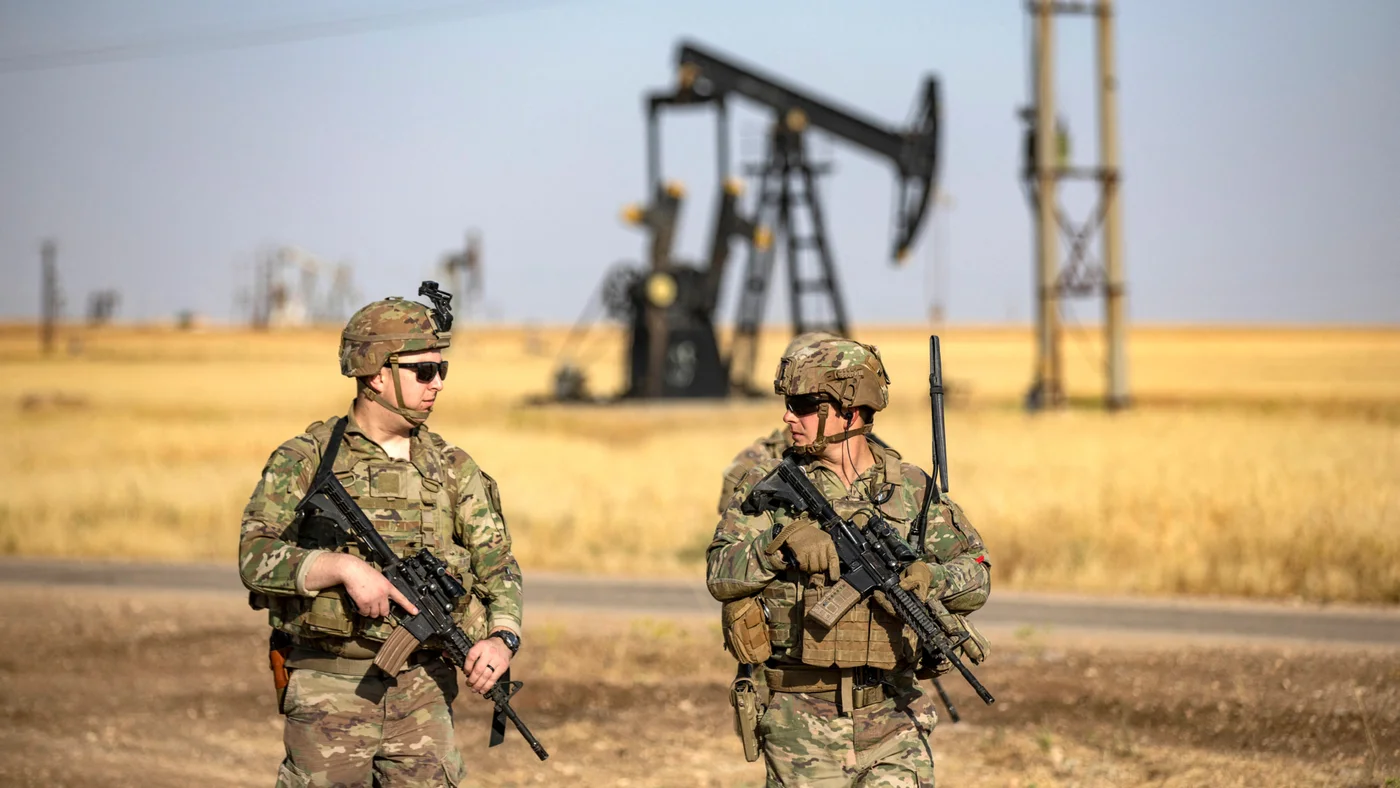
Over the past month alone, Washington has taken or threatened military action affecting oil-producing countries in Latin America, the Middle East, Africa and the Arctic. In December and January, US forces struck targets in Syria, where more than 2,000 American troops remain deployed in oil-producing regions. The Pentagon said the strikes targeted Islamic State militants following the killing of two US soldiers and an interpreter.

In Africa, Trump ordered air strikes in Nigeria after repeatedly warning of mass killings of Christians by jihadist groups, framing the attacks as protective measures. He has since threatened further action if violence continues. In Asia, the administration has openly encouraged anti-government protests in Iran, with Trump urging demonstrators to “keep protesting” and saying “help is on the way” as unrest intensified amid a deep economic crisis.

Iranian officials report hundreds of deaths, while other estimates suggest casualties may run into the thousands, including protesters and security personnel. Israeli officials have confirmed the presence of intelligence operatives in Iran, while former US Secretary of State Mike Pompeo publicly alluded to cooperation between Iranian protesters and Israeli intelligence — claims that Tehran cites as evidence of foreign involvement.

On Tuesday, Trump escalated pressure on Tehran by cancelling talks, announcing 25% tariffs on countries trading with Iran and threatening “very strong” military action over the government’s handling of protests. The White House has linked these measures to human rights concerns, while critics say they reflect broader strategic aims tied to energy security.

Oil has emerged as a central thread in the administration’s actions. Venezuela, home to the world’s largest proven oil reserves, has been singled out by Trump, who has said the US will now “run” the country following Maduro’s detention. US officials have also floated the use of force against Greenland, a semi-autonomous Danish territory with significant untapped energy resources. A Republican lawmaker has introduced legislation backing US annexation of the island, citing national security concerns.

Energy analysts note that Washington’s strategy appears aimed at maintaining influence over oil prices, ensuring the dollar’s dominance in energy trade and constraining rivals — particularly China — by shaping access to global energy supplies.

The approach mirrors Cold War-era precedents. After World War Two, the US backed a series of coups linked to energy interests, including the 1949 overthrow of Syria’s elected government following its refusal to approve a major oil pipeline, and the 1953 CIA- and MI6-backed coup in Iran that removed Prime Minister Mohammad Mossadegh after he nationalised the oil industry.

More recent interventions — from Libya in 2011 to Syria, Venezuela and now renewed pressure on Iran — are seen by critics as part of the same pattern, albeit under shifting justifications ranging from counterterrorism and democracy promotion to drug trafficking and human rights.

US officials reject accusations of imperial overreach, arguing that current actions are necessary to protect allies, secure energy markets and uphold international stability. Yet as tensions rise across several regions simultaneously, observers say the practical reach of the so-called “Donroe Doctrine” may soon become clearer — and potentially more consequential — in the weeks ahead.
Most PopularUnited StatesUS Foreign Policy
Previous Post

Japan’s Takaichi plans snap election to strengthen fragile lower-house majority

Next Post

Myanmar’s military-linked party widens lead as election enters final phase

Related Posts

King Charles III addresses U.S. Congress: praise for NATO, ‘checks and balances’ and silence on Epstein
World

King Charles III addresses U.S. Congress: praise for NATO, ‘checks and balances’ and silence on Epstein

29 April, 2026
Rubio rejects Iran’s new proposal on Hormuz: ‘They say — we’ll blow you up, and you pay us’
World

Rubio rejects Iran’s new proposal on Hormuz: ‘They say — we’ll blow you up, and you pay us’

28 April, 2026
Eizenkot called Bennett and Lapid his allies, but cast doubt on their bloc’s ability to attract right-wing voters
World

Eizenkot called Bennett and Lapid his allies, but cast doubt on their bloc’s ability to attract right-wing voters

27 April, 2026
Araghchi heads to Moscow: Putin to host Iran’s foreign minister after US talks collapse
World

Araghchi heads to Moscow: Putin to host Iran’s foreign minister after US talks collapse

27 April, 2026
Assassination attempt on Trump in Washington — shooter detained
World

Assassination attempt on Trump in Washington — shooter detained

26 April, 2026
Diplomatic collapse: US-Iran talks fail, Lebanon ceasefire frayed
World

Diplomatic collapse: US-Iran talks fail, Lebanon ceasefire frayed

26 April, 2026
Most Popular
Most Popular
155 billionaires vs. 150 million people: Zyuganov on the social catastrophe in Russia

155 billionaires vs. 150 million people: Zyuganov on the social catastrophe in Russia

25 April, 2026

MOSCOW (Realist English). Chairman of the Central Committee of the Communist Party of the Russian Federation Gennady Zyuganov presented the pre-election program "Victory...

‘Behind dry laws are living people and destinies’: Lawyer Narek Petrosyan on replacing justice with convenience

‘Behind dry laws are living people and destinies’: Lawyer Narek Petrosyan on replacing justice with convenience

25 April, 2026

MOSCOW (Realist English). Narek Petrosyan is a criminal defense lawyer who made himself. He overcame many obstacles on his path to the...

«The Kurdish card is a weapon of major powers»: Yaşar Yakış on why Turkey missed its chance to solve the Kurdish issue

«The Kurdish card is a weapon of major powers»: Yaşar Yakış on why Turkey missed its chance to solve the Kurdish issue

18 April, 2026

ANKARA (Realist English). Yaşar Yakış — a Turkish diplomat and statesman who served as Turkey's Minister of Foreign Affairs, ambassador to Saudi...

Dmitry Novikov on his path to politics, the intelligentsia, the left movement, and why US aggression against Iran is a threat to Russia

Dmitry Novikov on his path to politics, the intelligentsia, the left movement, and why US aggression against Iran is a threat to Russia

12 April, 2026

MOSCOW (Realist English). Dmitry Novikov, Deputy Chairman of the CPRF Central Committee and First Deputy Chairman of the State Duma...

Opinion

The Great Divide: Capitalism and Socialism in the Battle for Humanity’s Future

The Great Divide: Capitalism and Socialism in the Battle for Humanity’s Future

29 April, 2026

MOSCOW (Realist English). The world economic system has reached a point of no return. The conflict between the classic market model...

A century of violence from the Jeddah massacre to the killings in Kobani: how Turkey exterminated Arabs

A century of violence from the Jeddah massacre to the killings in Kobani: how Turkey exterminated Arabs

27 April, 2026

ISTANBUL (Realist English). The long and bloody history of the Turkish state's relations with the Arab population — both Muslim and...

US-Iran talks collapse, Netanyahu orders strikes on Hezbollah

US-Iran talks collapse, Netanyahu orders strikes on Hezbollah

25 April, 2026

TEHRAN (Realist English). The outgoing week saw the complete breakdown of US-Iranian peace talks mediated by Pakistan, alongside a parallel escalation...

3.6 million Christians were killed in Ottoman Turkey: marking the anniversary of an unrecognised genocide

3.6 million Christians were killed in Ottoman Turkey: marking the anniversary of an unrecognised genocide

24 April, 2026

YEREVAN / ATHENS (Realist English). On April 24, 2026, the Armenian people, the worldwide diaspora and many other nations commemorated the...

All rights reserved.

© 2017-2026

  • About Us
  • Mission and Values
  • Contact Us
  • Privacy Policy

Follow Realist English

No Result
View All Result
  • News
  • Russia
  • Caucasus
  • Opinion
  • Interviews
  • Experts

Русский / English / العربية