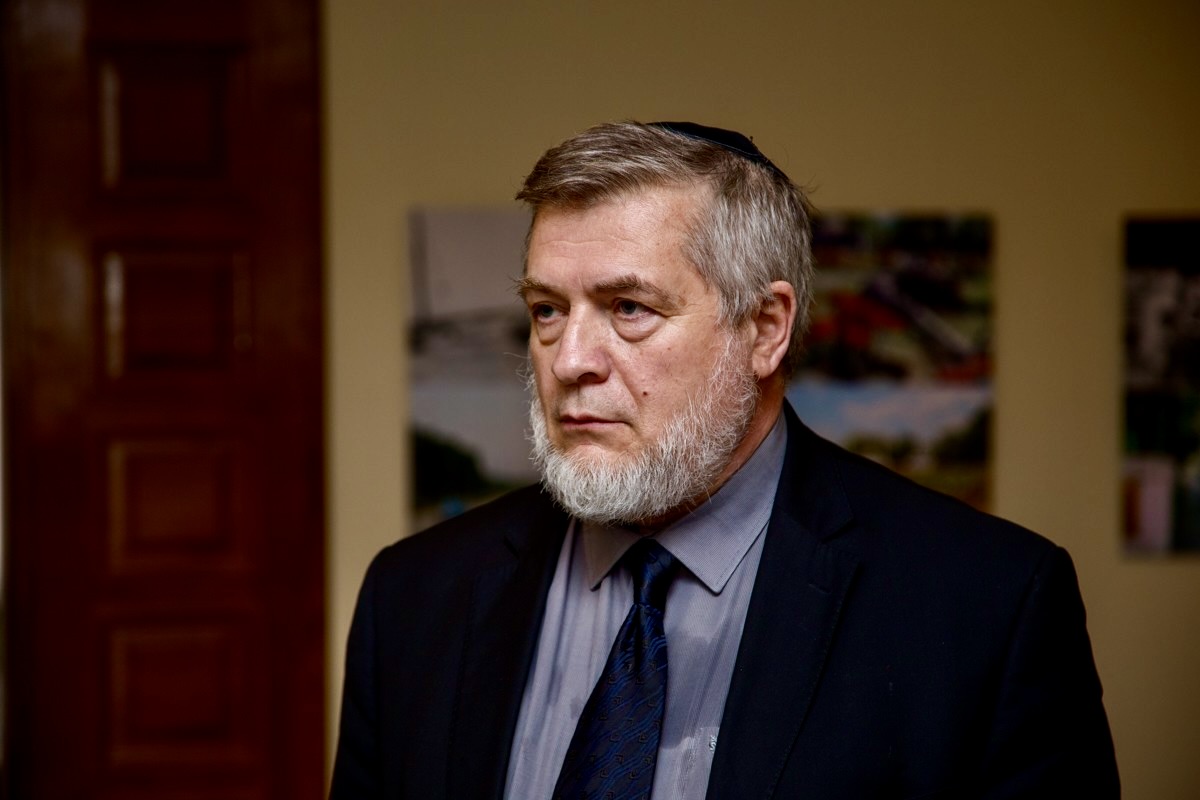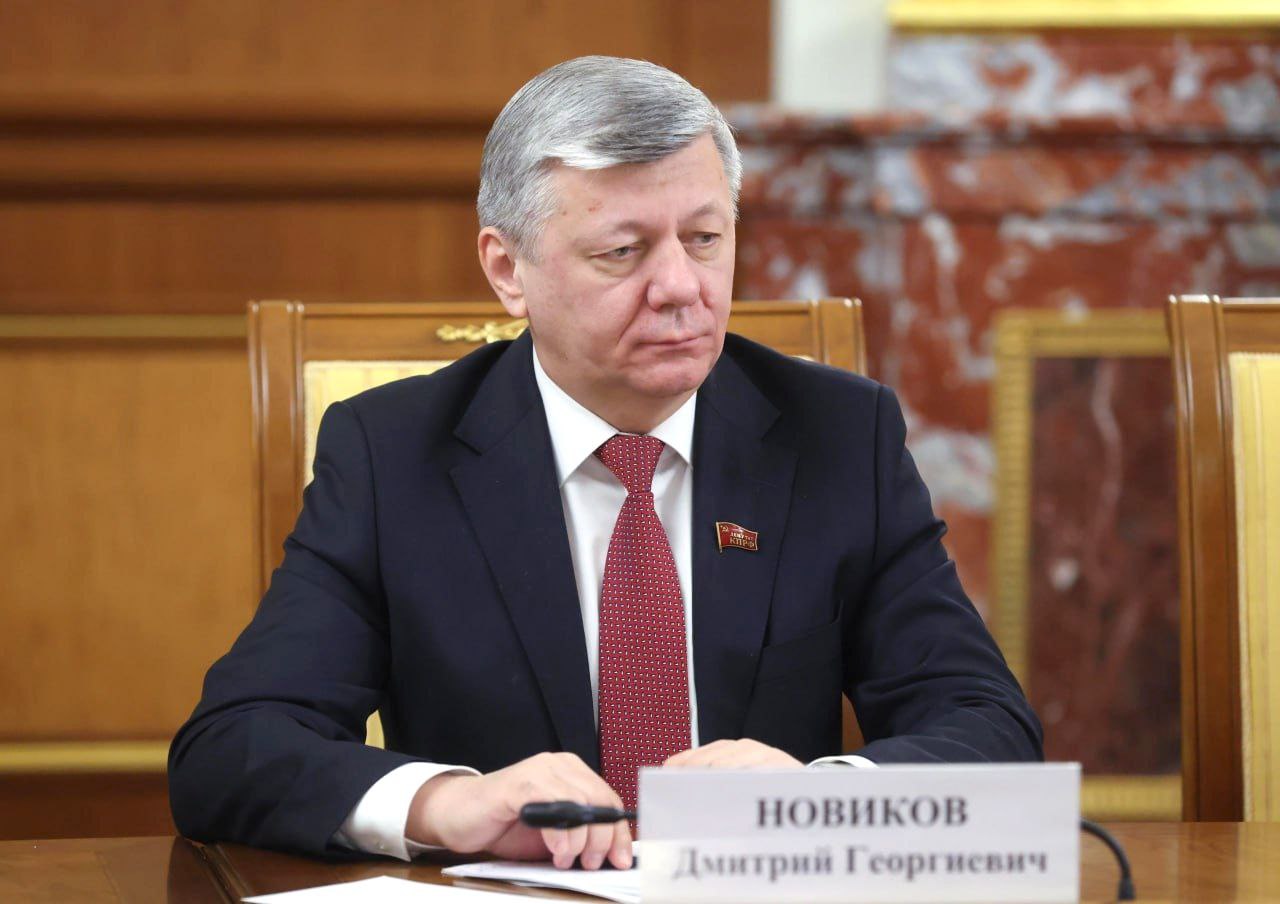
MOSCOW (Realist English). Dmitry Novikov, Deputy Chairman of the CPRF Central Committee and First Deputy Chairman of the State Duma Committee on International Affairs, is a politician for whom service to the Fatherland is inseparable from the socialist choice, and for whom collectivism and sincerity remain the main tools in the struggle for Russia’s future. At the time of the collapse of the Soviet Union, when many turned away from communist values, he made the principled decision to join the party at the height of the anti-Soviet campaign.
His path from a Komsomol leader to one of the leaders of the CPRF is not a career calculation, but a consistent service to convictions shaped by a deep historical education and personal experience.
In an interview with Realist English, Novikov demonstrates not only a professional analysis of the current geopolitical situation — from US aggression against Iran to the prospects of the left movement in the world — but also an unwavering loyalty to Marxist-Leninist methodology.
He reflects on the nature of color revolutions, the role of the intelligentsia as the “conscience of the people,” and why the CPRF, despite sanctions and limited resources, maintains a principled position in agitation and work with young people.
Mr. Novikov, you were born in Khabarovsk, studied in the Amur region, served in the army, defended your dissertation in Moscow. How did the geography of your life influence your worldview?
Dmitry Novikov: When high school students decide on their professional choice, it is already connected with their worldview. For someone entering the history faculty, the globe, its population, history, geography — all this is what they constantly coexist with. Historical processes, economic trends, military history form a fairly broad view of one’s country and the world as a whole. This influences the way of thinking.
When the Soviet Union ceased to exist in December 1991, I could not accept the contours of my country on the new maps. Suddenly, beyond its borders remained Ukraine, from where my maternal ancestors came. Outside the new map remained the Central Asian republics where I had friends — I had already served in the Soviet army, in the air defense forces. In our unit, there were guys from Kazakhstan, Tajikistan, Kyrgyzstan, Turkmenistan, Uzbekistan.
This attitude to the new Russian maps did not arise by chance and turned out to be very symbolic. It was caused by a certain type of thinking. Any school history lesson, university lecture, speech at a scientific conference essentially begins with a map — with the geography of the events that took place.
You joined the CPSU on the day Yeltsin signed the decree dissolving the party. Was it an act of despair, a principled position, or a premonition that the communist idea would return?
Dmitry Novikov: It was not so much that I joined as that I made a decision. Joining a party is a multi-stage procedure. I wrote my application after Yeltsin issued a decree suspending the activities of the CPSU and the Communist Party of the RSFSR. I took my application to the party committee of the Blagoveshchensk State Pedagogical Institute. But there was no one to consider it — the party committee door was sealed.
However, the decision to act had already been made. If you have convictions — ideological, political, religious — you cannot change them overnight. In an instant, a Muslim will not become a Buddhist. An atheist will not suddenly become a believer, nor vice versa. Such changes are possible only as a result of an evolution of views. And that takes time.
By the time I came of age and could decide on party membership, much had already happened in the country. Gorbachev came to power. The Soviet system was being shaken. Any observer could see that the attack on socialism was taking place with the participation of those who had great influence in the CPSU and its Central Committee. Thanks to my teachers, I received a good historical education and formed the habit of evaluating not the form but the content of phenomena.
Yes, the CPSU continued to be called the Communist Party. But looking closely, you discovered that factions had formed within it, even if prohibited by the Statute. Platforms appeared quite officially: Marxist, democratic. In essence, this was already factional activity.
Legitimate questions arose. What would happen to the party tomorrow? Which line would prevail? How would this affect the fate of the USSR? The first person of the party — Gorbachev — was already leading the country into an obvious dead end. It became clear that he was definitely not a consistent communist.
Then people who embarked on the path of fighting the treacherous line of Gorbachev-Yakovlev-Shevardnadze began to emerge. Gennady Zyuganov declared his position. He was supported by Valentin Chikin, the editor-in-chief of “Soviet Russia”. Many in the Soviet Union paid attention to the position of CPSU Central Committee Secretary Yegor Ligachev, Marshal Sergei Akhromeev, and many others.
When the Communist Party of the RSFSR emerged, major leaders who opposed the policy of disintegration became more visible. It was then that Ivan Polozkov, elected first secretary of the CP RSFSR, became widely known. A wave of vicious slander immediately fell upon him.
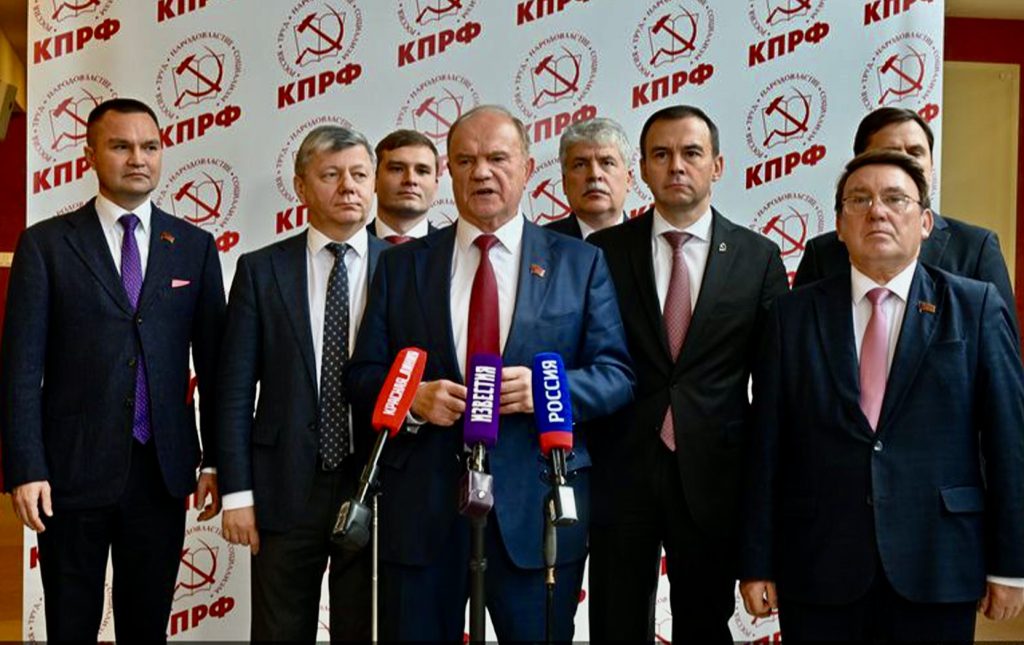
Much later, I met Ivan Kuzmich in Moscow and saw an erudite personality with a very thoughtful view of the world. That his political position might not please someone is quite understandable to me. But imposing on him the image of a semi-literate person was absolutely dishonest. However, the “democratic” media did exactly that, and extremely aggressively.
By and large, even then it was about using the methods of color revolutions. To prepare an anti-Soviet coup, the Soviet past was blackened, and then the leaders of the CPSU who defended socialism and Soviet power. Ivan Polozkov and other party leaders became victims of unbridled slander. They were stigmatized as retrograde, conservatives, enemies of perestroika.
It was then that our country first encountered extremely dirty political technologies. A full-fledged discussion was replaced by the vilification of opponents. Andrei Sakharov shamelessly violated all the rules of procedure at the Congress of People’s Deputies. At the same time, his disrespect for fellow deputies was presented as if Sakharov himself was the victim of an “aggressively obedient majority.”
The events of that time clearly illustrate the fact that communists behave much more honestly than their opponents. They also show perseverance and principle. Having passed through a wave of lies and attacks, the party was revived after Yeltsin’s ban. Gennady Zyuganov, Yuri Belov, Valentin Kuptsov, Ivan Melnikov, Vladimir Kashin, Yuri Maslyukov, Anatoly Lukyanov, Valentin Varennikov, Viktor Ilyukhin, Sergei Reshulsky and many other comrades took part in this great work. Fortunately, the list of names is very long.
So the confrontation between Gorbachev and Yeltsin was a form of color revolution?
Dmitry Novikov: At that time, the term “color revolution” was not yet known. But many characteristic methods were already being used. And the events of August–September 1991 need to be qualified exactly that way. They became the peak of a color revolution that lasted several years. Under the guise of popular protest against the GKChP, the destruction of the USSR was being prepared.
The events from August to December 1991 became the peak. The defeat of the GKChP gave [Boris] Yeltsin a free hand. It came down to decrees banning the CPSU. The lack of resistance to these processes on the part of Gorbachev directly exposes him. After all, he was both the leader of the party and the president of the country! How could he agree to the ban on the CPSU? The illegality of Yeltsin’s decrees was obvious! By the way, a little later the Constitutional Court of Russia confirmed this.
Gorbachev loved to talk about the rule of law, but as president he did not protect the norms of the law. He did not shield his own party from an illegal ban. So tell me, what is that if not meanness? The same applies to the fate of the USSR. In the referendum of March 1991, Gorbachev formally spoke in favor of the Union, but in December of the same year he did nothing to preserve a single country. He simply agreed with the Belavezha conspirators and left. So it turns out that despite all his disagreements with Yeltsin, he was clearing the way for him. They came together in the matter of destroying a single country.
The fact that events were taking on a destructive character became clear somewhat earlier. In the situation of 1988–1990, this raised the question: what were the leaders of the CPSU going to make of the party? I wanted clarity. I waited for each plenum, each congress, hoping that the party would get healthier and solve the problem of Gorbachev.
The creation of the CP RSFSR under those conditions was a response to criticism from both pseudo-democrats and ultra-patriots. While fighting among themselves, they together speculated on the theme of the absence of their own party and their own Central Committee for Russian communists — following the example of other republics of the Union. The emergence of the Russian communist party within the CPSU helped to consolidate forces in the fight against “Gorbachevism” and “Yeltsinism.” But, as Gennady Zyuganov and other participants in the events emphasize, the processes of destruction were faster than the mobilization of healthy forces.
Let us not forget that the anti-Soviet collaborators had an additional powerful resource — Western support. The supporters of the color revolution acted more harshly, not being bound by party discipline. But the forces that advocated recovery on the basis of socialism had many restrictions. Gorbachev skillfully used his position as General Secretary.
When August 1991 happened, those same Yeltsin decrees followed — on the suspension, and then on the ban of the CPSU and the CP RSFSR. It became clear that the cleansing of the party was inevitable. Those who were in it for the sake of a career or to undermine it from within would leave the ranks. And so it happened. There were famous directors, theater managers, burning their party cards in front of television cameras.
My application to the CPSU was written precisely at that moment. If everything superficial is leaving, then you need to join the party and help its transformation on consistently communist principles. However, those who so loudly and much spoke about democracy and pluralism took the path of bans. They did not care about pluralism and freedom of speech.
The people who stormed Soviet power under the flags of democratization showed their dictatorial character from the very first days. They confirmed this in October 1993, by shooting the parliament on which they themselves had recently relied. The swift ban on the communist party in 1991 did not allow me to join its ranks. That was done later, when we revived the party.
You have come a long way from first secretary of the regional Komsomol committee to deputy chairman of the CPRF Central Committee. What is more difficult today: educating young people or convincing the older generation?
Dmitry Novikov: If you are sincere with people and have thoroughly understood the topics you discuss with them, then there is no difficulty in building a dialogue. It is just that it is always a different dialogue. When you come to veterans, you understand what path they have traveled, how they perceive the events they witnessed. They remember Brezhnev, Khrushchev, Gorbachev and Yeltsin — you can appeal to their memory.
For young people, the same events are history. They were not witnesses to them. But they perceive today’s realities more acutely. In youth, life is richer, the body adapts faster, you think more precisely, you absorb information more quickly. You need to understand and feel the audience. It would be strange to speak to young people in the same way as to people who have accumulated a great deal of life experience. And vice versa.
At meetings, you are always limited in time. It could be 10–15 minutes or an hour and a half, but there is a limit. You need to talk about what interests people. It is their time after all. You need to respect them. In a student audience, it is strange to focus on the problems of veterans. Yes, if the guys think broadly, they are also interested in these issues — they live in families, they have relatives. But other topics are also important to them. If you understand all this, topics for conversation will always be found and mutual understanding will be achieved.
You were at the origins of the creation of the Krasnaya Liniya TV channel and the Center for Political Studies of the CPRF Central Committee. Has the party managed to restructure its agitation for new media, or are the old methods more effective?
Dmitry Novikov: Thank you for remembering these projects together. Each of them has existed for more than 10 years. Historically, both ideas matured and began to be implemented simultaneously. At congresses and plenums, decisions on their creation were taken in the same period. The fate of each idea, fortunately, turned out to be successful.
Krasnaya Liniya has already gathered a large audience. Step by step, we concluded contracts with cable operators, often small ones — with 3–5 thousand subscribers. Today, there are already more than six hundred contracts with companies delivering the signal to viewers. Among the most significant additions is inclusion in the Rostelecom package.
At present, more than 60 million of our fellow citizens can find and watch our channel on their TV sets. Of course, Krasnaya Liniya has its own website. There is also an application that allows you to quickly access the channel’s broadcast from a smartphone.
The viewing parameters of Krasnaya Liniya are also good. Measurements record how much time a user spends on a particular channel, and he often has more than a hundred channels. We have very good indicators both for the country as a whole and for the new regions that have returned to Russia.
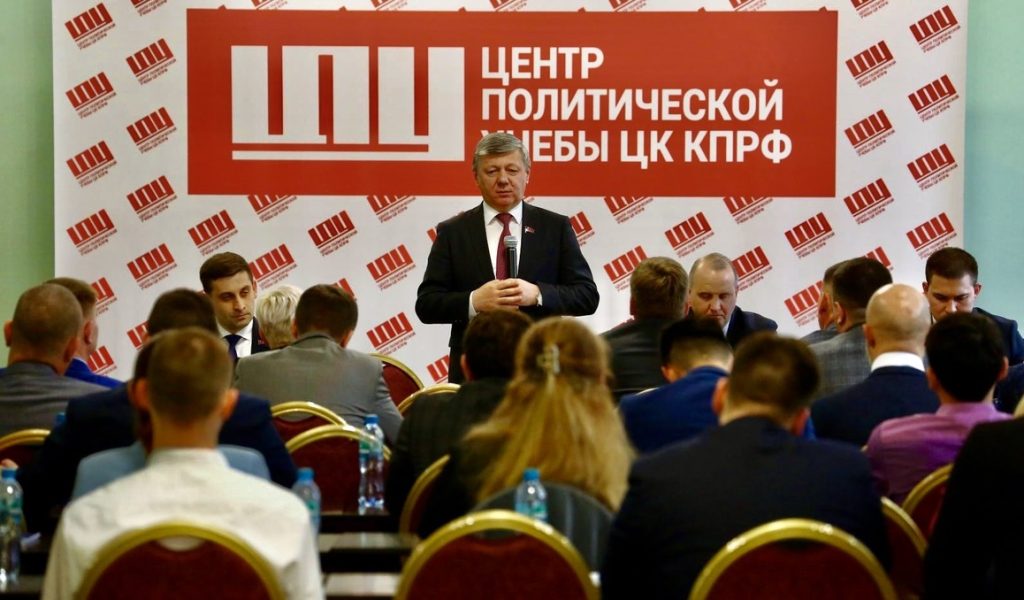
The Center for Political Studies is also developing. In March, we conducted two training streams under new programs. We continued last year’s new project — the Krasnaya Tribuna. It is intended for our already established comrades. These are heads of regional party media, secretaries of various levels, communist deputies. Some had previously completed a two-week basic educational course, which has been the foundation for many years. Now they come to study under a special weekly program.
Krasnaya Tribuna is focused on mastering oratory skills, on the ability to convey our collective position. The classes are conducted by a wide range of people — party members and non-partisans, university teachers and politicians. A significant part of the invited lecturers have become our friends and colleagues.
As for old and new media, it must be understood that the resources of any party are limited. Even United Russia’s. The lack of funds for the CPRF, of course, has an impact. We would like to increase newspaper circulation, expand the editorial staff of our media, and attract as many talented people as possible to professional work. But even under these conditions, we do not intend to confine ourselves to certain types of agitation.
During discussions, including at plenums of the Central Committee, we came to the conclusion: the CPRF will not choose one “winning” means of agitation. We must use all methods of conveying our position. Each means of communication has its own characteristics and its own audience.
There were times when some thought that the blogosphere was where we should throw all our efforts. But when the Special Military Operation began, access to the internet became difficult in frontline areas. Yet people’s desire to receive information did not disappear. The importance of the printed word grew significantly.
During the period of the Donetsk and Lugansk People’s Republics joining Russia, a special period arose in the lives of their populations. People needed to understand what their fate would be now, what the political forces of Russia were offering, what the communists were saying. The demand for our newspapers *Pravda* and *Soviet Russia* became very high there.
By the way, the printed word is trusted more than the spoken word. When you write a text, you think it over, verify it, concentrate your attention. An oral speech is not always prepared so carefully. As they say, manuscripts do not burn. It is not by chance that the proverb arose: “What is written with a pen cannot be cut out with an axe.”
You will be judged for a long time by what you have written — your literacy, intelligence, style and way of thinking. Oral statements are much easier to replace with something else. Zhirinovsky is a striking example of how one can say mutually exclusive things time after time. And there will be people who will not only not condemn him for this, but will elevate him to prophet. Vulgar, of course, but it partially works.
When Krasnaya Liniya was being created, the question arose: should we go entirely into this television project? Should we abandon leaflets or newspapers? No and again no! All of them have their own audience — newspapers, bloggers, magazines, social media pages. Good posters that convey your position in the language of images are also valuable. It’s just that nowadays a poster can be placed on a bulletin board, or it can be distributed via the Internet. There is not a single form of agitation that can be safely ignored.
Parties are created to fight for power. If a party has forgotten about this and turned into an interest club, it has lost its original meaning. As a party, it withers and dies. To implement its program, a party needs to gain control of the levers of power. Therefore, you fight to have as many supporters as possible. For this, you use a wide palette of means.
The CPRF is very effective in social networks. Many of our comrades are involved in this work. Its central link is the CPRF Central Committee Commission on Internet Technologies, headed by Marat Muzaev. The results he has achieved allow other comrades to learn to act more and more effectively. In many regions, this is well understood. Nikolai Bondarenko, who lives in Saratov, has accumulated interesting experience. His approaches also deserve attention.
The effectiveness of our work in social networks is determined by the chosen strategy. We do not engage in cheating. You can have 100 thousand subscribers on Telegram, but if your materials have gathered a dozen reactions in a week, you are dealing not with live subscribers but with bots. This self-deception is not interesting to us.
The meaning of politics is to work with living people, not with bots. Bots will not come to vote, will not go out to distribute newspapers, will not become observers at polling stations. There were visitors who offered us other approaches, but that was rejected. Gennady Zyuganov, as the party leader, supported our approach. The path of fraud is meaningless.
You are a candidate of historical sciences, author of works on the formation of the intelligentsia. Is the intelligentsia in Russia today a support of the state or an “eternal oppositionist”?
Dmitry Novikov: To reflect on this topic, we need to define what the intelligentsia is. Some phenomena are easily expressed in terms, others are not. Marxist methodology actively uses the concepts of “classes” and “social groups.” Belonging to a class is connected with one’s place in the system of production relations: feudal lord, capitalist, peasant, worker. With the intelligentsia it is more complicated. The owner of a magazine or printing house can participate in the creative process and simultaneously exploit employees and printing workers.
The intelligentsia is not a class. An intellectual is a person who combines different functions. Take a university teacher for example. He can both give lectures, engage in educational work, lead clubs, conduct scientific activities, and perform administrative functions at the dean’s office, department, or rector’s office.
There are more than 350 definitions of the term “culture.” And they all have their differences. The same with the intelligentsia. Very often, it is precisely the bearers of culture that are classified as intelligentsia.
In the Russian tradition at the turn of the 19th–20th centuries, there was an opinion that the intelligentsia exists only in Russia, although the word itself came from Europe. But in European languages, it emphasizes high mental abilities, education, a high intellectual level. It often indicates professional realization outside material production.
In Russia, however, they persistently tried to give a special characteristic of intelligence, to highlight special personality traits. In our tradition, the intelligentsia is not only people of mental labor, but also those who empathize with the fate of their people. This is very characteristic of Russian culture.
The study of the intelligentsia is an example where the philosophical component is strong in historical research. But even then we need sociological parameters. If we do not use them, we will not be able to describe the phenomenon. This is the complexity of research on the Russian intelligentsia. On the one hand, we need to define the parameters of the phenomenon and take into account numerical data. On the other hand, we must take into account how the intellectual is perceived in social and spiritual life.
I often recall my teachers. Among them were those for whom the historical process was a reason for philosophical reflection. For others, the study of history was determined by a subject analysis of data — facts, dates, numbers, their comparison. Both concepts are important. When you combine them together, historical science becomes even more interesting.
If you were invited to give a lecture to students on how to build a career in politics, what would be your main advice?
Dmitry Novikov: I would recommend not building a career in politics. Something else is needed here — to realize yourself in accordance with your convictions. If you have convictions, then you will achieve something. A circle of people will certainly appear in which you will be your own, where you will be recognized and appreciated.
You can act differently — imitate convictions for the sake of a career. Something may work out. Many view politics as a sphere of endless manipulation and opportunism. But opportunists manifest themselves in different spheres, not only in politics. At the same time, they are not the ones who achieve the greatest heights.
Remember Vereshchagin from “White Sun of the Desert”? And his sacramental: “I don’t take bribes. I feel sorry for the country.” In the film, Vereshchagin dies. But it is not difficult to imagine his fate if he had remained alive. Service to Soviet power would have been natural for him. No wonder he liked Petrukha so much — that representative of the first generation of red youth. But who would dare to reproach Vereshchagin for opportunism? Only people with unhealthy minds. Vereshchagin is sincere in his service. Service to the Fatherland.
Of course, there will also be those who want to declare Talleyrand a hero. In his person, they will paint the image of someone who fully served France under very different regimes. But that is nonsense. He served himself. He built a career. In short, not Vereshchagin. It seems like a fine line, but an important one. A fundamental one. Like between our culture and the European one.
Talleyrand is definitely not my hero. To me, he is an extremely unpleasant type. In politics, you need not to build a career, but to live, to realize yourself and your convictions. And also to understand that you cannot achieve success alone. Of course, there are plenty of individualists in politics, but even the smartest among them understand the importance of teamwork.
An artist or sculptor realizes personal talent. Collective forms of labor are not entirely characteristic of art. Individual work is a priority here. There is, of course, the example of the Kukryniksy, but that is rather an exception.
Politics is a different sphere. In it, success is achieved collectively. Especially if you stand on communist, left-wing positions. Collectivism is inherent in the very nature of the left movement.
Do you, as First Deputy Chairman of the State Duma Committee on International Affairs and a person under sanctions by dozens of countries, feel like a “persona non grata,” or is it rather a badge of honor?
Dmitry Novikov: If you have convictions or a political stance, what difference does it make whether you are included in someone else’s sanctions lists or not? My workload has not decreased.
I know many people from different countries around the world. For example, I have friends in Cuba. It may seem like a small country, yet even there you find differences—between Havana, Santa Clara, and Santiago de Cuba. And that is within a country of just 10–11 million people. Russia, by contrast, is vast. We have plenty of places to travel within our own country. The only thing one might regret is that a lifetime is not enough to visit every corner of our homeland.
Yes, there are countries whose authorities do not wish to see us. They impose sanctions. But in most states, Russian citizens are welcomed. I have most often visited China. It is like an entire planet. Even having come to know the PRC quite well, I would not dare say that I fully understand it. Even sinologists who have devoted their entire lives to studying China do not know everything about it. That gives you a vast field for exploration.
Fascinating processes are unfolding in Asia, Africa, and Latin America. Europe and the United States are too familiar to us—their history has always been at the center of attention in our education system. But how much do we really know about India and Brazil? About Pakistan and Bangladesh? About Uruguay, South Africa, Paraguay, Nigeria? Many people have only fragmentary knowledge of these countries. Yet they represent the global majority, and important developments are taking place there. Economic growth there is often higher than in Europe and the United States. Their economic structures, as well as social and cultural life, are changing more rapidly.
The world is vast. We are developing international ties both through parliamentary and party channels. However, the Russian state has many shortcomings in studying other countries and macro-regions. We need new institutions, research centers, and expert groups. This will help in making sound state decisions.
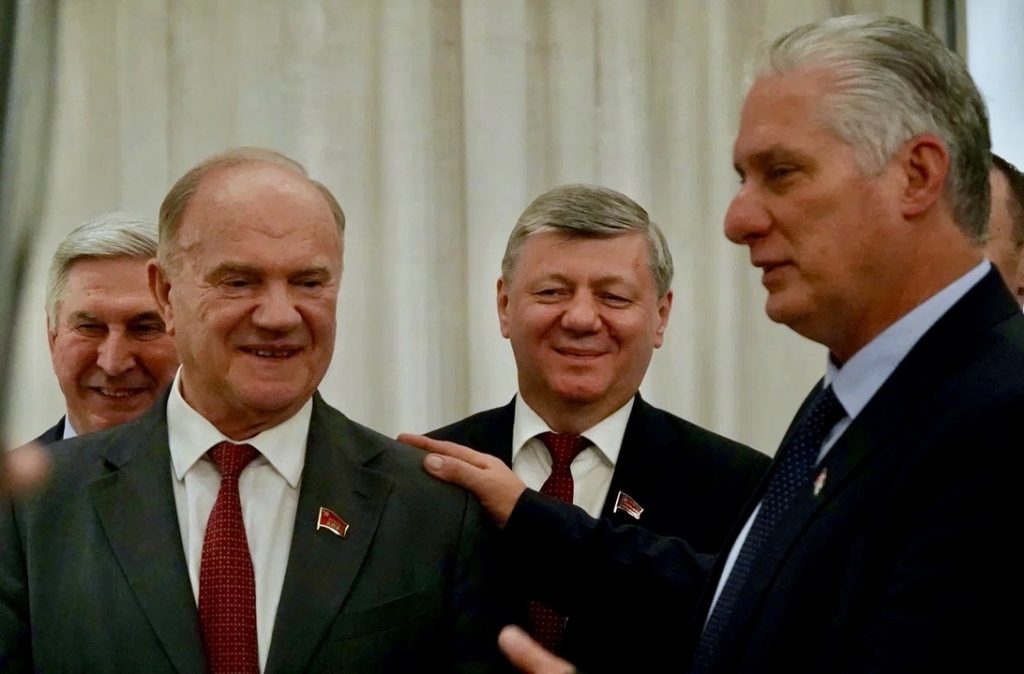
It is far from sufficient to build foreign policy based solely on general notions of national interest and personal relations between leaders. It is good that Vladimir Putin and Xi Jinping have a high level of mutual understanding. But this alone is not enough to implement a long-term and successful strategy of interstate cooperation.
You may have an excellent Foreign Ministry and a successful foreign minister, but if state decisions are made without relying on science and the expert community, there will inevitably be failures. We lack research institutions focused on India, China, Africa, and Latin America. And do not the processes in Central Asian countries require careful and thoughtful study?
So it would be strange to suffer from being included in sanctions lists and being unable to travel to Europe. I have already visited a number of its countries. I understand Europe’s life and structure well enough. Yes, I would perhaps like to visit Munich, for example—the city is closely connected with the revolutionary movement. But who knows—perhaps I will still go there someday.
The Communist Party of the Russian Federation is part of the international left-wing movement. What stage is it currently in—decadence, renaissance, or a transitional phase?
Dmitry Novikov: The international left-wing movement has not yet fully realized its potential. Whether this stage will prove to be a turning point cannot be determined today. The historical process continues. Today’s assessments will be made in the future. If someone manages to formulate them now, they will be called a prophet—but in reality, they will simply have guessed correctly.
The left-wing movement, having gone through serious trials at the turn of the 20th and 21st centuries, has survived. It still needs to refine its goals for the next stage of struggle. The left-wing movement is about socialism. Once you lose sight of its goals, the activity itself becomes meaningless.
Today, discussions are ongoing within the movement. For example, not all communist parties assess the Chinese experience in the same way. Some consider it an unquestionable example of socialist success—this is also the position of the CPRF. Others, albeit a minority, refuse to regard China as a classical socialist country. They believe that in its pursuit of economic development, Beijing has become overly entangled with capitalist market mechanisms.
Yes, China has used market tools and attracted investment from Western companies. So what? Was not Lenin’s New Economic Policy a way of using similar mechanisms? Did not Stalin attract Western engineers and capital for industrialization? Does this call into question the fact that Stalin was a communist building socialism?
Each side simply had its own interests. Capitalists from the United States cooperated with the USSR because of the Great Depression—they wanted to invest and earn profits. The Soviet Union provided clear rules of the game. A planned economy gave predictability: what you would do tomorrow and what profits you would receive. If the Stalinist government guaranteed something, it was fulfilled. No one in Moscow would later say: “We have a market; circumstances have changed.”
Before building a prosperous socialist state, one must solve many practical tasks. Chinese communists had to feed a vast population. Emerging from semi-colonial conditions and, together with the USSR, defeating Japan, the Chinese nation was extremely poor. Addressing this problem was a task of historic magnitude.
By the centenary of the Communist Party of China, Beijing set the goal of eliminating mass poverty. This “first centenary goal” has now been achieved. By the mid-21st century, marking 100 years since the founding of the PRC, China aims to build a developed, prosperous socialist state. One of Xi Jinping’s major achievements is that the goal of making China wealthy and its people well-fed has been accomplished. If some are not yet aware, the average salary in China today is higher than in Russia.
Now that basic issues have been resolved, the CPC is strengthening the socialist character of the state. This is evident in constitutional changes, party congress decisions, and the topics discussed by scholars. For over fifteen years, the Chinese Academy of Social Sciences has held an annual World Socialism Forum. The CPRF always participates. The range of issues discussed shows that the country is firmly advancing along the path of socialism.
Unlike the CPSU under Nikita Khrushchev, the Chinese never planned to build communism in 20–30 years. They understand that even building socialism is a long process. But they are moving forward, increasingly successfully. China is becoming a flagship of global economic development. Its competition with China explains much of U.S. policy on the world stage.
How do you assess the balance of power in light of the war in Iran? Does Russia benefit from it, as some in the West claim, or are conflicts near its borders always a risk?
Dmitry Novikov: The United States seeks to deprive China and Russia of allies. Strikes against Venezuela and Iran, threats against Cuba—all of this is aimed at eventually turning against us. Washington believes it has no alternative path if it wants to preserve its hegemonic position.
Communists understand this imperialist logic well. We discuss global trends in both bilateral and multilateral formats. Bilateral ties involve strengthening relations between the CPRF and communist parties in China, Cuba, Spain, Italy, South Africa, and others. Our foreign comrades frequently visit us at the Central Committee and in the CPRF faction in the State Duma.
There are also multilateral formats. Since the mid-1990s, annual Meetings of Communist and Workers’ Parties have been held. Their purpose is to exchange information and develop common approaches. Synchronizing positions helps us move forward.
In the post-Soviet space, the Union of Communist Parties—CPSU operates, chaired by Gennady Zyuganov. This is another example of multilateral cooperation. Communist parties are active in Belarus, Georgia, Armenia, and other former Soviet republics.
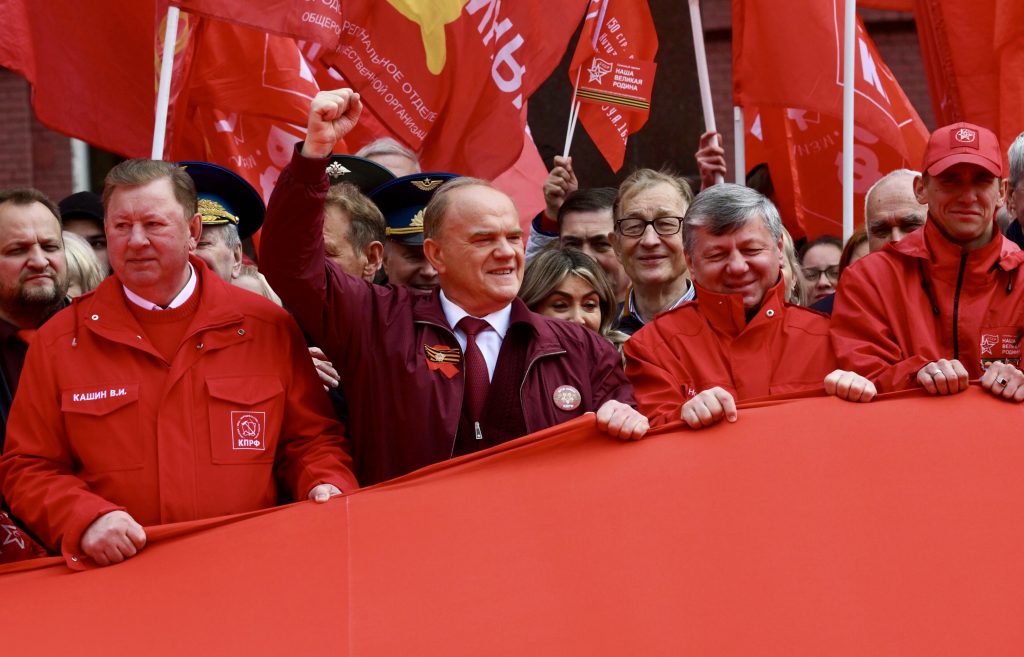
Three years ago, the communist parties of Russia and Belarus initiated International Anti-Fascist Forums. Two have already been held—in Minsk and Moscow. Last year, this work continued with an International Anti-Fascist Media Forum. Participants include communist, socialist, workers’ parties, and anti-fascist organizations—for example, the Nicaraguan Sandinistas.
A third International Anti-Fascist Forum is planned for late May in Moscow. This time, special attention will be paid to terrorism. Unfortunately, this phenomenon is widespread in a world dominated by imperialism.
Western analysts argue that Moscow is gaining an “Iran dividend,” strengthening its position in the oil market and its leverage over Europe. Do you agree?
Dmitry Novikov: Marxism is strong in its dialectics—it teaches us to view any phenomenon within a system of interconnections. What brings situational benefits today may turn into problems tomorrow. This must be kept in mind when assessing developments in Iran.
The United States has embarked on a serious adventure. Iran has proven capable of resisting aggression far more effectively than Washington expected. Energy prices have risen. This distracts Europeans from the Ukrainian issue, yet NATO’s support for Kyiv has not disappeared.
At present, the intervention has not led to the destruction of Iranian statehood, as happened in Iraq or Libya. However, if the United States continues its strikes or deploys new military bases in the Middle East, this will worsen the international climate. Prospects for resisting further aggression by the leading global power will weaken. This will not strengthen BRICS or the SCO.
Yes, there may be short-term, situational benefits for Russia from rising oil prices. If we are talking about oligarchs trading oil, they will make their profits. But any aggression against our friends and allies, against supporters of a just world order, is a long-term threat to Russia. It should be viewed as such. That is how I perceive the situation in Iran. The courage of the Iranian people in resisting aggression today is defending the entire world.