
Realist: news and analytics

Русский / English / العربية

  • News
  • Russia
  • Caucasus
  • Opinion
  • Interviews
  • Experts
No Result
View All Result
Realist: news and analytics
  • News
  • Russia
  • Caucasus
  • Opinion
  • Interviews
  • Experts
No Result
View All Result
Realist: news and analytics

Strait of Hormuz disruption sends shockwaves through global trade

Missile threats, surging insurance costs and halted shipping routes threaten supply chains and fuel prices.

   
March 16, 2026, 15:03
Business & Energy
Strait of Hormuz disruption sends shockwaves through global trade

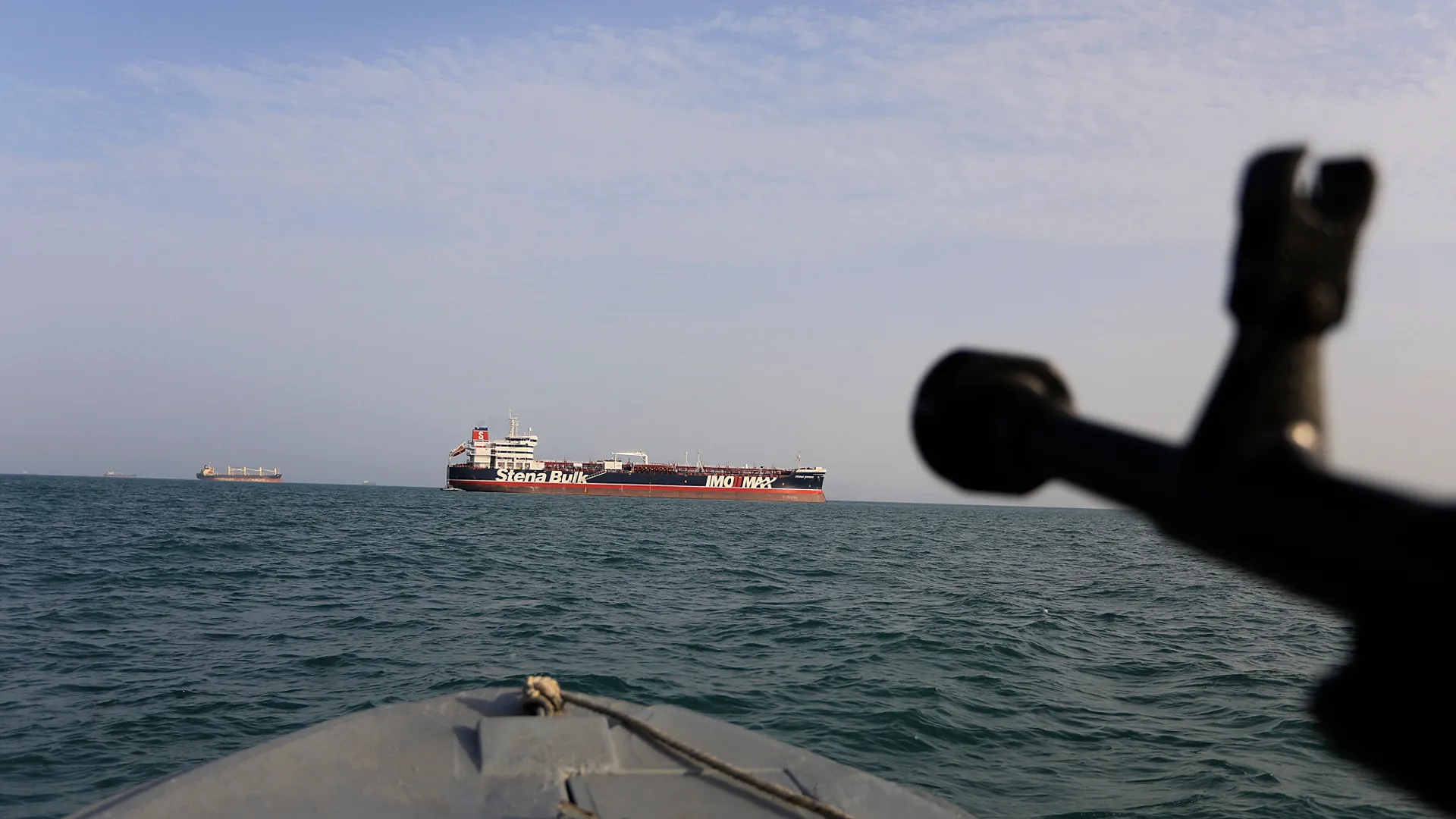
LONDON (Realist English). Escalating military tensions around the Strait of Hormuz are rapidly disrupting global shipping and energy markets, as missile threats and soaring insurance costs force vessels to suspend or reroute voyages through one of the world’s most important trade corridors.

The narrow waterway linking the Persian Gulf to the Gulf of Oman normally handles about 20% of global oil shipments and roughly 30% of the world’s fertilizer trade.

But as the war involving Iran enters its third week, the strait has become a central flashpoint where economic pressure and military confrontation are colliding.

“What was once a disruption-sensitive environment has now become a persistently hostile operating zone,” said Marco Forgione, director of the Chartered Institute of Export and International Trade. “Voyage feasibility, insurance acceptance and real-time security conditions are now major constraints.”

Despite U.S. assurances that steps are being taken to stabilize the route, hundreds of tankers and cargo vessels remain anchored on both sides of the strait.

Insurance costs surge

Shipping through the region has become dramatically more expensive as insurers reassess the risks.

War-risk insurance premiums for ships transiting the Persian Gulf have increased by roughly 200% to 300% since the conflict began.

Before the crisis, insurance for a vessel passing through the region typically cost between 0.02% and 0.05% of a ship’s value.

Since hostilities escalated, premiums have jumped to 0.5% to 1% or more.

For a tanker valued at about $120 million, that means a voyage that previously cost roughly $40,000 in insurance can now exceed $600,000 to $1.2 million for a single trip.

The surge in costs is expected to ripple quickly through global supply chains.

“These pressures have already driven tanker freight rates higher,” Forgione said. “As those costs move through refining and logistics networks, consumers will feel the impact through rising fuel and product prices.”

Shipping companies alter routes

Major global shipping firms including Maersk, MSC, CMA CGM and Hapag-Lloyd have either suspended voyages through the Gulf or diverted cargo away from the Strait of Hormuz.

Alternative routes are limited due to the geography of the Persian Gulf, forcing companies to carefully weigh operational risks.

Christopher Long, director of intelligence and risk at Neptune P2P Group and a former British naval officer, said shipping companies are now integrating geopolitical risk into everyday operational planning.

This includes monitoring threat intelligence, adjusting transit schedules and ensuring crews have updated security procedures.

“Companies are reviewing contingency plans, crew preparedness and communication protocols so vessels can respond effectively if conditions deteriorate further,” Long said.

Supply chains under pressure

Experts say the situation highlights the need for stronger supply-chain resilience.

Forgione said companies must reduce dependence on single trade routes or suppliers and diversify sourcing to withstand disruptions.

“When disruptions occur, firms with multiple sourcing options are better insulated and can adapt faster,” he said.

Greater transparency across supply chains is also critical, allowing businesses to identify vulnerabilities before they escalate into major disruptions.

Naval escorts under discussion

In response to growing security risks, the United States has pledged to escort tankers through the Strait of Hormuz.

President Donald Trump has urged major energy-importing countries — including China, Japan, South Korea, France and the United Kingdom — to deploy naval forces to help secure the shipping lane.

However, analysts say naval patrols alone may not eliminate the risks.

Even with escorts in place, companies are likely to continue treating the strait as a high-threat environment, Long said.

Iran has repeatedly warned that vessels attempting to transit the area could face attacks, reinforcing uncertainty for shipping companies.

Global economic implications

At least 16 commercial vessels have been attacked or damaged since the conflict began, and prolonged disruption in the strait could have major consequences for the global economy.

Economists warn that if the crisis continues, the effects could extend far beyond energy markets and last for years.

Forgione said governments and businesses should treat economic security as a strategic priority.

“Strengthening supply-chain resilience is no longer optional,” he said. “It is a strategic necessity.”

Iran WarMiddle EastMost Popular
Previous Post

Lavrov warns strikes on Iran undermine nuclear non-proliferation regime

Next Post

U.S.–Iran backchannel reopens amid war

Related Posts

Eurozone economy slows to 0.1%, inflation hits highest since September 2023
Business & Energy

Eurozone economy slows to 0.1%, inflation hits highest since September 2023

30 April, 2026
Brent hits highest since 2022, breaking above $123: chronicle of price shock from closed Strait of Hormuz
Business & Energy

Brent hits highest since 2022, breaking above $123: chronicle of price shock from closed Strait of Hormuz

30 April, 2026
Oil blockade strangles Iran: production falls to 3 million barrels per day, gas sector cracking at the seams
Business & Energy

Oil blockade strangles Iran: production falls to 3 million barrels per day, gas sector cracking at the seams

29 April, 2026
UAE leaves OPEC from May 1: oil jumps to $111
Business & Energy

UAE leaves OPEC from May 1: oil jumps to $111

28 April, 2026
War crushes Iran’s economy: 23,000 enterprises destroyed, millions unemployed, inflation at 72%
Business & Energy

War crushes Iran’s economy: 23,000 enterprises destroyed, millions unemployed, inflation at 72%

28 April, 2026
Oil prices rise: Brent at $107, Urals at $95
Business & Energy

Oil prices rise: Brent at $107, Urals at $95

27 April, 2026
Most Popular
Most Popular
Azerbaijan provided its territory for strikes on Iran: source

Azerbaijan provided its territory for strikes on Iran: source

26 April, 2026

MOSCOW (Realist English). Iranian sources claim that Azerbaijan has provided its territory for strikes against the Islamic Republic, and this information...

155 billionaires vs. 150 million people: Zyuganov on the social catastrophe in Russia

155 billionaires vs. 150 million people: Zyuganov on the social catastrophe in Russia

25 April, 2026

MOSCOW (Realist English). Chairman of the Central Committee of the Communist Party of the Russian Federation Gennady Zyuganov presented the pre-election program "Victory...

‘Behind dry laws are living people and destinies’: Lawyer Narek Petrosyan on replacing justice with convenience

‘Behind dry laws are living people and destinies’: Lawyer Narek Petrosyan on replacing justice with convenience

25 April, 2026

MOSCOW (Realist English). Narek Petrosyan is a criminal defense lawyer who made himself. He overcame many obstacles on his path to the...

«The Kurdish card is a weapon of major powers»: Yaşar Yakış on why Turkey missed its chance to solve the Kurdish issue

«The Kurdish card is a weapon of major powers»: Yaşar Yakış on why Turkey missed its chance to solve the Kurdish issue

18 April, 2026

ANKARA (Realist English). Yaşar Yakış — a Turkish diplomat and statesman who served as Turkey's Minister of Foreign Affairs, ambassador to Saudi...

Opinion

Merz vs Macron: how German military spending is splitting the EU

Merz vs Macron: how German military spending is splitting the EU

30 April, 2026

BERLIN (Realist English). Less than a month after historian Liana Fix published an essay on the "perils of German power", she received an...

The Great Divide: Capitalism and Socialism in the Battle for Humanity’s Future

The Great Divide: Capitalism and Socialism in the Battle for Humanity’s Future

29 April, 2026

MOSCOW (Realist English). The world economic system has reached a point of no return. The conflict between the classic market model...

A century of violence from the Jeddah massacre to the killings in Kobani: how Turkey exterminated Arabs

A century of violence from the Jeddah massacre to the killings in Kobani: how Turkey exterminated Arabs

27 April, 2026

ISTANBUL (Realist English). The long and bloody history of the Turkish state's relations with the Arab population — both Muslim and...

US-Iran talks collapse, Netanyahu orders strikes on Hezbollah

US-Iran talks collapse, Netanyahu orders strikes on Hezbollah

25 April, 2026

TEHRAN (Realist English). The outgoing week saw the complete breakdown of US-Iranian peace talks mediated by Pakistan, alongside a parallel escalation...

All rights reserved.

© 2017-2026

  • About Us
  • Mission and Values
  • Contact Us
  • Privacy Policy

Follow Realist English

No Result
View All Result
  • News
  • Russia
  • Caucasus
  • Opinion
  • Interviews
  • Experts

Русский / English / العربية