

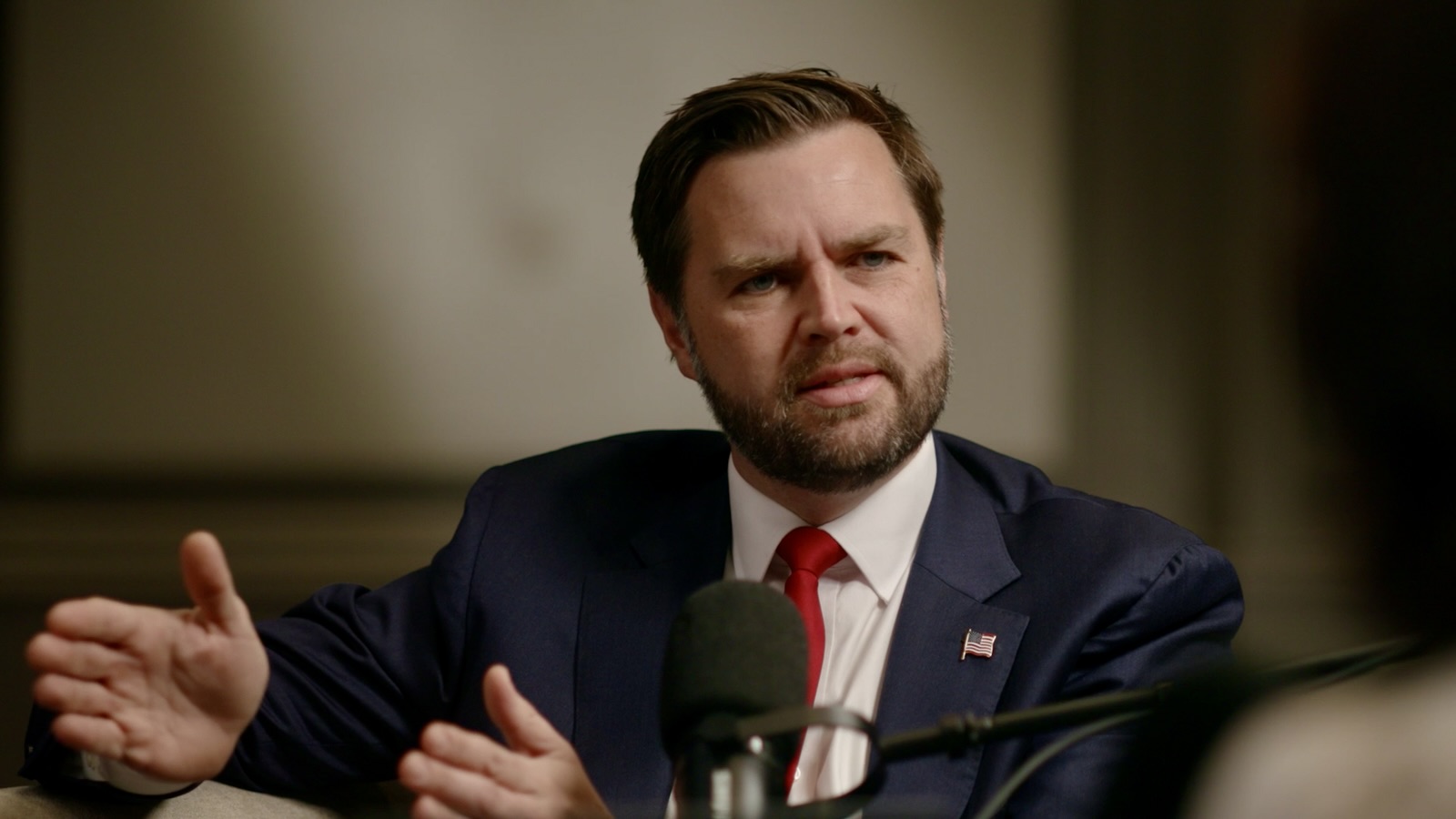
ISLAMABAD (Realist English). The American delegation, headed by Vice President JD Vance, is arriving in Islamabad for negotiations with Iran, the goal of which is to reach an agreement to end the war that has lasted more than five weeks. Vance expressed hope for constructive dialogue but also warned that the United States would not tolerate being played.
Ghalibaf sets preconditions
Hours before the scheduled start of talks on April 11, Mohammad Bagher Ghalibaf, Speaker of the Iranian Parliament and one of the country’s key military leaders, wrote on social media platform X (blocked in Russia): “These two conditions must be fulfilled before negotiations begin.”
He demanded that Israel halt its attacks on Iran-backed Hezbollah in Lebanon and that the US unfreeze Iranian overseas assets. Diplomats, however, believe the talks will still take place despite these statements.
Trump: “Iran is only alive to negotiate.”
US President Donald Trump reacted to Tehran’s threats on his Truth Social platform: “The Iranians don’t seem to realize they have no cards, other than short-term extortion of the World by using International Waterways. The only reason they are alive today is to negotiate!”
Vance, commenting on his trip, said: “If the Iranians are willing to negotiate in good faith, we’re certainly willing to extend the open hand. But if they’re going to try to play us, then they’re going to find the negotiating team is not that receptive.”
Historic format and composition of delegations.
If the talks go ahead, Vance would be the highest-ranking US official to engage in direct talks with Iran since the 1979 Islamic revolution. The US delegation also includes Trump’s envoy Steve Witkoff and the president’s son-in-law Jared Kushner.
Iran has not yet confirmed that it is sending a delegation, but Pakistani officials expect it to be led by Ghalibaf and Foreign Minister Abbas Araghchi, a veteran nuclear negotiator. Ghalibaf’s participation — a conservative close to the elite Islamic Revolutionary Guard Corps but also considered a pragmatist — would mark the highest-level Iranian representation at talks with the US in decades.
Fragile ceasefire and contradictions
The two-week ceasefire announced on April 8 took effect, but its terms are being interpreted differently by the parties. Particular confusion arose over a 10-point Iranian plan delivered through Pakistani mediators. Trump called it a “workable basis” for talks, but Tehran and Washington appear to be relying on different versions of the document.
Tensions soared after Israel launched massive strikes on Lebanon on April 9, killing more than 300 people. Iran said this was a violation of the ceasefire, insisting that Lebanon was supposed to be included in the agreement. The Trump administration and Israel say otherwise, despite Pakistan — the main mediator — having publicly stated that Lebanon was part of the arrangement.
In response to the strikes on Lebanon, Tehran announced a halt to tanker traffic through the Strait of Hormuz, pushing oil prices back above $100 per barrel. Iran also signaled that it intends to continue charging fees for ships transiting the strait, through which about a fifth of the world’s oil and gas normally passes.
Trump’s pressure on Netanyahu and continued shelling
As Israel’s attacks on Lebanon threatened to derail the truce, Trump called Israeli Prime Minister Benjamin Netanyahu and told him to scale back the strikes against Hezbollah. After the call, Netanyahu said he had authorized Israel to open talks with Lebanon.
However, on April 10, Israeli forces and Hezbollah continued to exchange fire, although there were no strikes on Beirut. On Friday, April 10, Israel struck a local government building complex in the southern city of Nabatiyeh, killing at least 11 members of the state security forces.
Diplomats: Iran still wants a deal
A diplomat briefed on the talks noted that the fact that Iran did not respond militarily to Israel’s bombardment of Lebanon suggests it still wants a deal with the US. “This would have been an opportunity for them to break it, it was the biggest test,” the diplomat said. “But there’s a big risk that if the talks don’t work, it could go back to war. It’s a very dangerous time right now.”
Supreme leader’s position and key US demands
Iran’s Supreme Leader Ayatollah Mojtaba Khamenei, who has not been seen or heard publicly since before the war began, signaled his support for the talks in a statement on April 9. He urged his supporters to continue rallying in main squares, describing this as “a time of silence on the battlefield” while the country engages in “talks with the enemy.”
Beyond demanding free shipping through the Strait of Hormuz, the US delegation intends to push Iran to give up its uranium enrichment capability (which Tehran rejects) and agree to dilute its stockpile of 440 kg of uranium enriched close to weapons grade. Trump said this week that the US would work with Iran to remove the “deeply buried” nuclear “dust” and is discussing sanctions relief.
What Iran wants
Tehran, for its part, demands the unfreezing of tens of billions of dollars of its oil revenues held overseas — including $6 billion in Doha that the Biden administration promised to release as part of a 2023 prisoner swap deal. Iran needs reconstruction and to manage growing social pressure.
Its insistence that Lebanon be included in the ceasefire and that Israel halt its attacks on Hezbollah is also a key demand. (The Iran-backed militant group began firing missiles at Israel in solidarity with Tehran after its supreme leader, Ayatollah Ali Khamenei, was killed in an airstrike.)
Direct bilateral talks between the US and Iran have never taken place — former president Hassan Rouhani held a phone call with Barack Obama after Iran sealed a nuclear accord with world powers in 2015, a deal Trump abandoned during his first term.