
Realist: news and analytics

Русский / English / العربية

  • News
  • Russia
  • Caucasus
  • Opinion
  • Interviews
  • Experts
No Result
View All Result
Realist: news and analytics
  • News
  • Russia
  • Caucasus
  • Opinion
  • Interviews
  • Experts
No Result
View All Result
Realist: news and analytics

“Ceasefire is temporary and conditional”: why reopening the Strait of Hormuz won’t solve shipping woes and high oil prices

Ship owners are not risking entering the Persian Gulf, fearing that the fragile ceasefire could collapse, while empty tankers would need to return to pick up new cargo. Experts warn: the backlog of 400 oil tankers and 100 container ships could take until July to clear, and US gasoline prices will remain high for a long time.

     
April 12, 2026, 14:39
Business & Energy
“Ceasefire is temporary and conditional”: why reopening the Strait of Hormuz won’t solve shipping woes and high oil prices

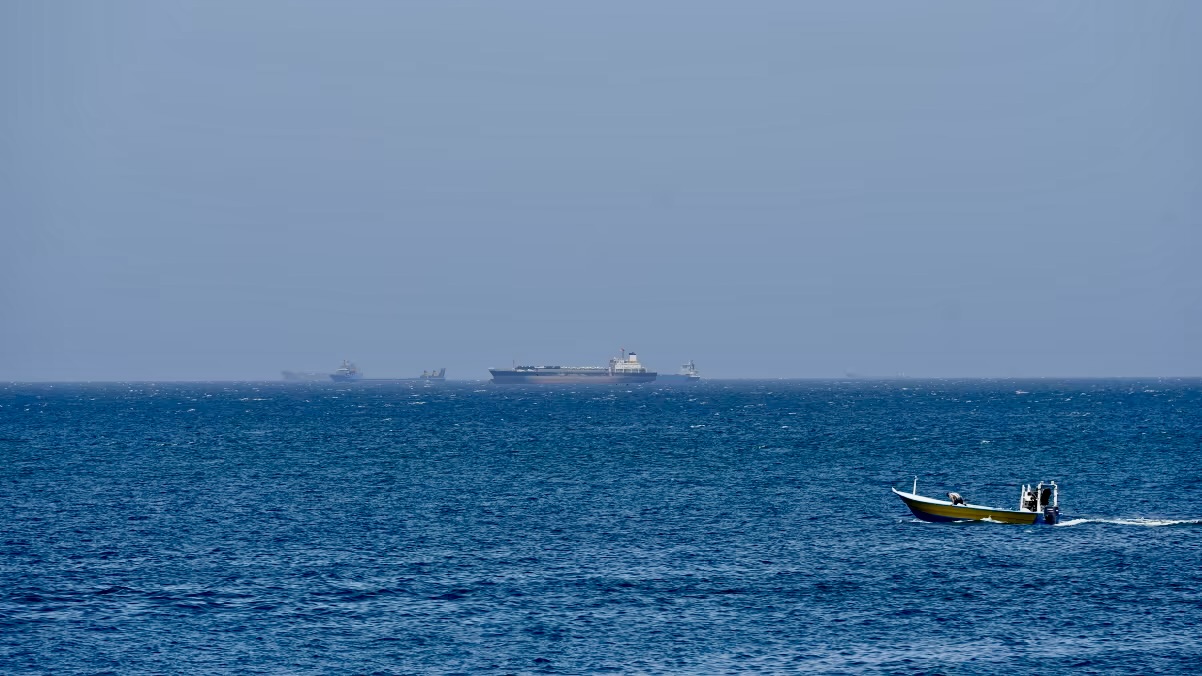
Vessels off the coast of Musandam Governorate, overlooking the Strait of Hormuz, in Musandam province, Oman, April 8, 2026. Photo: Reuters

NEW YORK (Realist English). The fragile two-week ceasefire between the United States and Iran, announced on April 8, is not giving ship owners the confidence to return to the Strait of Hormuz — the key waterway through which 20% of global oil supplies pass, CNN reports.

Even if the strait officially reopens, experts warn that the economic consequences of the war will be felt for many months, and a return to normal shipping could take up to six months.

“Almost no one feels confident enough.” 

Despite US President Donald Trump’s statements that the strait is open, only a handful of vessels have passed through in the days since April 8. According to data from analytics platform Kpler, only two oil or gas tankers have transited the strait since the ceasefire was announced. Meanwhile, more than 400 crude oil tankers, 34 LPG carriers and 19 LNG vessels remain in the region, MarineTraffic reports.

“Almost no one feels confident enough to transit the strait,” said Matt Smith of Kpler. Typically, more than 100 tankers pass through the Strait of Hormuz daily, but that number has now dropped to 10 or fewer.

Lale Akoner, a global market analyst at eToro, noted: “A two-week ceasefire that is fragile — I don’t think that would give ship operators the confidence they need.” In her estimation, restoring shipping to pre-war levels could take up to six months.

The problem is not just getting out, but getting back in 

The main difficulty, experts say, is not only letting the trapped vessels out, but also getting empty tankers to re-enter the strait to load new oil cargoes. Smith explained that about 400 loaded oil tankers are waiting to exit the Persian Gulf, but only about 100 empty vessels are ready to enter. Even if the strait opened today, normalizing oil flows would take until July.

Peter Tirschwell, vice president for maritime and trade at S&P Global Market Intelligence, added that about 100 container ships are waiting to exit, but virtually no empty vessels are ready to enter. That means 30% of the world’s fertilizer supplies, normally shipped from the region, could be stuck for months, as shipping by sea is the only way to move them. “The capacity does not exist to easily reroute those cargoes,” he stressed.

Iran charges fees, ship owners wait for first movers 

The situation is aggravated by Iran’s stance. Iran’s Islamic Revolutionary Guard Corps (IRGC) charges passing ships up to $2 million per tanker, with payment accepted in Chinese yuan or cryptocurrencies, bypassing the dollar-based financial system and US sanctions. Even Trump himself has floated the idea of a toll as part of a “joint venture” with Iran.

Ship owners, according to Sanne Manders, president of global logistics company Flexport, have “no information” on how to transit during the ceasefire and are not in contact with Iranian authorities. “They are basically waiting until others test the passage,” Manders said. He predicted that tankers and vessels of Chinese origin would likely test the waters first (China is an ally of Iran).

Consequences for ordinary Americans

The real impact is already being felt at the pump. According to AAA, average US gasoline prices have risen 40% since the start of the war — up $1.18 per gallon, reaching $4.17. Returning to pre-war levels of around $3 per gallon, analysts say, is a distant prospect even if oil begins to flow freely again.

Joe McMonigle, president of the Global Center for Energy Analysis, warned: “If this continues for another week or two, the consequences not just for energy prices but for the global economy are dire. This is a very tenuous ceasefire.”
Iran WarIran’s Foreign PolicyStrait of HormuzTransport And CommunicationsUS-Iran Relations
Previous Post

Peskov: Russia ready to supply gas to EU if surplus remains after other markets

Next Post

76% of Armenian citizens live in poverty — World Bank

Related Posts

Global Coal Prices Hit Record Highs While Russia Suffers Losses
Business & Energy

Global Coal Prices Hit Record Highs While Russia Suffers Losses

29 May, 2026
Oil Drops Below $95: Market Awaits Reopening of Hormuz Despite US Strikes on Iran
Business & Energy

Oil Drops Below $95: Market Awaits Reopening of Hormuz Despite US Strikes on Iran

28 May, 2026
Canada and Germany Sign Major LNG Deal Worth $7.3 Billion
Business & Energy

Canada and Germany Sign Major LNG Deal Worth $7.3 Billion

27 May, 2026
Uzbekistan returns to global gold market: exports reach $1.5 billion
Business & Energy

Uzbekistan returns to global gold market: exports reach $1.5 billion

26 May, 2026
Oil Plunges 6% Amid Possible US–Iran Deal
Business & Energy

Oil Plunges 6% Amid Possible US–Iran Deal

25 May, 2026
Oil rises again: markets lose faith in a quick US-Iran compromise
Business & Energy

Oil rises again: markets lose faith in a quick US-Iran compromise

23 May, 2026
Most Popular
Most Popular
Putin and Tokayev Approve Nuclear Plant Construction and Currency Swap: Results of State Visit to Astana

Putin and Tokayev Approve Nuclear Plant Construction and Currency Swap: Results of State Visit to Astana

29 May, 2026

ASTANA (Realist English). Russian President Vladimir Putin's state visit to Kazakhstan concluded with the signing of 16 bilateral documents and...

Kyiv Rejects Merz’s Initiative on Ukraine’s Intermediate EU Membership

Kyiv Rejects Merz’s Initiative on Ukraine’s Intermediate EU Membership

28 May, 2026

KYIV (Realist English). The Ukrainian leadership has not supported the initiative of German Chancellor Friedrich Merz, who proposed introducing "associated membership"...

Russia’s Oil and Gas Revenues Jump 39% in May, But Budget Loses Out Due to Stronger Ruble

Russia’s Oil and Gas Revenues Jump 39% in May, But Budget Loses Out Due to Stronger Ruble

26 May, 2026

MOSCOW (Realist English). The Russian economy continues to adapt to external challenges, showing a mixed picture. A slowdown in economic growth...

“Cuba Does Not Change Its Principles”: Cuban Ambassador Orta González Responds to US Pressure

“Cuba Does Not Change Its Principles”: Cuban Ambassador Orta González Responds to US Pressure

25 May, 2026

MOSCOW (Realist English). The Cuban people are ready to defend the life and dignity of Venezuela's leadership, just as 32 Cubans...

Opinion

Erdoğan Redesigned the Opposition to Suit Himself

Erdoğan Redesigned the Opposition to Suit Himself

29 May, 2026

ANKARA (Realist English). Turkey’s authorities are moving from suppressing the opposition to forcibly reshaping it. This is argued by Salim Çevik,...

The G2 Era as Reality: China Cannot Be Contained, the US Cannot Be Displaced

The G2 Era as Reality: China Cannot Be Contained, the US Cannot Be Displaced

27 May, 2026

WASHINGTON (Realist English). The United States and China are beginning to recognize that neither side is capable of forcing the...

“The fire of World War III is flaring up”: Gennady Zyuganov calls on leftist forces to unite and rise up against capitalism

“The fire of World War III is flaring up”: Gennady Zyuganov calls on leftist forces to unite and rise up against capitalism

24 May, 2026

MOSCOW (Realist English). On May 24, the 3rd International Anti‑Fascist Forum began its work in Moscow. Gennady Zyuganov, leader of the...

Turkey and Israel on the verge of direct confrontation

Turkey and Israel on the verge of direct confrontation

23 May, 2026

MOSCOW (Realist English). Leading researcher at IMEMO RAS and Candidate of Historical Sciences Stanislav Ivanov analyzes the causes and consequences...

All rights reserved.

© 2017-2026

  • About Us
  • Mission and Values
  • Contact Us
  • Privacy Policy

Follow Realist English

No Result
View All Result
  • News
  • Russia
  • Caucasus
  • Opinion
  • Interviews
  • Experts

Русский / English / العربية