Realist: news and analytics

Русский / English / العربية

  • News
  • Russia
  • Caucasus
  • Opinion
  • Interviews
  • Experts
No Result
View All Result
Realist: news and analytics
  • News
  • Russia
  • Caucasus
  • Opinion
  • Interviews
  • Experts
No Result
View All Result
Realist: news and analytics

“Ceasefire is temporary and conditional”: why reopening the Strait of Hormuz won’t solve shipping woes and high oil prices

Ship owners are not risking entering the Persian Gulf, fearing that the fragile ceasefire could collapse, while empty tankers would need to return to pick up new cargo. Experts warn: the backlog of 400 oil tankers and 100 container ships could take until July to clear, and US gasoline prices will remain high for a long time.

     
April 12, 2026, 14:39
Business & Energy
“Ceasefire is temporary and conditional”: why reopening the Strait of Hormuz won’t solve shipping woes and high oil prices

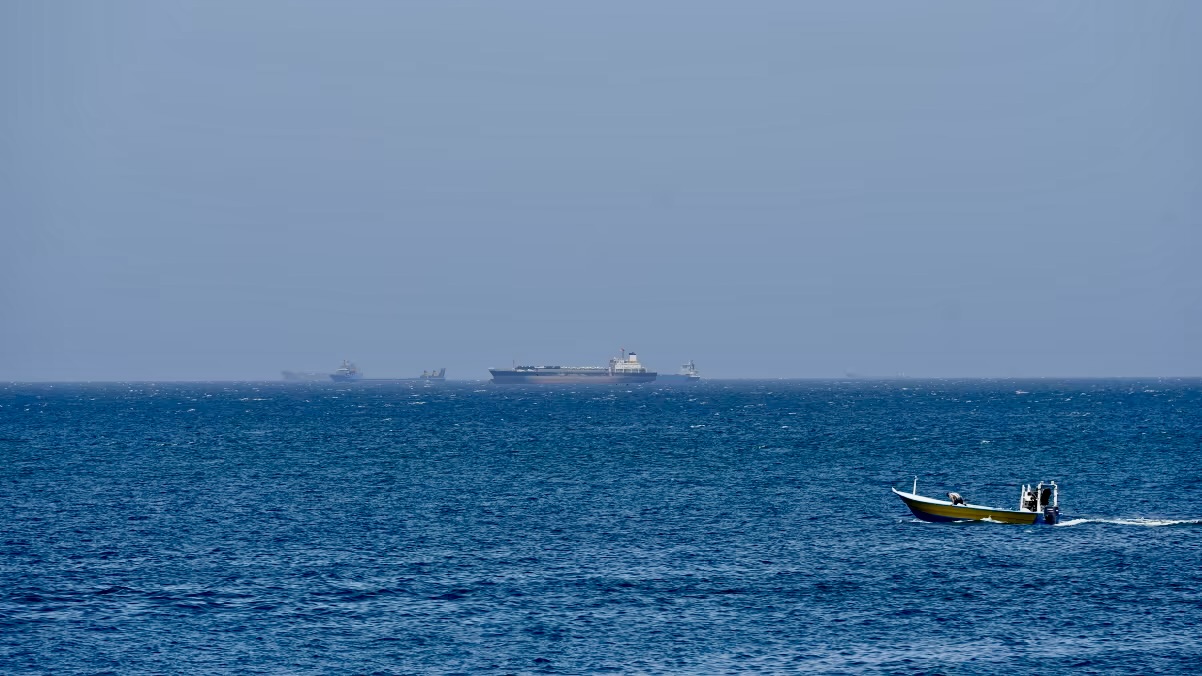
Vessels off the coast of Musandam Governorate, overlooking the Strait of Hormuz, in Musandam province, Oman, April 8, 2026. Photo: Reuters

NEW YORK (Realist English). The fragile two-week ceasefire between the United States and Iran, announced on April 8, is not giving ship owners the confidence to return to the Strait of Hormuz — the key waterway through which 20% of global oil supplies pass, CNN reports.

Even if the strait officially reopens, experts warn that the economic consequences of the war will be felt for many months, and a return to normal shipping could take up to six months.

“Almost no one feels confident enough.” 

Despite US President Donald Trump’s statements that the strait is open, only a handful of vessels have passed through in the days since April 8. According to data from analytics platform Kpler, only two oil or gas tankers have transited the strait since the ceasefire was announced. Meanwhile, more than 400 crude oil tankers, 34 LPG carriers and 19 LNG vessels remain in the region, MarineTraffic reports.

“Almost no one feels confident enough to transit the strait,” said Matt Smith of Kpler. Typically, more than 100 tankers pass through the Strait of Hormuz daily, but that number has now dropped to 10 or fewer.

Lale Akoner, a global market analyst at eToro, noted: “A two-week ceasefire that is fragile — I don’t think that would give ship operators the confidence they need.” In her estimation, restoring shipping to pre-war levels could take up to six months.

The problem is not just getting out, but getting back in 

The main difficulty, experts say, is not only letting the trapped vessels out, but also getting empty tankers to re-enter the strait to load new oil cargoes. Smith explained that about 400 loaded oil tankers are waiting to exit the Persian Gulf, but only about 100 empty vessels are ready to enter. Even if the strait opened today, normalizing oil flows would take until July.

Peter Tirschwell, vice president for maritime and trade at S&P Global Market Intelligence, added that about 100 container ships are waiting to exit, but virtually no empty vessels are ready to enter. That means 30% of the world’s fertilizer supplies, normally shipped from the region, could be stuck for months, as shipping by sea is the only way to move them. “The capacity does not exist to easily reroute those cargoes,” he stressed.

Iran charges fees, ship owners wait for first movers 

The situation is aggravated by Iran’s stance. Iran’s Islamic Revolutionary Guard Corps (IRGC) charges passing ships up to $2 million per tanker, with payment accepted in Chinese yuan or cryptocurrencies, bypassing the dollar-based financial system and US sanctions. Even Trump himself has floated the idea of a toll as part of a “joint venture” with Iran.

Ship owners, according to Sanne Manders, president of global logistics company Flexport, have “no information” on how to transit during the ceasefire and are not in contact with Iranian authorities. “They are basically waiting until others test the passage,” Manders said. He predicted that tankers and vessels of Chinese origin would likely test the waters first (China is an ally of Iran).

Consequences for ordinary Americans

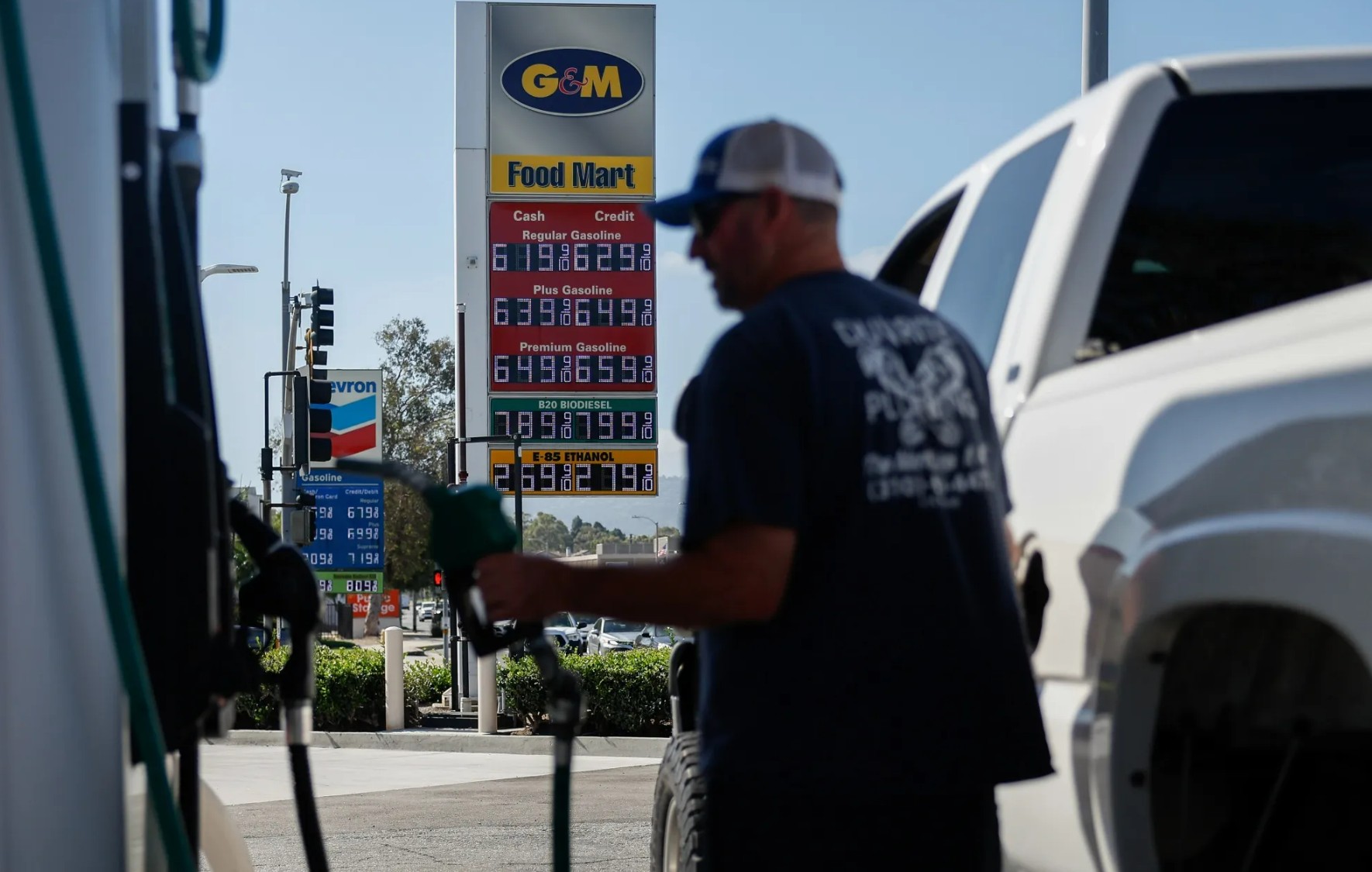
The real impact is already being felt at the pump. According to AAA, average US gasoline prices have risen 40% since the start of the war — up $1.18 per gallon, reaching $4.17. Returning to pre-war levels of around $3 per gallon, analysts say, is a distant prospect even if oil begins to flow freely again.

Joe McMonigle, president of the Global Center for Energy Analysis, warned: “If this continues for another week or two, the consequences not just for energy prices but for the global economy are dire. This is a very tenuous ceasefire.”

Iran WarIran’s Foreign PolicyStrait of HormuzTransport And CommunicationsUS-Iran Relations
Previous Post

Peskov: Russia ready to supply gas to EU if surplus remains after other markets

Next Post

76% of Armenian citizens live in poverty — World Bank

Related Posts

US gasoline prices jumped 21.2% in a month — biggest spike since 1967
Business & Energy

US gasoline prices jumped 21.2% in a month — biggest spike since 1967

11 April, 2026
Iran war has exposed the weakness of the dollar: America’s weapon is cracking
Business & Energy

Iran war has exposed the weakness of the dollar: America’s weapon is cracking

9 April, 2026
Central bank sold $20 billion in gold: Turkey crashed the precious metals market, prices post biggest drop since 2008
Business & Energy

Central bank sold $20 billion in gold: Turkey crashed the precious metals market

8 April, 2026
Easter unites millions as Armenian, Catholic and Protestant churches celebrate together
Business & Energy

Chinese semiconductor firms surge on AI boom and export restrictions

5 April, 2026
Lavrov says SCO “holding firm” amid global instability
Business & Energy

Iran says it can sustain Hormuz disruption for years amid standoff with US

4 April, 2026
Microsoft unveils $10bn Japan AI plan, boosts local tech stocks
Business & Energy

Microsoft unveils $10bn Japan AI plan, boosts local tech stocks

3 April, 2026
Most Popular
Most Popular
Dmitry Novikov on his path to politics, the intelligentsia, the left movement, and why US aggression against Iran is a threat to Russia

Dmitry Novikov on his path to politics, the intelligentsia, the left movement, and why US aggression against Iran is a threat to Russia

12 April, 2026

MOSCOW (Realist English). Dmitry Novikov, Deputy Chairman of the CPRF Central Committee and First Deputy Chairman of the State Duma...

“We Are Witnessing the Messianic Footsteps”: Avigdor Eskin on Israel’s War with Iran

“We Are Witnessing the Messianic Footsteps”: Avigdor Eskin on Israel’s War with Iran

11 April, 2026

JERUSALEM (Realist English). Israeli public figure and publicist Avigdor Eskin argues that we live in an era of “incredible acceleration,” when...

“Israel is not fighting the Iranian people, but the regime”: Alexander Tsinker on the goals of the operation against Iran

“Israel is not fighting the Iranian people, but the regime”: Alexander Tsinker on the goals of the operation against Iran

9 April, 2026

TEL AVIV (Realist English). The war in the Middle East, which began with US-Israeli strikes on Iran, has entered its fifth...

“Armenians are the autochthonous people of the South Caucasus”: geneticist Levon Yepiskoposyan on the Armenian gene pool and its neighbors

“Armenians are the autochthonous people of the South Caucasus”: geneticist Levon Yepiskoposyan on the Armenian gene pool and its neighbors

8 April, 2026

YEREVAN (Realist English). Levon Yepiskoposyan – Doctor of Biological Sciences, head of the Laboratory of Evolutionary Genomics at the Institute of...

Opinion

Sumerian and Armenian are the same language: Sumerologist Armen Davtyan

Sumerian and Armenian are the same language: Sumerologist Armen Davtyan

12 April, 2026

YEREVAN (Realist English). Armen Davtyan — a renowned Armenian linguist, Sumerologist and poet. He is the author of the “Armenian-Sumerian Dictionary”...

New economic course of Abkhazia and South Ossetia: forums as drivers of development and investment attraction

New economic course of Abkhazia and South Ossetia: forums as drivers of development and investment attraction

11 April, 2026

MOSCOW (Realist English). Political scientist Maxim Vaskov is an expert who for many years has personally participated in establishing and strengthening...

China’s Game of Go without rules: How the Celestial Empire “strangles in its embrace” the countries of Latin America and expands its influence in Russia

China’s Game of Go without rules: How the Celestial Empire “strangles in its embrace” the countries of Latin America and expands its influence in Russia

10 April, 2026

MOSCOW (Realist English). Doctor of Political Sciences, State Counselor of the Russian Federation First Class Tatiana Poloskova, in an authorial...

Alexander Cheryomin: Karabakh is an ancient Armenian land

Alexander Cheryomin: Karabakh is an ancient Armenian land

9 April, 2026

MOSCOW (Realist English). If one looks at the history of Yerevan, founded in 782 BC, and studies its architectural monuments, it...

All rights reserved.

© 2017-2026

  • About Us
  • Mission and Values
  • Contact Us
  • Privacy Policy

Follow Realist English

No Result
View All Result
  • News
  • Russia
  • Caucasus
  • Opinion
  • Interviews
  • Experts

Русский / English / العربية