

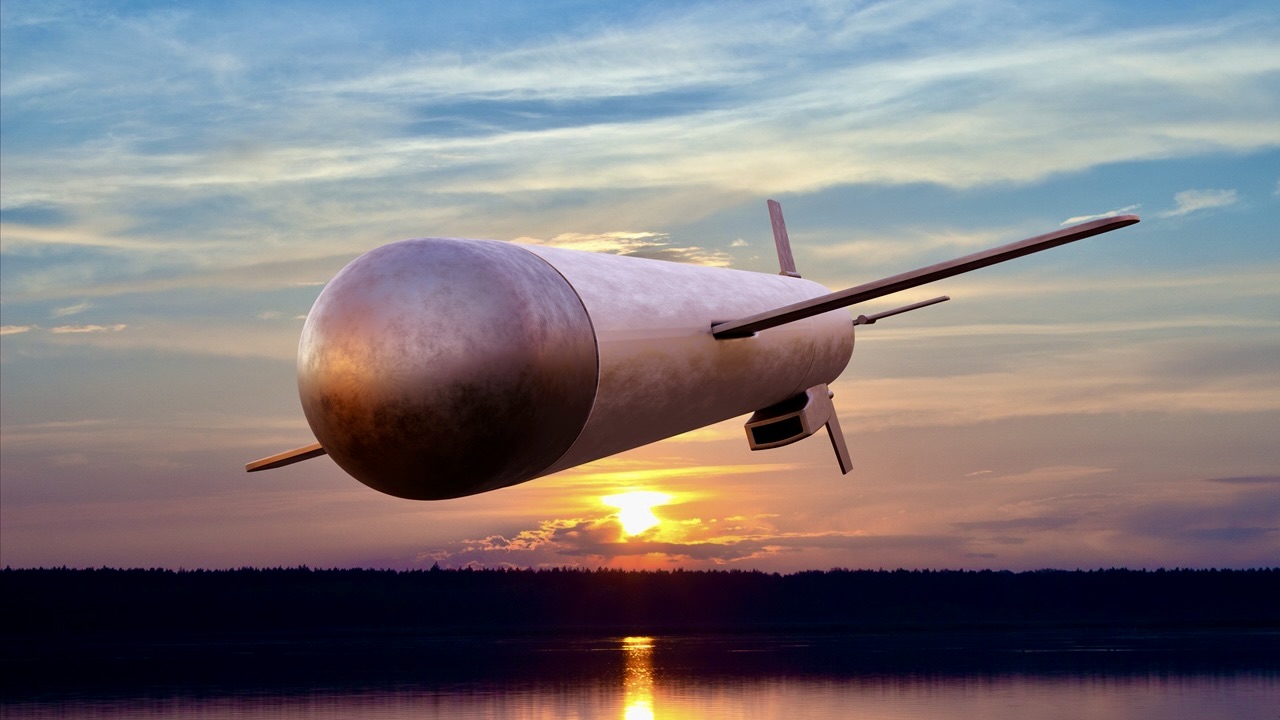
BERLIN (Realist English). The German government has been unsuccessfully seeking Pentagon approval for nearly a year to purchase American Tomahawk cruise missiles and Typhon mobile launch systems.
According to the Financial Times, the request was sent back in July 2025, but no response has yet been forthcoming from Washington. Amid worsening relations with Donald Trump’s administration and Washington’s refusal to deploy its own missile systems on German territory, Berlin finds itself in a critical position: European defence is literally “up in the air”.
Background: Biden’s promise and Trump’s cancellation
Initially, under President Joe Biden, the US and Germany had agreed on the temporary deployment of a US battalion with Typhon systems on German territory. The decision was intended as a response to the deployment of Russian Iskander missiles in the Kaliningrad region and to provide a security “umbrella” until Europe could develop its own missile systems (tentatively by the end of the 2020s).
However, after Trump’s return to the White House, Washington unilaterally cancelled these plans. The Pentagon has notified the withdrawal of about 5,000 troops from Germany and, according to German media reports, is considering a complete abandonment of plans to deploy long-range missiles in Europe.
German Defence Minister Boris Pistorius described the situation as critical: “This again creates a hole in our capabilities.”
Difficult negotiations and uncertainty
Against this backdrop, Berlin is trying to solve the problem through a direct purchase of Tomahawks. However, the request sent to the Pentagon back in mid-2025 remains unanswered. The Pentagon, whose production capacity is overloaded with contracts for Japan and the Netherlands, as well as replenishing its own stocks depleted during the recent conflict with Iran, is in no hurry to give the green light.
The situation is aggravated by strained personal relations between German Chancellor Friedrich Merz and Donald Trump. Disagreements over trade policy (threats to impose tariffs on European cars) and differing positions on Middle East settlement are hampering diplomatic dialogue.
Even the German defence minister’s visit to Washington for a meeting with new Pentagon chief Pete Hegseth has yet to be scheduled, and its timing remains uncertain.
European alternatives: Taurus Neo, ELSA and the Turkish connection
Realising that it can no longer count on Washington, Berlin is accelerating the development of its own and European systems. In the autumn of 2025, the Bundestag approved funding for a modernised Taurus Neo missile with an intended range of up to 1,000 km (the current version has a range of 500 km). However, even with accelerated funding, the new missile will not enter service before 2029.
At the same time, Germany, together with the UK and France, is discussing the revival of the pan-European ELSA (European Long-Range Strike Approach) programme. The German concern Rheinmetall has announced the creation of a joint venture with Destinus to produce cruise missiles and rocket artillery systems. Production is scheduled to start in late 2026 or early 2027.
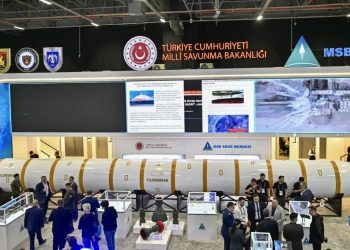
Finally, expert circles are discussing (though no official decisions have been made yet) the possibility of purchasing missiles from Turkey – for example, Tayfun-Block-4 systems. However, such plans entail serious political and technical risks, and the debate itself testifies to Berlin’s desperation, as it is ready to consider any option.