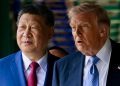


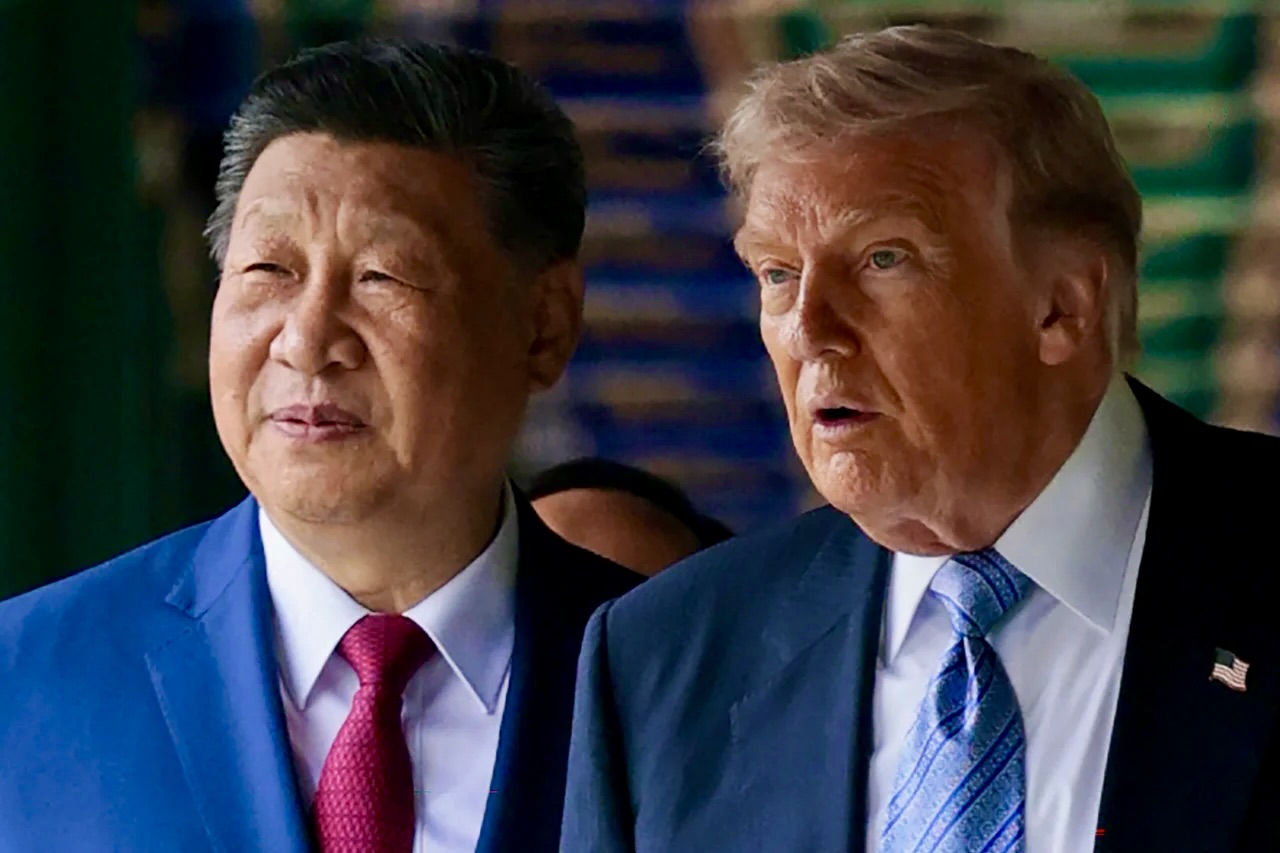
BEIJING (Realist English). On May 15, US President Donald Trump and Chinese President Xi Jinping began the final round of negotiations during a crucial US-China summit in Beijing. The Chinese side is portraying the meeting as the beginning of a new era of “strategic stability” between the two superpowers.
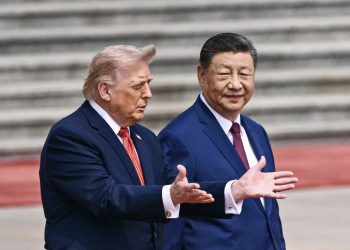
In the morning, the leaders held an informal tea meeting at Zhongnanhai — the closed compound of the Chinese Communist Party leadership near Tiananmen Square. This was followed by working talks and a joint lunch before Trump’s departure to Washington.
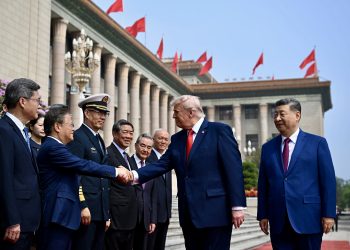
The negotiations continued the ceremonial portion of the visit held on May 14. Xi welcomed the American president with full military honors at the Great Hall of the People. The two leaders later visited the Temple of Heaven and attended a state banquet.
Trump is accompanied by a major business delegation that includes Apple CEO Tim Cook, Tesla chief Elon Musk, and representatives of other large American corporations. The White House is attempting to present the trip as economically beneficial for the United States.
American officials have spoken of possible large-scale agreements involving Chinese purchases of oil, aircraft, and agricultural products, although no concrete details have yet been disclosed.
Beijing, meanwhile, has focused on strategic issues. Chinese authorities stressed that the “Taiwan question” remains the central element of relations between the two countries. At the same time, China is seeking an extension of the trade truce reached after Trump and Xi met in Busan in 2025.
At that meeting, both sides agreed to halt escalation of the tariff war after China imposed export controls on critical minerals used in American industry.
“I have agreed with President Trump on a new vision for building constructive China-US relations of strategic stability,” China’s Ministry of Foreign Affairs quoted Xi Jinping as saying.
According to the Chinese leader, the new framework should provide “strategic guidance” for bilateral relations “over the next three years and beyond.”
In Beijing, the concept of “constructive strategic stability” is interpreted as:
- maintaining cooperation as the foundation of relations;
- keeping competition “within reasonable limits”;
- managing disagreements;
- preserving long-term predictability and stability.
Analysts believe China is seeking to limit Washington’s ability to escalate tensions further while Beijing struggles with slowing domestic growth and heavy dependence on exports.
“Beijing is effectively proposing a new operating system for bilateral relations,” said Lizzi Lee of the Asia Society.
Trump also stated that the two sides discussed the conflict surrounding Iran. According to the US president, Xi Jinping reaffirmed China’s position that the Strait of Hormuz must remain open and offered assistance in resolving the crisis. Chinese state media, however, did not comment on those remarks.
US officials also said Washington and Beijing are considering the creation of joint trade and investment councils to identify areas of cooperation that do not affect national security concerns.
US Trade Representative Jamieson Greer noted that semiconductor export restrictions have not yet become a central issue in the talks, despite the presence of Nvidia CEO Jensen Huang in Beijing as part of the American delegation.
Despite the absence of an official joint statement announcing a major agreement, the Beijing negotiations have already produced several strategic outcomes.
1. The sides confirmed continuation of the trade truce
Washington and Beijing effectively reaffirmed their refusal to immediately escalate the tariff war. For China, this is critical amid slowing domestic demand and a prolonged property-sector crisis, while for the United States it is important for supply-chain stability and inflation control.
2. China proposed a new framework for relations with the US
Xi’s concept of “strategic stability” implies a shift from permanent confrontation toward managed competition. Beijing is attempting to institutionalize relations in a way that reduces the risk of a full economic and technological rupture between the two powers.
3. Taiwan remains the central geopolitical flashpoint
China made clear that the Taiwan issue is viewed as the core indicator of relations with Washington. This means that even if economic dialogue continues, military and strategic rivalry will remain a structural component of US-China relations.
4. The US and China are searching for “safe zones” of cooperation
The idea of creating joint trade and investment mechanisms demonstrates both economies’ desire to separate sensitive sectors from areas where cooperation remains possible. This reflects an attempt to prevent full economic decoupling by replacing it with partial technological and financial separation.
5. Iran and the Strait of Hormuz are emerging as a new area of interaction
The discussion of Iran shows that both Washington and Beijing are interested in preventing destabilization of the global energy market. For China, the Strait of Hormuz is critical as an oil supply route, while the United States seeks to avoid a global price shock.
6. Technological confrontation remains unresolved
Although semiconductor export controls were not the central topic of the summit, the very presence of top executives from major technology companies demonstrates that competition over AI, chips, and high-tech supply chains remains a fundamental element of US-China rivalry.
The Beijing negotiations indicate that Washington and Beijing are gradually moving from a model of direct economic confrontation toward one of managed strategic rivalry.
The United States is trying to preserve its global technological leadership and alliance system in Asia while avoiding a full-scale economic rupture with China. Beijing, for its part, seeks to buy time to stabilize its domestic economy, reduce export dependence, and strengthen technological sovereignty.
At the same time, the fundamental contradictions — Taiwan, semiconductors, supply-chain control, artificial intelligence, and the US military presence in Asia — remain unresolved.
For this reason, the current summit reflects a temporary stabilization of relations rather than genuine strategic reconciliation.