

WASHINGTON (Realist English). An analytical article by Benjamin Bradlow, professor of sociology and international affairs at Princeton University, published in Foreign Affairs, examines how the war around Iran and the blockade of the Strait of Hormuz created a new geopolitical reality.
Bradlow argues that dependence on imported fossil fuels has become a trap that deprives countries of sovereignty, while energy independence — primarily through renewable energy sources — is increasingly synonymous with political freedom. The main beneficiary of this transformation is China, while the United States risks emerging among the losers.
Winners and Losers: Who Found a Voice and Who Lost Sovereignty
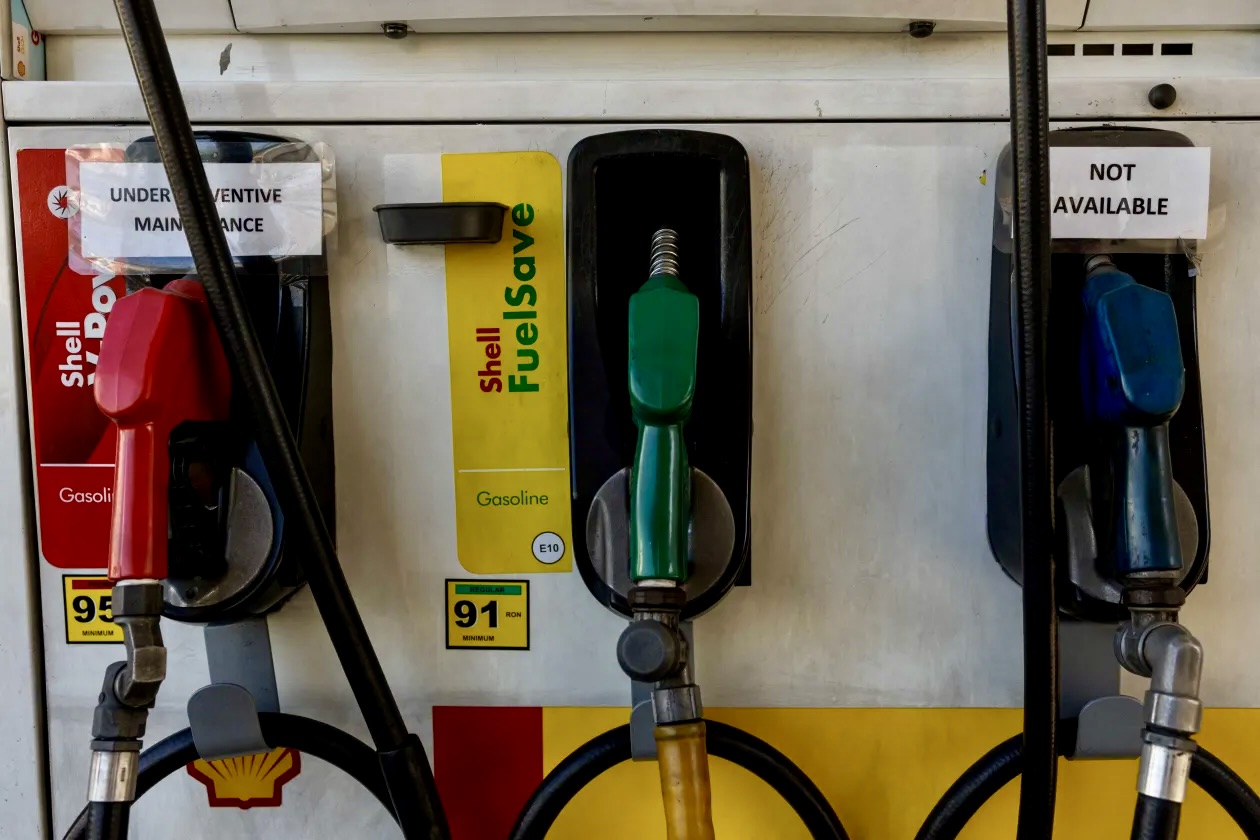
When the Strait of Hormuz effectively closed in early March 2026, cutting off roughly one-fifth of global oil and liquefied natural gas supplies, countries around the world faced a sharp surge in energy prices.
The Philippines became the first country to declare a state of emergency in the energy sector. Zambia suspended fuel levies, while Slovenia introduced gasoline rationing.
The crisis triggered a political awakening: countries dependent on imports realized that foreign governments could easily deprive them of critical resources, thereby undermining their sovereignty. States with strong domestic energy systems, by contrast, gained greater freedom of action and political maneuverability.
The world absorbed a new lesson: energy independence is political independence. Governments are therefore increasingly trying to reduce fuel imports and rapidly expand domestic energy capacity, particularly in renewables. The chief beneficiary of this transition is China, which dominates global supply chains for green technologies.
Southeast Asia proved to be the most vulnerable region, with more than half of its oil imports coming from the Persian Gulf.
Laos shut down hundreds of gas stations and reduced the school week to four days in order to avoid an energy collapse. Diesel prices in Vietnam rose by 40%, while Indonesia’s budget deficit widened amid the weakening of its national currency.
The region maintained striking silence regarding the conflict, wary of angering either Tehran or Washington. Indonesia even held direct negotiations with Iran over the safe passage of its oil tankers.
India and Pakistan: Two Opposite Models
India, which positions itself as a leader of the Global South, found itself in an especially difficult situation: two-thirds of its oil imports pass through the Strait of Hormuz.
New Delhi was effectively forced to swallow humiliation after the United States sank an Iranian warship invited by India to participate in joint military exercises. Indian authorities also avoided publicly criticizing Washington.
India’s foreign ministry reportedly waited five days before signing a book of condolences following the killing of Iran’s supreme leader. In exchange for diplomatic silence, the United States eased restrictions on Russian oil trade, with India becoming the first recipient of sanctions exemptions.
Pakistan, however, found itself in the exact opposite position.
Thanks to explosive growth in renewable energy — solar power’s share rose from less than 3% in 2020 to more than 32% by the end of 2025 — Pakistan saved more than $12 billion on oil and gas imports since 2020. In 2026 alone, additional savings are projected at $6.3 billion.
Pakistan became a key intermediary in negotiations between the United States and Iran. Prime Minister Shehbaz Sharif and the country’s de facto leader, Field Marshal Asim Munir, played a central role in organizing the April 8 ceasefire.
Energy independence gave Islamabad far greater freedom to act independently.
Latin America and Africa: Ideology Gives Way to Energy Reality
Spain, which generates more than 56% of its electricity from renewable sources, maintained the lowest electricity prices in Europe throughout the conflict and refused to provide the United States with military bases for operations against Iran — a position that would have been nearly impossible for less energy-independent NATO allies.
Brazil, whose energy system relies heavily on hydro, wind, and solar generation, and whose transportation sector partly runs on ethanol made from sugarcane, also quickly condemned the strikes on Iran.
Many observers explained these positions through the ideology of left-wing governments, but the decisive factor was energy independence itself, which provided room for political maneuver.
South Africa offers a striking contrast. Despite being governed by a left-wing party and maintaining historically friendly ties with Iran, the country remains heavily dependent on diesel and gasoline imports through the Strait of Hormuz. As a result, Pretoria was forced to cut fuel taxes to avoid domestic unrest and largely refrained from criticizing the United States.
Energy Independence as a Strategic Goal: Lessons from the 1970s
Brazil began moving in this direction after the oil crises of the 1970s.
The government built five major hydroelectric plants and launched the Proálcool program to produce ethanol from sugarcane.
One famous 1979 poster depicted an oil tanker passing near a naval mine with the caption: “The ethanol in your car does not pass through this place.” The campaign’s slogan read: “If you have this, you depend on no one.”
Today, more than 80% of Brazilian vehicles use flexible fuel systems, while the country’s power grid remains among the cleanest in the world, with nearly 90% of electricity generated by hydro, wind, and solar energy.
The Strait of Hormuz crisis will almost certainly push more countries toward accelerated energy independence.
The Philippines and Thailand have already expanded coal-fired power generation, yet Vietnam simultaneously approved more than 80 renewable energy projects. Thailand is reviving rooftop solar programs, while Indonesian President Prabowo Subianto has announced plans to build 100 gigawatts of solar capacity within three years, calling the crisis a “rude awakening.”
China Emerges as the Main Beneficiary While the U.S. Risks Falling Behind
Virtually all new investments in the global energy transition ultimately benefit China, which has spent decades investing trillions of dollars into green technology manufacturing.
China produces more solar panels than any other country in the world. Companies such as CATL — the world’s largest battery producer — BYD, the leading electric vehicle manufacturer, and Sungrow, a major solar equipment supplier, now dominate global markets.
Since the start of the war, their combined market capitalization has risen by more than $70 billion, far outpacing gains by oil companies.
China emerged from the crisis better prepared than any other major oil importer.
According to a May 2026 survey of Southeast Asian opinion leaders conducted by ISEAS, Donald Trump’s administration became the region’s main geopolitical concern, while China overtook the United States as the preferred superpower partner for the first time.
The United States, by contrast, continues to rely on hydrocarbon exports as a strategic offering, but the attractiveness of that model is increasingly fading compared to Chinese renewable technologies.
Wind and sunlight cannot be blocked by geopolitical chokepoints — unlike oil and gas.
Benjamin Bradlow, professor of sociology and international affairs at Princeton University