


NEW YORK (Realist English). Since the start of President Donald Trump’s war with Iran, Americans have spent more than $40 billion extra on fuel — enough to repair the country’s entire bridge network or completely modernise its air traffic control system.
According to estimates by Brown University’s Watson School of International and Public Affairs, as of the evening of 17 May 2026, additional consumer spending on petrol and diesel had reached $41.5 billion, or $316 per US household.
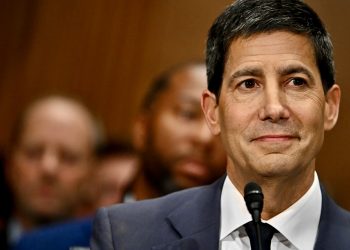
“We are spending this huge amount of money as a country on extra fuel costs, which we could have used in a whole range of more constructive ways to improve America’s transportation infrastructure — which, frankly, could use the attention,” said Jeff Colgan, a political science professor at Brown University.
Inflation shock and record prices
The fallout from the war with Iran has rippled across the world’s largest economy, driving inflation to its highest level since the start of the war in Ukraine and creating a growing political problem for Trump.
Higher fuel prices have not only taken a toll on motorists but have also pushed up the cost of everything from groceries to airfares, as rising energy costs spread through other sectors of the economy.
The Brown University report comes just as many Americans prepare to travel across the country during the summer driving season, which begins next week and typically sends petrol demand to its annual peak.
The additional $41.5 billion in spending exceeds:
— the entire $40 billion federal Bridge Investment Program for restoring major crossings;
— the $31.5 billion cost of fully modernising the US air traffic control system;
— the full funding of the now-defunct $18.9 billion federal electric vehicle charging and electrification programmes proposed by Joe Biden.
“We could have been building the transportation infrastructure of the future if we were not wasting this money on higher fuel costs associated with a war that most Americans do not want,” Colgan stressed.
Hormuz closed — prices soar
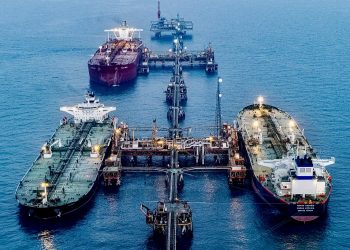
The Strait of Hormuz, through which around one-fifth of global oil supplies normally pass, has remained largely closed since the conflict began in late February.
The supply shock has pushed Brent Crude prices up by more than 50%, to around $110 per barrel.
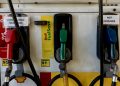
According to AAA, US petrol prices have surged by 51%, reaching $4.51 per gallon on 17 May — the sharpest increase among G7 countries.
Diesel prices have risen by 54% to $5.65 per gallon, approaching record highs.
Inflation accelerates, borrowing costs rise
The rise in fuel prices has triggered a fresh wave of inflation as production and transportation costs continue to increase.
Consumer prices in April rose at their fastest pace in three years, while wholesale prices recorded their sharpest increase since 2022.
The inflationary spike has also driven up borrowing costs. Last week, the US Treasury issued 30-year bonds at a 5% yield for the first time since 2007 amid investor concerns about accelerating inflation.
In the first quarter of 2026, US GDP growth stood at 2%. However, analysts warn that the worst economic effects of the war are still ahead. Growth for 2026 is now expected to slow to between 1.0% and 1.7%, down from earlier forecasts of 2.3%–2.4%.
Retail sales continue to rise, but largely because of forced spending on fuel. In April, retail sales increased by just 0.5%, compared with a revised 1.6% in March.
Meanwhile, petrol sales surged by 15.5% — the largest increase on record. Consumers have already begun cutting back on clothing, furniture and other non-essential goods.