KHARTOUM (Realist English). Last year, when the paramilitary Rapid Support Forces (RSF) carried out mass killings in Darfur, global attention focused on their actions. Less attention was paid to the Islamist militias fighting on the side of the Sudanese Armed Forces (SAF).
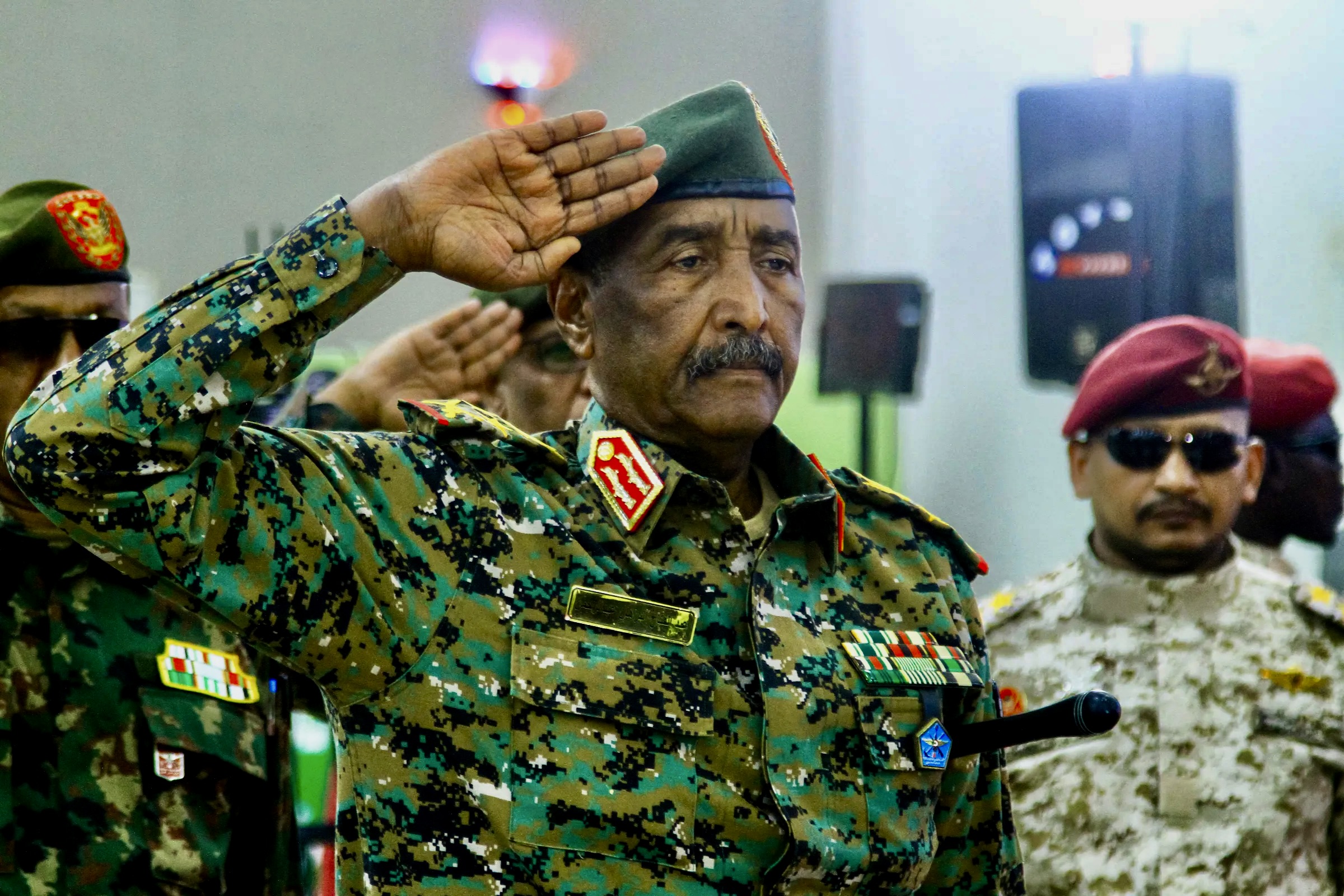
The influence of former leaders of the Islamist regime and “mujahideen” acting in alliance with the army has once again come under the spotlight against the backdrop of the US‑Israeli war with Iran. This has created a difficult situation for Sudan’s de facto military ruler, General Abdel Fattah al‑Burhan.
For the US, Israel and the UAE, the priority has become to stem residual Iranian influence, cut off weapons flows and prevent the Sudanese Muslim Brotherhood from regaining control. This is of particular importance given their concerns over Red Sea security.
This has complicated al‑Burhan’s task: he needs to maintain the loyalty of the Islamist alliance on which he relies on the battlefield (these forces helped retake Khartoum in 2025), while at the same time seeking international legitimacy.
“He has yet to build an alternative to them,” said Suliman Baldo, a Sudanese conflict resolution expert. “He sometimes goes through the theatrics of purging officers who are Islamist, but he cannot really get rid of them.”
Iran returns to Sudan
Iran stepped back into the frame after the war erupted in 2023, supplying al‑Burhan’s regime with ammunition and Mohajer‑6 drones. This came after an eight‑year hiatus during which Saudi influence had dominated Sudan.
Although the coalition fighting on the SAF side also includes new recruits, former Darfur rebels and local ethnic militias, al‑Burhan relied heavily on the Islamist brigades to reverse initial losses in the war.
The most powerful of them was the al‑Baraa bin Malik brigade – an elite combat unit affiliated with the Muslim Brotherhood that has been officially absorbed into the army. About 20,000 of its fighters took part in key battles to recapture Khartoum last year, after the capital had been partially destroyed under RSF control.
According to the US Treasury Department, Iran’s Islamic Revolutionary Guard Corps (IRGC) had provided training and weapons to the al‑Baraa bin Malik brigade. Washington accused the formation of actively obstructing ceasefire efforts.
Trying to balance the competing demands of these militias while persuading the outside world that they have little influence, al‑Burhan has limited room for manoeuvre.
“If he plays any games, there will be a backlash,” a former military intelligence officer said, arguing that keeping this coalition together under the SAF is Sudan’s best hope of stabilising ahead of any future political transition.
Contradictions and external interests
Egypt and Saudi Arabia oppose the Muslim Brotherhood but view the SAF as the only state institution capable of countering the country’s disintegration.
Some Sudanese observers note that the US has designated the Muslim Brotherhood as terrorists but not the RSF, which both Washington and the UN have accused of genocide.
Asked about the value of such formulations, al‑Burhan’s foreign affairs adviser, Amgad Fareid Eltayeb (not himself an Islamist), quoted Shakespeare: “What is it Shakespeare said about a rose by any other name smelling just as sweet?”
In his view, for Sudanese people, regardless of their religious affiliation, this war is existential – a struggle to defend national unity against a militia that, according to the US and UN, has committed genocide.
He rejected the characterisation of the conflict as a struggle between secular and religious forces, pointing out that senior RSF figures, including former vice‑president Hassabu Mohamed Abdelrahman, were themselves prominent Islamists under the former Bashir regime.
“When they say they are fighting political Islam, it is an attempt by the UAE and those siding with them to hide the reality of the atrocities they have committed,” he said. The UAE strenuously denies backing either side in the war.
Proxy war on the Red Sea
Sudan has become an arena of confrontation not only between two military factions, but also between regional powers vying for influence in a strategically vital area on the Red Sea. The Islamist militias, having proven their combat effectiveness, are beginning to gain increasing political influence, alarming Western countries and conservative Arab monarchies alike.
The massive use of drones, which has turned the conflict into a “war of distance”, and the presence of foreign mercenaries are making the situation increasingly difficult to resolve diplomatically.
In April 2026, Berlin hosted a ministerial conference on Sudan, but it too failed to achieve a breakthrough. Jens Laerke, head of the UN Office for the Coordination of Humanitarian Affairs, called on UN member states to exert real pressure on the warring parties, but without the involvement of major regional powers, the prospects for peace remain bleak.
The negotiation process has effectively reached an impasse. In March 2026, Turkey and Saudi Arabia proposed a “road map” for a settlement, but the key parties rejected it.
US sanctions and the response
On 9 March, the US added the Sudanese wing of the Muslim Brotherhood to its list of “Specially Designated Global Terrorists”, and also reaffirmed sanctions against the al‑Baraa bin Malik battalion as a foreign terrorist organisation. Secretary of State Marco Rubio said the group “uses unchecked violence against civilians to undermine efforts to resolve the conflict”.
The UAE welcomed the US move, calling it part of the Trump administration’s systematic efforts to end violence and the destabilising activities of the Muslim Brotherhood.
Immediately after the sanctions were announced, the Sudanese authorities briefly arrested Islamist leader Enagi Abdallah, but this did not lead to a break in ties with the militia.
Foreign involvement
The conflict in Sudan has long ceased to be internal. On the side of the Sudanese army are Egypt, Turkey, Russia and Iran. At the same time, Iran, despite its own problems due to the war with Israel, continues to supply the army with Mohajer and Ababil drones, although sources note that Iranian support has waned following Israeli strikes on Tehran.
The RSF, for their part, enjoy the support of the UAE, which, according to Western analysts, supplies weapons and fuel through a sprawling network of intermediaries in Libya, Chad, Uganda and the CAR. Abu Dhabi officially denies these allegations and condemns RSF atrocities.
In May 2026, Russia’s ambassador to Sudan, Andrei Chernovol, confirmed the presence of Ukrainian mercenaries in the ranks of the RSF, putting the figure at “hundreds of instructors, including drone operators”.