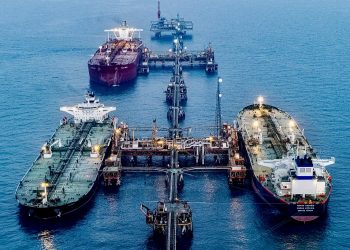


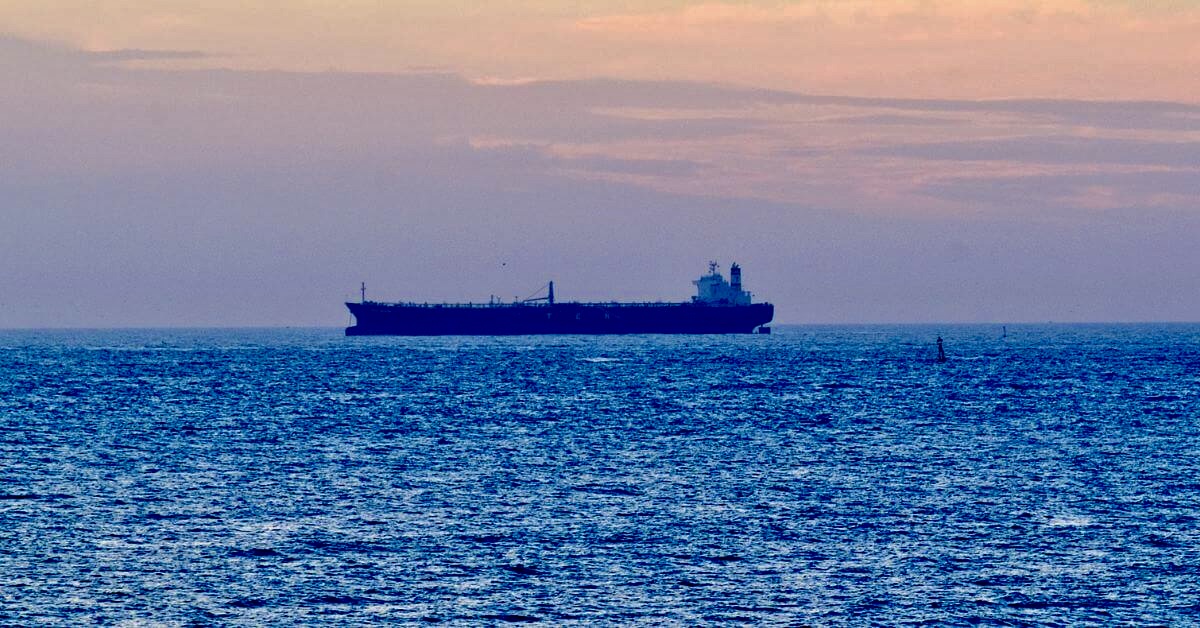
TEHRAN (Realist English). Iran is being forced to store oil on ageing tankers anchored in the Gulf as the US naval blockade severely restricts Tehran’s ability to export crude oil to the Far East.
According to United Against Nuclear Iran (UANI), about 39 tankers carrying Iranian oil and petrochemicals are currently located in the Gulf — up from 29 before the blockade came into force on 13 April. A particularly sharp increase in tanker accumulation has been observed near the oil export terminal on Kharg Island.
In addition, the Financial Times and UANI identified another 13 suspected tankers anchored off Iran’s Chabahar port in the Gulf of Oman, on the eastern side of the Strait of Hormuz and close to the theoretical blockade line established by the US Navy.
Blockade limits exports as tankers accumulate
The growing concentration of vessels highlights the impact of the US blockade. Its stated purpose is to subject Iranian vessels — or ships suspected of carrying Iranian cargo — to “visit, board, search and seizure” operations by the US Navy, with the aim of reducing Tehran’s oil revenues.
The blockade marks another shift in Washington’s policy toward Iranian crude exports, with the broader confrontation now entering its eleventh week.
In March, amid concerns over a sharp increase in global oil prices, Washington granted a 30-day waiver for Iranian crude already in transit at sea. Before the US-Israeli strikes, Iran exported approximately 40–60 million barrels of oil per month — around 2% of global supply — using a fleet of ageing tankers that primarily served Asian refineries.
However, as Iran showed no indication that it would reopen the Strait of Hormuz and continued generating substantial oil revenues, Washington tightened restrictions in April, imposing a full naval blockade and authorising the detention of vessels engaged in trade involving Iranian products worldwide.
US Central Command (CENTCOM) stated that since the introduction of the blockade it has “redirected” 72 ships back to Iranian ports and disabled four vessels.
Ageing tankers return to service
As a result of the blockade, significant volumes of Iranian crude have remained stranded. Tehran has reportedly returned older tankers to active use and converted some into floating storage facilities.
For example, a 30-year-old supertanker that analysts say had been inactive for more than two years began transmitting its location in the Gulf in late April.
Yui Torikata, an analyst at Kpler, said that the volume of Iranian crude stored on tankers in the Gulf had reached its “highest level since the beginning of the conflict” and had remained elevated since early May.
Kpler estimates that approximately 42 million barrels of Iranian crude are currently stored aboard tankers in the Middle East — an increase of 65% since the start of the conflict.
Antoine Halff, chief analyst at energy data company Kayrros, said Iran appears to be attempting to “extend its runway” in order to avoid reducing production levels.
According to Kayrros estimates, onshore oil storage in Iran has increased by approximately 10 million barrels and is now about 64% full, providing what analysts describe as “a couple of weeks” of additional production flexibility.
Kpler also estimates that Iran still has unused tanker capacity within the blockade zone that could accommodate an additional 24 million barrels of floating storage.
Tanker accumulation near Kharg Island
The most significant increase in stationary tankers has occurred near Kharg Island, Iran’s main oil export hub in the northern Gulf.
According to a Financial Times analysis of European Space Agency (ESA) Sentinel-1 satellite data, 20 vessels are now located there, compared with six a month earlier.
The increase is not visible through conventional shipping data because many of the vessels are not transmitting their positions.
ESA remains one of the few sources of freely available satellite imagery in the region, as several US commercial satellite providers have reportedly restricted access to imagery at the request of the US government.
According to maritime intelligence company Windward, however, no tankers loaded oil at Kharg Island between 6 May — when satellite imagery detected a large oil spill near the terminal — and 14 May.
Satellite images indicate that the spill has since dispersed south and southwest of the island.
Breakout attempts remain limited
Few vessels have managed to bypass the blockade.
One example is the Iranian-flagged tanker Huge, which loaded oil at Kharg Island on 31 March and exited the Gulf of Oman on 14 April.
The vessel appears to have taken a longer and less economical route to avoid US naval monitoring, passing through Indonesia’s Lombok Strait and heading toward China.
Under normal circumstances, Iranian tankers usually transit through the Strait of Malacca and transfer cargo to Chinese vessels near Malaysia.
Oil prices
Oil prices on 18–19 May remained highly volatile, reacting primarily to developments surrounding the Iran-Hormuz crisis and signals regarding possible negotiations between Washington and Tehran.
By the morning of 19 May, Brent crude was trading at approximately $109.5–110.8 per barrel, while WTI was trading around $102–103 per barrel.
Investors increasingly began pricing in several factors:
— Donald Trump’s statements regarding a possible delay in military action against Iran;
— continued diplomatic contacts;
— waivers for certain Russian oil shipments;
— expectations surrounding US crude inventory data.
Analysts at ING and other energy firms note that markets are increasingly pricing in geopolitical supply risks rather than immediate shortages.
Current estimates suggest that as much as 14 million barrels per day of Middle Eastern exports could be at risk under a severe escalation scenario.