


TEHRAN (Realist English). Relations between the United States and Iran have reached a critical point where diplomacy exists only on the brink of full-scale war. Washington maintains a dual strategy: while publicly claiming “significant progress” in negotiations, the US simultaneously intensifies military pressure and economic sanctions.
At the same time, Israel, which does not believe in the success of diplomacy, continues to strike Lebanon and finalizes joint preparations with the Pentagon to resume its military campaign against Iran, including possible special forces operations to seize nuclear materials.
US-Iran negotiations: progress at gunpoint
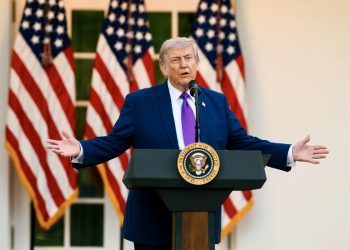
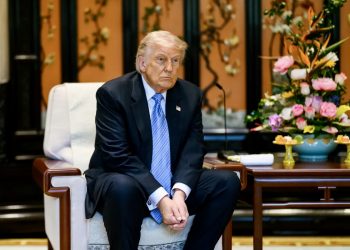
On May 19, Donald Trump announced that he had postponed massive strikes on Iran that had been planned for that day, citing requests from the leaders of Qatar, Saudi Arabia, and the UAE, who asked to give diplomacy another chance. However, the very next day, Vice President JD Vance made a statement that became a classic expression of American “carrot and stick” diplomacy: negotiations are moving forward, but US troops remain “locked and loaded.”
“We believe we have made a lot of progress. We believe the Iranians want to make a deal,” Vance said at a White House briefing, adding that “the president has directed the military to remain in a state of readiness.”
But this rhetoric hides deep stagnation. Trump himself told reporters that he had given Tehran “two or three days” to think, and that a new attack could come as early as Friday, over the weekend, or at the beginning of next week. On May 14, Israeli Defense Minister Israel Katz confirmed that Israeli forces are ready to resume action against Iran at any moment, and that the mission is “not yet completed.”
Fundamental disagreements
The key positions of the sides remain irreconcilable. The United States demands that Iran fulfill five main conditions:
- Removal of 400 kg of uranium enriched to 60%. According to IAEA data, Iran holds approximately 440 kg of this material — a short technical step from weapons-grade 90%, enough to produce 10–12 nuclear warheads.
- Reduction of operating nuclear facilities to one. The US also insists on a 20-year moratorium on enrichment, which Iran has previously rejected.
- Waiver of any reparations for war damage caused by US bombing.
- Freezing or withholding 25% of Iranian assets.
- Resolution of the conflict on all fronts, including Lebanon.
In response, Iran put forward its own 14-point plan, including mirror demands:
- Immediate cessation of hostilities on all fronts, including the Israeli operation in Lebanon.
- Complete lifting of economic sanctions and unfreezing of Iranian assets.
- Payment of compensation for war damage.
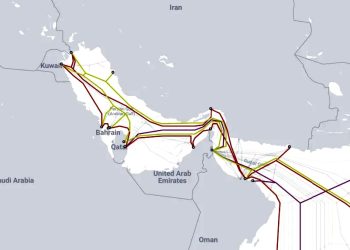
- Recognition of Iran’s sovereignty over the Strait of Hormuz.
Iranian analyst Ali Golhaki told The New Arab that Tehran has rejected the recent US proposal for the immediate signing of a comprehensive agreement, insisting on the priority resolution of military and economic issues. At the same time, according to him, the Iranian leadership remains committed to preserving the right to enrich uranium as a “red line.”
Washington softens its position?
According to The New Arab, there has been a noticeable shift in rhetoric in Washington. The American side has demonstrated “increased flexibility,” including agreeing to discuss a ceasefire on several fronts, including Lebanon. Moreover, Washington has “backed away” from its previous demand for the complete removal of enriched uranium from Iran — a significant change in position. Serious disagreements over sanctions relief, especially regarding Iran’s oil sector, have also been resolved.
Israeli strategy: preparing for a two-front war
On the Iranian front, Tel Aviv and the Pentagon have completed joint preparations for the resumption of military operations. Israeli television channel Kan TV, citing a US security official, reported that the US and Israel are “fully coordinated” and ready for any scenario.
Earlier, in March 2026, Axios reported that the US and Israel were discussing the possibility of sending special forces to Iranian nuclear facilities to remove highly enriched uranium. The operation could be carried out by American, Israeli, or joint forces at facilities in Fordow, Isfahan, and Natanz. Two main scenarios are being considered: full evacuation of uranium from Iran or deploying experts on site to dilute and neutralize stocks.
The Israeli defense minister said that despite the heavy blows inflicted on Iran over the past year, “our mission is not yet over,” and Israel is ready for new attacks. According to intelligence estimates, Iran has lost a third of its missile arsenal but continues to rebuild its forces.
Parallel war on the Lebanese front
The situation on the Lebanese front is a classic example of a ceasefire that exists only on paper. Despite the State Department announcing on May 16 an extension of the Israeli-Lebanese truce for 45 days, Israeli aircraft continue to carry out daily strikes on the Bekaa Valley and southern Lebanon.
On May 15, just hours after the truce extension was announced, the Israeli Air Force struck a civilian defense center in the town of Haruf, killing six people, including three civilian paramedics.
Opinions of Western analysts
- John Mearsheimer (political scientist, University of Chicago): strategic defeat for the US
The leading realist analyst, author of The Israel Lobby, gave a sharp assessment of the current situation. In his view, Iran has already emerged from the conflict as a clear winner, forcing the Trump administration to accept a ceasefire and negotiate from a weakened position. He believes the war has become the third major US failure in the Middle East after Iraq and Afghanistan, making future American military intervention in the region far less likely. Mearsheimer also predicts a deterioration in US-Israeli relations, as the American public will begin to realize that support for Israel has led to catastrophic consequences.
- Hadi Mohammadi (Iranian analyst): cautious optimism
According to Mohammadi, recent rounds of talks have produced “preliminary understanding,” including an agreement to allocate 30 days to discuss unresolved issues. He cautions, however, that the contradictory nature of US statements makes it difficult to determine whether Washington’s recent softening reflects a genuine diplomatic intention or is merely a tactical pause before renewed military escalation.
- Analysts at ECPS (European Center for Policy and Security Studies)
An analytical note from the ECPS states that the current conflict is a complex interstate conflict within a broader matrix of regional rivalry. The escalation of 2026, including coordinated US-Israeli military action against Iran’s nuclear and military infrastructure, is the culmination of long-standing antagonisms. The situation is drifting toward a protracted war of attrition on multiple fronts.
Preliminary conclusions
The current situation is characterized by a fundamental contradiction: the United States needs a diplomatic exit from a protracted conflict to curb rising oil prices and fulfill campaign promises, yet at the same time it is not ready to make real concessions to Tehran. Iran, feeling its increased regional role, demands guarantees and the unfreezing of assets, refusing to capitulate to US pressure.
The main tool of diplomacy has once again become the threat of force, and key players continue moving toward renewed escalation. As Iranian Foreign Ministry spokesman Esmaeil Baghaei stated: “For us, capitulation makes no sense; either we achieve victory or we become martyrs.”
Israeli Defense Minister Katz, for his part, confirmed that his country is ready to resume military action at any moment. Meanwhile, Iran has strengthened its air defense, studied American tactical patterns, and deepened cooperation with Russia, making the prospect of a quick US military victory increasingly illusory.