

BRUSSELS (Realist English). European capitals are increasingly hearing calls to appoint a special representative of the European Union for direct dialogue with the Kremlin. Against the backdrop of a protracted stalemate in negotiations led by the United States, Brussels fears being left out of a possible peace settlement for Ukraine.
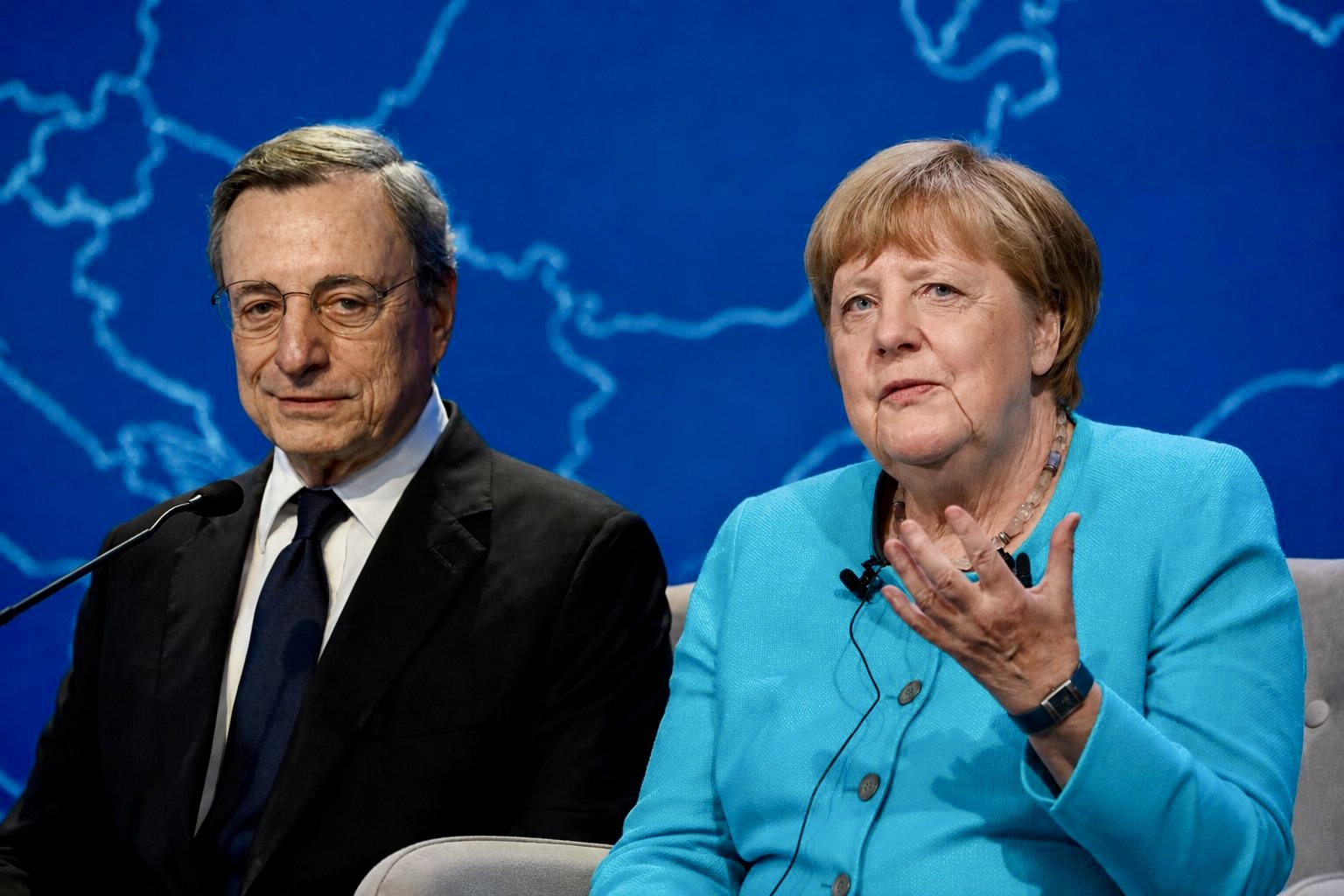
The main candidates for the role of “mediator” are former German Chancellor Angela Merkel and former Italian Prime Minister Mario Draghi.
Why the issue has arisen now
Discussion of this new diplomatic initiative comes amid several key factors. The negotiation process to resolve the conflict in Ukraine, long overseen by the United States, has reached an impasse due to the irreconcilable positions of Moscow and Kyiv on territorial issues.
Brussels is growing increasingly concerned that the prolonged pause could lead to a final agreement being worked out directly between Washington and Moscow without regard for European interests, leaving the EU “vulnerable to an agreement on unfavorable terms.”
The administration of Donald Trump, currently distracted by its own military campaigns in the Middle East, has already signaled to European partners that it “does not object” to parallel talks between the EU and Russia. Furthermore, President Volodymyr Zelensky insists that Europe must have a “strong voice and presence” in this process.
A senior Ukrainian official explained that Kyiv would like to see “someone like Draghi” or a sitting leader with significant political weight in this role.
Main candidates: technocrat vs. heavyweight
According to information that has appeared in Western media, two main figures are now being considered, representing fundamentally different approaches.
- Mario Draghi: crisis manager
The former head of the European Central Bank and former Italian prime minister is seen as a reliable technocrat respected throughout the European Union. His assets include a reputation for handling systemic crises (Eurozone debt, pandemic) and a pragmatic approach.
Draghi is known for his staunch pro-Ukrainian and pro-NATO stance, but it is believed that his status will allow him to distance himself from the current political battles within the EU.
Sources emphasize that he inspires confidence in Kyiv and Washington, and his candidacy is reportedly being actively promoted by European Council President António Costa.
- Angela Merkel: old‑school diplomat
The former German chancellor, who spent 16 years in power, embodies an entire era in Europe-Russia relations. She personally knows Vladimir Putin, spoke with him in German, and was one of the architects of the “Minsk process” after 2014.
Her experience is considered invaluable, yet it also invites criticism. Many blame Merkel’s policies during her tenure for Europe’s excessive dependence on Russian gas and for underestimating the threats posed by the Kremlin.
Merkel herself, commenting on the idea, expressed regret that Europe had been pushed to the sidelines, but at the same time diplomatically suggested that she might not be the best fit for the role, noting that “President Putin only takes sitting heads of government seriously.”
In addition to the two main contenders, other names are occasionally heard in the corridors: Finnish President Alexander Stubb and his predecessor Sauli Niinistö.
Obstacles and “Putin’s condition”
The initiative faces serious challenges. The main intrigue lies in the Kremlin’s position. Vladimir Putin has stated that he is ready to talk to a European envoy, but on one condition: the interlocutor has never allowed himself “unpleasant statements” or “dirty words” about Russia. This condition effectively means that many current and former EU leaders may fail the political “face control.”
Within the European Union, there is also no unity. Eastern European countries — Poland and the Baltic states — oppose the very idea. They fear that resumption of direct dialogue would be perceived by the Kremlin as a reward for aggression and a retreat from the principles of international law. Lithuanian Foreign Minister Gabrielius Landsbergis called the idea of sending Merkel a “dangerous experiment.” It is also known that the option does not find support among the foreign ministers of the Nordic countries, who believe that such contacts could prematurely weaken pressure on Russia.
What’s next?
The issue of an official representative for talks with Russia will be put on the agenda shortly. EU foreign ministers are expected to discuss possible candidates at an informal meeting in Cyprus as early as next week. Following that, the topic may be raised at a higher level — at the EU leaders’ summit in June.
In Kyiv, in turn, it is expected that Zelensky will discuss the matter at the end of this week with the leaders of France, Germany, and the United Kingdom.
For now, Brussels admits: the current negotiation framework is not working. The idea of appointing a mediator from among former “heavyweights” is an attempt by Brussels to seize the initiative so as not to “lose the peace” while sitting on the sidelines.
Analysts have already noted that the debate over a “Russian negotiator” concerns not so much diplomacy as the strategic identity of the European Union. The question is whether the bloc can act as an autonomous player or whether it will remain forever in search of figures designed to fill the yawning void where a common foreign policy should be.