TBILISI (Realist English). Georgia’s economic growth is accompanied by deepening regional inequality and a growing gap between official poverty figures and the real situation.
According to the National Statistics Office of Georgia (Geostat), the absolute poverty rate in the country fell to a historic low of 9.4% in 2024, 2.4 percentage points lower than in 2023. However, these figures contradict data from the Social Service Agency, according to which 1,302,394 people (about a third of the population) are registered as needing assistance.
Gini coefficient is decreasing, but inequality persists
According to the World Bank, Georgia’s Gini coefficient stood at 33.9 in 2024, down from 34.8 in 2023. Inequality peaked in 1998 (41.2), while the lowest value was recorded in 2022 (33.5). Despite the positive trend, these figures indicate a persistent income gap between different segments of the population.
Tbilisi vs. regions: 50% of GDP vs. 55% below the poverty line
The key problem remains regional asymmetry. According to a study by the Institute for Economic Research (ISET), nearly a third of Georgia’s population lives in Tbilisi and produces 50% of the country’s GDP.
At the same time, 55% of the population in the regions live below the poverty line set at $6.85 per day. Most municipalities have seen population decline, exacerbating economic stagnation. The leaders in quality of life are Tbilisi, Batumi, Kazbegi, Poti and Rustavi, while the outsiders are Lentekhi, Tsageri, Marneuli, Martvili and Khulo.
Child poverty: 12.1% in absolute terms and 37.8% in multidimensional terms
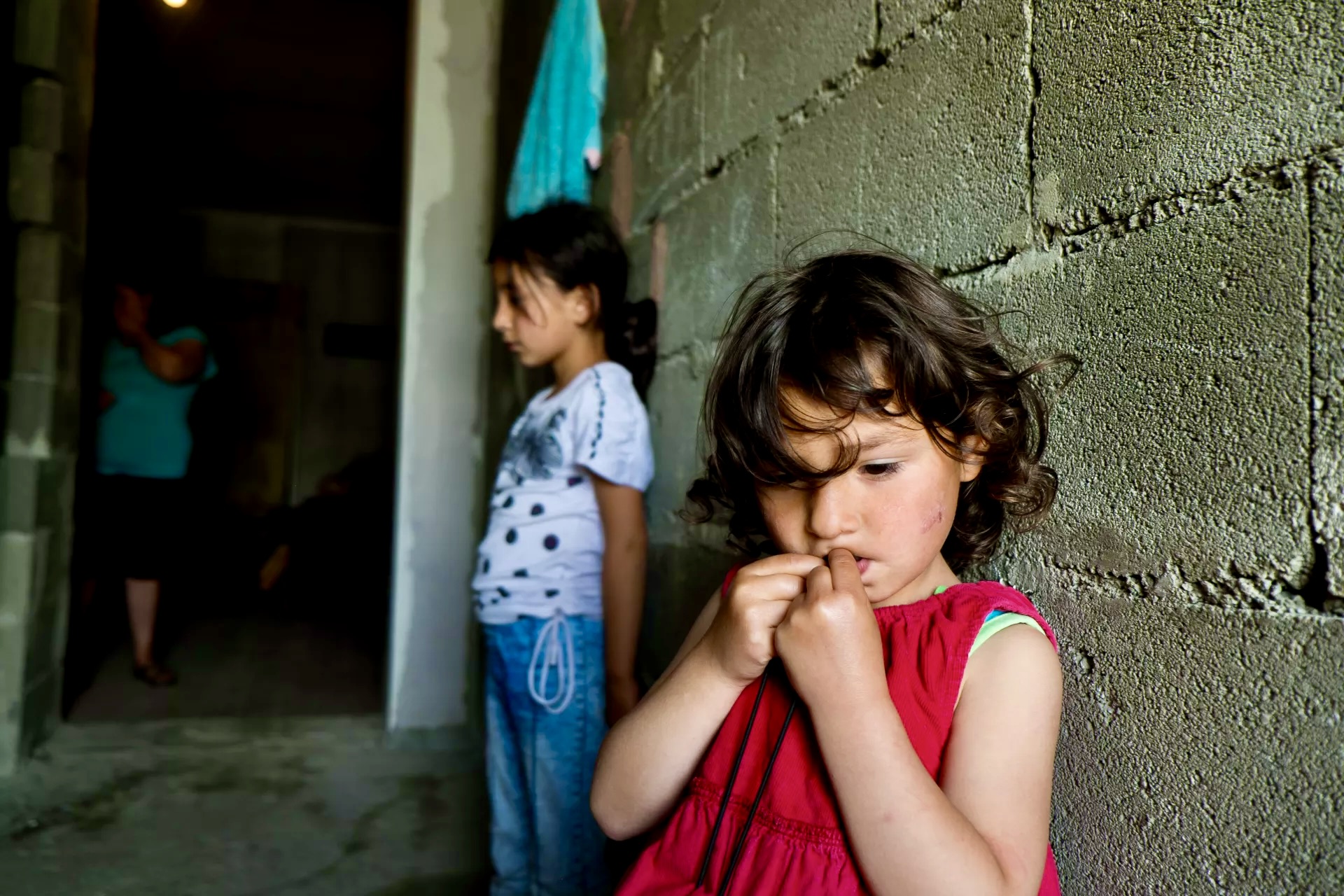
Children remain the most vulnerable group. Absolute poverty among minors in 2024 was 12.1% — the highest rate among all age groups. Even more alarming data comes from UNICEF: according to the 2022 MICS survey, 37.8% of children in Georgia experience deprivation in three out of sixteen categories of basic needs. In rural areas, this figure reaches 47.1%. About 45% of children lack necessary school supplies, 35% do not receive daily meals at school, and about 29,000 children have no access to basic hygiene facilities.
Demographic profile of poverty: youth suffer more than the elderly
The poverty rate is unevenly distributed across age groups. Among young people under 18, it is 12.1%, while among the elderly (65+) it is only 6.7%. This is explained, in particular, by the fact that pensioners receive regular payments, while families with children are more vulnerable to economic shocks. The poverty rate among the population aged 18–64 is 9.3%.
Living wage and food security
The subsistence minimum in Georgia for January–November 2025 was 255 lari ($94) per month, 10% higher than a year earlier. For an able-bodied man, this figure is 288 lari ($106). Despite this, Georgia ranks among the top 25 countries in the world in the 2025 Global Hunger Index, scoring 5 out of 100 and taking first place in freedom from hunger. Malnutrition affects less than 2.5% of the population, and the under-five mortality rate is only 0.9%.
Human development and gender inequality
According to the 2025 UNDP report, Georgia retains the status of a country with “very high human development”, ranking 57th out of 193 countries with an HDI of 0.844. However, when accounting for inequality, this figure drops by 10.7% to 0.754.
The Gender Inequality Index (GII) is 0.257 (66th out of 172), reflecting persistent gaps in reproductive health, political representation and labor market participation.
Social assistance: the paradox of 708,245 recipients
As of 2025, 708,245 people receive social assistance, and their number exceeds the number of officially recognized poor. This is explained by several factors: about 279,000 children receive benefits, and more than 239,000 people retain their socially vulnerable status even after employment thanks to public employment programs that allow them to keep benefits for up to four years.
Opposition politician Tazo Datunashvili stated that “every fifth citizen of Georgia officially depends on social assistance,” accusing the government of “zero effect” in lifting families out of long-term vulnerability.
Prime Minister Irakli Kobakhidze, for his part, notes that GDP per capita has more than doubled since 2020 and will exceed $10,000 in 2025. However, economists warn that using nominal dollar figures may exaggerate real income growth, and Kobakhidze himself admits that Georgia “remains far behind even the least prosperous EU member states.”