
Realist: news and analytics

Русский / English / العربية

  • News
  • Russia
  • Caucasus
  • Opinion
  • Interviews
  • Experts
No Result
View All Result
Realist: news and analytics
  • News
  • Russia
  • Caucasus
  • Opinion
  • Interviews
  • Experts
No Result
View All Result
Realist: news and analytics

China slams U.S. chip export curbs as Trump accuses Beijing of trade deal violations

Amid a 90-day tariff truce, tensions rise over AI and semiconductors as both nations accuse each other of breaching economic commitments.

   
May 31, 2025, 11:01
Business & Energy
China slams U.S. chip export curbs as Trump accuses Beijing of trade deal violations

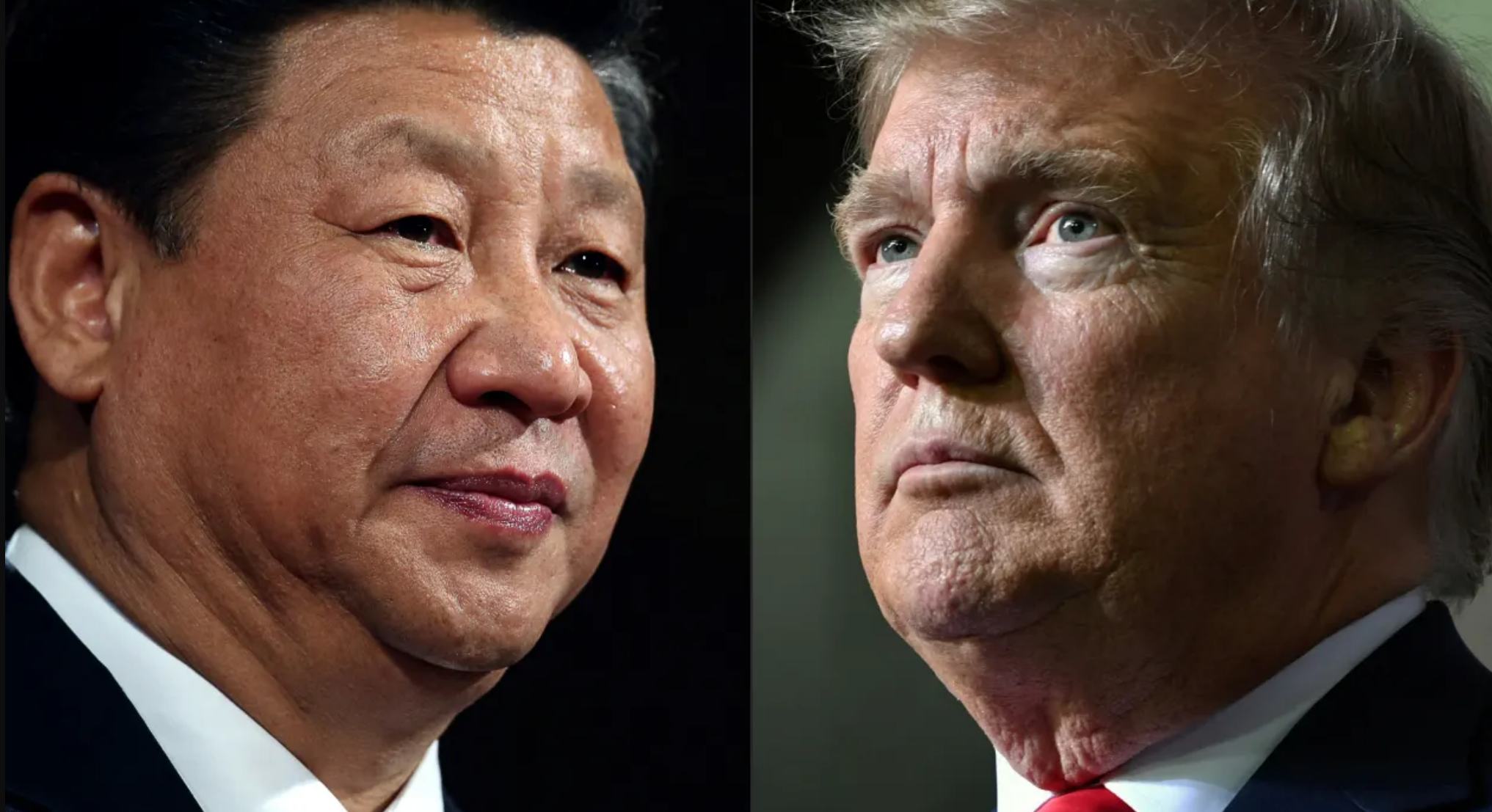
BEIJING / WASHINGTON (Realist English). The Chinese government has sharply criticized the United States for what it calls “discriminatory restrictions” in the semiconductor sector, escalating a renewed U.S.–China trade conflict just days after President Donald Trump accused Beijing of violating a preliminary trade deal.

“China has repeatedly raised concerns with the U.S. regarding its abuse of export control measures in the semiconductor sector and other related practices,” Liu Pengyu, spokesperson for the Chinese embassy in Washington, told NBC News.

The diplomatic clash comes amid heightened geopolitical and technological rivalry, particularly in the race to dominate artificial intelligence infrastructure. At the center of the dispute is Washington’s expanding effort to block Chinese access to cutting-edge chip technology — a campaign dating back to Trump’s first term and now intensifying under his renewed administration.

Trade freeze and public rebukes

Trump, in a social media post early Friday, accused China of failing to honor the terms of a 90-day tariff suspension agreement, reached after economic talks in Geneva on May 12. “The Chinese are slow-rolling compliance,” said U.S. Trade Representative Jamieson Greer in a separate CNBC interview.

China responded by demanding that the U.S. “correct its erroneous actions” and stop “discriminatory restrictions against China,” referencing a broader consensus allegedly reached in Geneva. However, Beijing did not clarify which U.S. measures it considers violations of that deal.

Chip war escalates

At the core of the dispute are toughened U.S. export controls that bar American companies from supplying key technologies to Chinese firms. This includes bans on AI chips developed by Nvidia, Huawei, and software from Synopsys and Cadence Design Systems, all of whom reportedly received new directives from the U.S. Commerce Department this month.

Earlier this year, Nvidia was told it could no longer export its H20 AI chip to China — a model specifically designed to comply with 2022 regulations. The company now expects to lose $8 billion in quarterly sales, with $4.5 billion in unsellable inventory stuck in limbo.

“The U.S. has based its policy on the assumption that China cannot make AI chips,” Nvidia CEO Jensen Huang told investors. “That assumption was always questionable — and now it’s clearly wrong.”

The restrictions, part of what Washington frames as a national security strategy, began in 2019 when Trump barred Huawei from accessing American tech, effectively pushing the firm out of the smartphone market. That early wave of controls paved the way for a broader tech decoupling effort, which President Joe Biden later expanded.

The Trump administration recently rolled back the controversial “AI diffusion rule”, a Biden-era framework that would have imposed export caps on nearly all countries. A new, simplified regulation is reportedly in the works.

Industry backlash and global realignment

Critics of U.S. policy — including Nvidia and trade analysts — warn that the sanctions risk accelerating China’s domestic chip industry rather than hindering it. Nvidia, in particular, has argued that rather than preserving U.S. technological leadership, the rules are isolating American companies from a growing global market.

Meanwhile, Chinese officials argue that U.S. restrictions are not only economically disruptive, but violate the spirit of free trade and weaponize supply chains to assert global dominance.
ChinaMost PopularUnited StatesUS Foreign PolicyUS-China Relations
Previous Post

Macron threatens sanctions on Israeli settlers over Gaza aid blockade

Next Post

Deadly sabotage in Russia: Seven killed, over 70 injured in coordinated railway attacks in Bryansk and Kursk regions

Related Posts

Oil prices rise amid uncertainty over Hormuz security coalition
Business & Energy

Oil prices rise amid uncertainty over Hormuz security coalition

17 March, 2026
Strait of Hormuz disruption sends shockwaves through global trade
Business & Energy

Strait of Hormuz disruption sends shockwaves through global trade

16 March, 2026
Hormuz crisis reshapes global tanker market as shipping routes collapse
Business & Energy

Hormuz crisis reshapes global tanker market as shipping routes collapse

13 March, 2026
U.S. grants temporary waiver for purchases of Russian oil amid Middle East energy shock
Business & Energy

U.S. grants temporary waiver for purchases of Russian oil amid Middle East energy shock

13 March, 2026
IEA countries agree to release 400 million barrels from emergency oil reserves
Business & Energy

IEA countries agree to release 400 million barrels from emergency oil reserves

12 March, 2026
IEA countries agree to release 400 million barrels from emergency oil reserves
Business & Energy

IEA warns Middle East war is disrupting global energy flows

12 March, 2026
Most Popular
Most Popular
Strait of Hormuz disruption sends shockwaves through global trade

Strait of Hormuz disruption sends shockwaves through global trade

16 March, 2026

LONDON (Realist English). Escalating military tensions around the Strait of Hormuz are rapidly disrupting global shipping and energy markets, as...

Russian Orthodox Church Synod approves leadership changes and structural reforms

Iran war puts Vice President JD Vance in difficult political position

14 March, 2026

WASHINGTON (Realist English). The ongoing war with Iran has placed US Vice President JD Vance in a politically sensitive position,...

Hormuz crisis reshapes global tanker market as shipping routes collapse

Hormuz crisis reshapes global tanker market as shipping routes collapse

13 March, 2026

LONDON (Realist English). The effective closure of the Strait of Hormuz following the escalation of the Iran war has triggered...

Iran’s new leader Mojtaba Khamenei calls for unity and vows continued resistance

Iran’s new leader Mojtaba Khamenei calls for unity and vows continued resistance

12 March, 2026

TEHRAN (Realist English). Iran’s newly appointed Leader of the Islamic Revolution Ayatollah Seyyed Mojtaba Khamenei delivered his first public address...

Opinion

Star Wars without fiction: how space became the next battlefield

Star Wars without fiction: how space became the next battlefield

27 January, 2026

MOSCOW (Realist English). “Star Wars” stopped being science fiction long ago. Unfortunately, over ten thousand years of civilisation, humanity has...

Armenian monastery Dadivank

Dadivank: The Legacy of Christ’s Apostles in Artsakh

17 December, 2025

YEREVAN (Realist English). In Artsakh, before the ethnic cleansing and forced deportation – simply put, genocide – carried out by...

An unusual phenomenon at the Church of the Holy Savior in Shushi

An unusual phenomenon at the Church of the Holy Savior in Shushi

3 November, 2025

YEREVAN (Realist English). In the distant year 1979, as a third-year university student, I used to visit the Church of...

War with Iran seen as inevitable, Armenia warned of looming regional storm

War with Iran seen as inevitable, Armenia warned of looming regional storm

21 September, 2025

YEREVAN (Realist English). The war with Iran is drawing ever closer. And once again, this pulls Armenia into a zone...

All rights reserved.

© 2017-2026

  • About Us
  • Mission and Values
  • Contact Us
  • Privacy Policy

Follow Realist English

No Result
View All Result
  • News
  • Russia
  • Caucasus
  • Opinion
  • Interviews
  • Experts

Русский / English / العربية