
Realist: news and analytics

Русский / English / العربية

  • News
  • Russia
  • Caucasus
  • Opinion
  • Interviews
  • Experts
No Result
View All Result
Realist: news and analytics
  • News
  • Russia
  • Caucasus
  • Opinion
  • Interviews
  • Experts
No Result
View All Result
Realist: news and analytics

“Europe cannot be a mediator”: Moscow toughens rhetoric amid BRICS talks and NATO threats

Key foreign policy events in Russia from 13 to 15 May.

     
May 15, 2026, 09:58
Russia
Lavrov reaffirmed support for Iran, Peskov – priority of a peace agreement on Ukraine

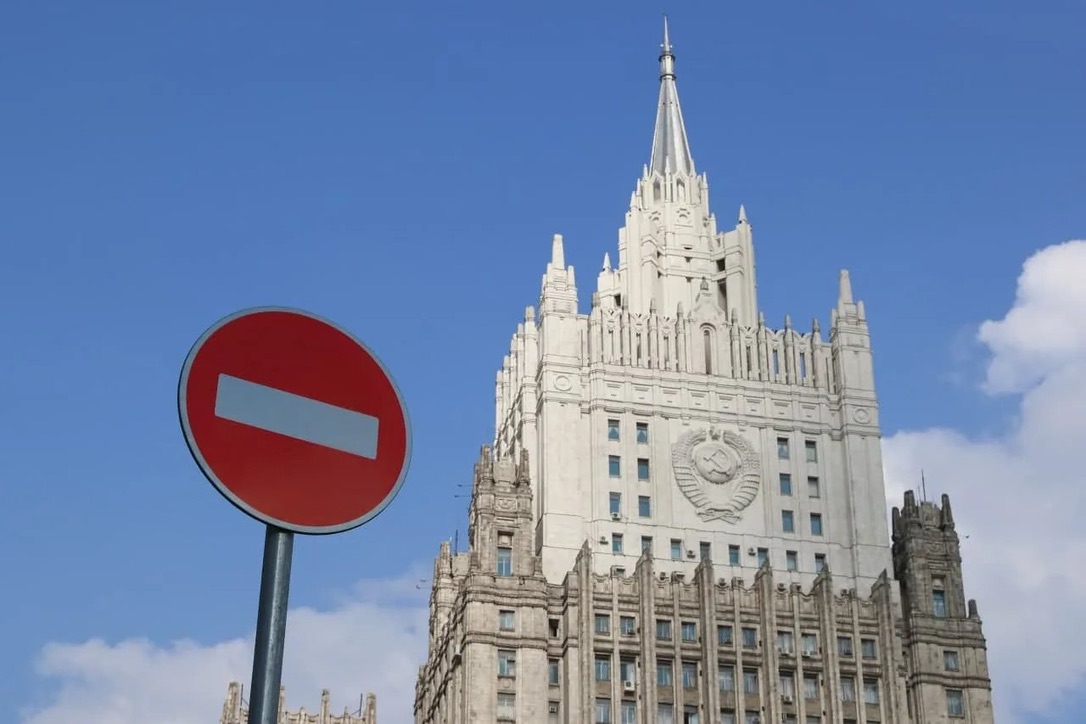
Main building of the Russian Ministry of Foreign Affairs. Photo: Press Service of the Russian Foreign Ministry

MOSCOW (Realist English). Over the past three days, Russian foreign policy has developed along several key tracks: strategic rapprochement with China and Iran on the sidelines of BRICS, a tough stance on the Ukrainian settlement, a return to nuclear diplomacy, and an escalation of confrontational rhetoric towards Europe and NATO.

Below is a summary of the main events and statements.

Eastern vector: BRICS in New Delhi and a hydrocarbon signal from Beijing

The central event of the three days was Foreign Minister Sergei Lavrov’s participation in the BRICS foreign ministers’ meeting in New Delhi (13–14 May 2026).

The Iranian dossier

Lavrov held a separate meeting with his Iranian counterpart, Abbas Araghchi. The sides discussed progress in negotiations on the Middle East conflict. Moscow stressed the importance of preserving the fragile ceasefire between the US and Iran and declared its readiness to offer “good offices” for de‑escalation.

The Chinese signal

On the eve of President Vladimir Putin’s scheduled visit to Beijing (20 May), the Kremlin announced a “serious step” in energy cooperation with China. Details have not been disclosed, but experts link this to agreements on the “Power of Siberia – 2” pipeline and settlements in national currencies. Beijing, for its part, reaffirmed its readiness to build a “more just world order”.

Ukrainian settlement: Moscow’s conditions and the mediator issue

Ahead of, and after, the two‑day ceasefire (8–9 May) agreed with the United States, the Kremlin set strict parameters for any talks.

Ultimatum on Donbas

On 13 May, presidential spokesman Dmitry Peskov stated that a ceasefire and the start of peace negotiations are only possible after Ukrainian troops withdraw from Donbas territory. Moscow considers no other scenario.

Europe is not a mediator

Peskov also categorically ruled out the European Union as a potential mediator, calling it a “party to the war on Ukraine’s side”. “The US is the only mediator now,” he stressed, adding that Europeans “do not want and cannot” play that role.

Earlier, on 4 May, he had noted that Russia was entering a “period of very tough confrontation with Europe”.

Nuclear diplomacy: reviving the idea of a “P5” summit

Against the backdrop of escalating international tensions, the Russian Foreign Ministry recalled Vladimir Putin’s long‑standing initiative to hold a summit of the five nuclear powers (Russia, China, the US, the UK, France).

The ministry emphasised that this initiative is becoming particularly relevant due to the “dire state of affairs” in relations between the permanent members of the UN Security Council. No specific timeline has been set, but the signal is directed primarily at Washington.

NATO, the Baltic region and a “window of opportunity”

The rhetoric towards the Atlantic alliance and European countries has been extremely tough in recent days.

NATO on the Kola Peninsula

Russia’s ambassador to Norway, Nikolay Korchunov, warned that NATO’s increased military activity near Russian strategic facilities on the Kola Peninsula threatens a direct military clash.

A Baltic “laboratory”

Deputy Foreign Minister Alexander Grushko called the Baltic region a Western “laboratory” for escalating tensions and containing Russia. He also criticised Western attempts to artificially link any regional cooperation with the Ukrainian settlement.

A “window of opportunity” for the Kremlin

Western experts, to whom Russian diplomats refer, warn that the next year or two could become a “window of opportunity” for Russia to test NATO’s resilience – due to a reduction in the US military presence in Europe and the alliance’s internal problems.

The past three days of Russian diplomacy have clearly demonstrated Moscow’s main principle: it conducts dialogue with the West exclusively through Washington, bypassing Brussels. At the same time, the Kremlin is strengthening its “eastern flank” (BRICS, China, Iran) and reminding of nuclear deterrence as its last resort.

Europe, meanwhile, has been pushed to the periphery – only “very tough confrontation” awaits it.

NATORussiaRussia-EU RelationsRussia-Iran RelationsRussia-Ukraine RelationsRussia’s Foreign PolicyRussian Foreign MinistryUkrainian Civil War
Previous Post

Iran issues ultimatum to US and Israel

Next Post

US and China Seek Transition to “Managed Rivalry”

Related Posts

Russia’s budget received 650 billion rubles in oil and gas revenues in May
Russia

Russia’s budget received 650 billion rubles in oil and gas revenues in May

14 May, 2026
Putin: meeting with Zelensky — only for signing peace
Russia

Putin: meeting with Zelensky — only for signing peace

13 May, 2026
Russia calls for not pushing the Palestinian-Israeli conflict to the periphery due to wars in Iran and Lebanon
Russia

“Russia is always with them”: how the Foreign Ministry supports compatriots abroad

12 May, 2026
Azerbaijani mafia in Russia: decades of murder, drugs and Russophobia under Baku’s patronage
Russia

Azerbaijani mafia in Russia: decades of murder, drugs and Russophobia under Baku’s patronage

11 May, 2026
Collapse of Small Business in Russia and Frozen Investments: Central Bank Records Drop in Demand as Enterprises Prepare for Layoffs
Russia

Collapse of Small Business in Russia and Frozen Investments: Central Bank Records Drop in Demand as Enterprises Prepare for Layoffs

11 May, 2026
“We Do Not Want a Repeat of February 1917”: Zyuganov Attacks the Government and United Russia
Russia

“We Do Not Want a Repeat of February 1917”: Zyuganov Attacks the Government and United Russia

10 May, 2026
Most Popular
Most Popular
US and China Seek Transition to “Managed Rivalry”

US and China Seek Transition to “Managed Rivalry”

15 May, 2026

BEIJING (Realist English). On May 15, US President Donald Trump and Chinese President Xi Jinping began the final round of...

Metropolitan Shio Moudjiri elected Patriarch of the Georgian Orthodox Church

Metropolitan Shio Moudjiri elected Patriarch of the Georgian Orthodox Church

12 May, 2026

TBILISI (Realist English). On 11 May, Georgia saw the succession of the head of its Orthodox Church for the first time...

Armenian battalion named after Marshal Bagramyan established in Donetsk: veterans of Abkhazia hand over their banner to Donbas volunteers

Armenian battalion named after Marshal Bagramyan established in Donetsk: veterans of Abkhazia hand over their banner to Donbas volunteers

7 May, 2026

MOSCOW (Realist English). On 6 May, a historic ceremony of handing over a battle banner took place at the Cathedral of...

Sheaito Moussallam: Iran is the main obstacle to Greater Israel

Sheaito Moussallam: Iran is the main obstacle to Greater Israel

5 May, 2026

BEIRUT (Realist English). The Middle East today is an echo of exploding bombs, diplomatic dead ends, and dozens of contradictory interpretations...

Opinion

From War to Cooperation: How Iraq Became Iran’s Main Partner but Maintained Neutrality

From War to Cooperation: How Iraq Became Iran’s Main Partner but Maintained Neutrality

14 May, 2026

ERBIL (Realist English). Amid the escalating Middle East crisis, with Iran and the United States standing on the brink of...

Lula and Trump Find “Chemistry” as China Is Pushed Out of Latin America

Lula and Trump Find “Chemistry” as China Is Pushed Out of Latin America

13 May, 2026

BRASILIA (Realist English). Luiz Inácio Lula da Silva, Brazil’s popular left‑wing president, recently visited the United States. Contrary to sceptical forecasts,...

Can Trump Get a New Nuclear Deal With Iran?

Can Trump Get a New Nuclear Deal With Iran?

12 May, 2026

WASHINGTON (Realist English). Since the US and Israeli war against Iran began in late February 2026, President Donald Trump has struggled...

Oil Shock Worsens the Plight of the Poor in Asia and Africa

Oil Shock Worsens the Plight of the Poor in Asia and Africa

11 May, 2026

MOSCOW (Realist English). The conflict in the Middle East, triggered by a joint US-Israeli military operation against Iran, has led to...

All rights reserved.

© 2017-2026

  • About Us
  • Mission and Values
  • Contact Us
  • Privacy Policy

Follow Realist English

No Result
View All Result
  • News
  • Russia
  • Caucasus
  • Opinion
  • Interviews
  • Experts

Русский / English / العربية