
Realist: news and analytics

Русский / English / العربية

  • News
  • Russia
  • Caucasus
  • Opinion
  • Interviews
  • Experts
No Result
View All Result
Realist: news and analytics
  • News
  • Russia
  • Caucasus
  • Opinion
  • Interviews
  • Experts
No Result
View All Result
Realist: news and analytics

Iran war exposes global reliance on fragile energy routes

Disruptions in the Strait of Hormuz strain global markets, with analysts pointing to renewables as a long-term buffer against recurring energy shocks.

   
March 23, 2026, 06:48
Business & Energy
Iran war exposes global reliance on fragile energy routes

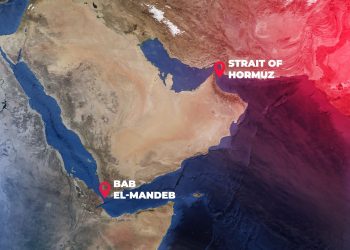
LONDON (Realist English). The war involving Iran has exposed the global economy’s dependence on vulnerable fossil fuel supply routes, intensifying calls to accelerate the transition to renewable energy as disruptions in the Strait of Hormuz ripple across global markets.

Fighting has effectively halted much of the oil and liquefied natural gas (LNG) traffic through the strait, a critical chokepoint that carries around 20% of global energy supplies. The disruption has driven sharp price increases and triggered supply concerns across multiple regions, particularly in Asia, which relies heavily on Gulf energy imports.

Europe and Africa are also facing growing pressure. European governments are exploring demand reduction measures, while many African economies are bracing for rising fuel costs and inflation due to their reliance on imported oil for transport and logistics.

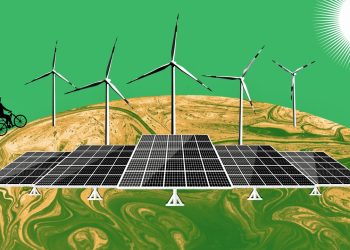
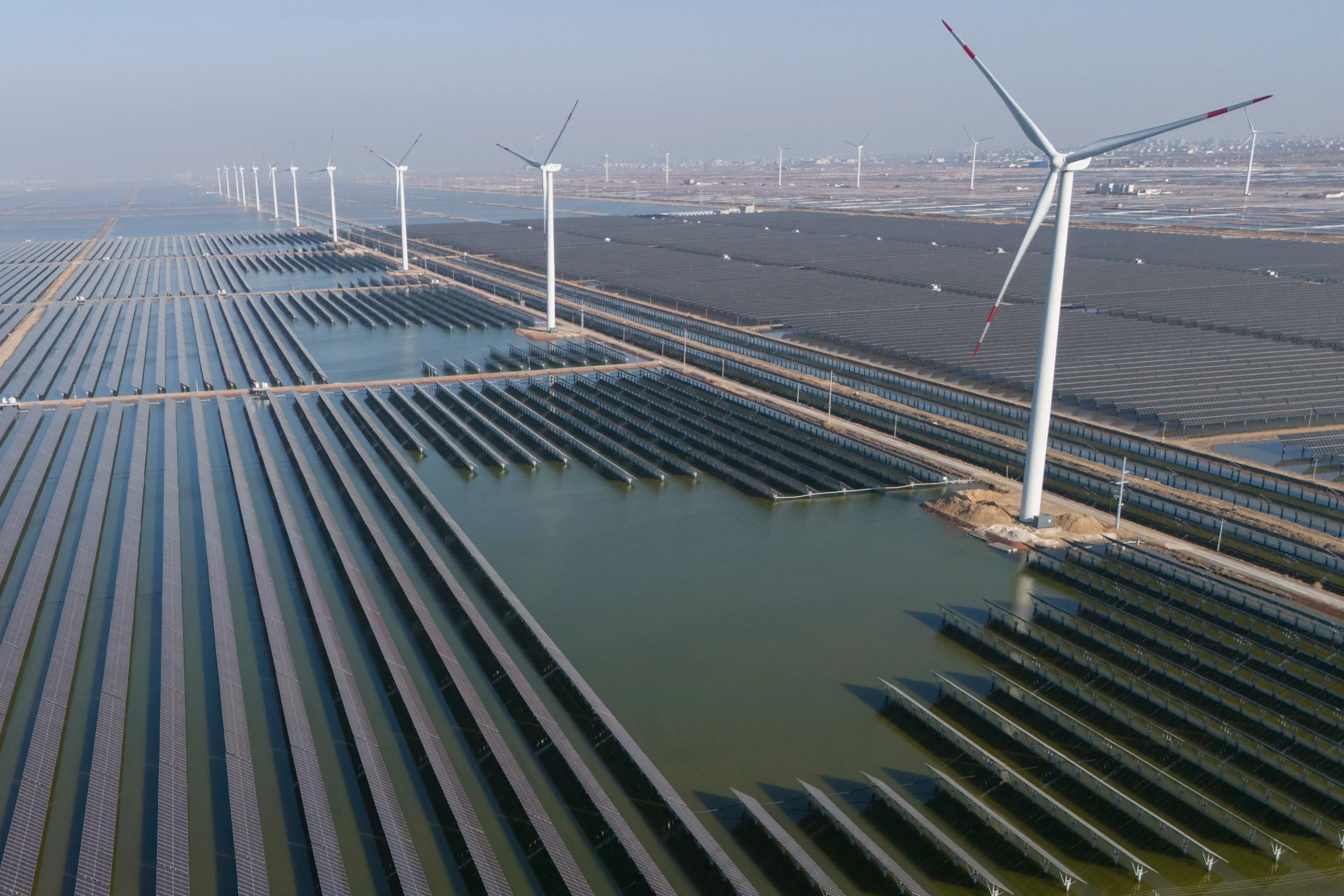
Analysts note that, unlike previous energy crises, renewable energy is now cost-competitive in many markets. According to the International Renewable Energy Agency, more than 90% of new renewable power projects in 2024 were cheaper than fossil fuel alternatives, strengthening the economic case for accelerating deployment.

However, oil remains critical beyond electricity generation, including in fertilizers, petrochemicals, and industrial production. As a result, most economies remain exposed to supply disruptions, even as renewable capacity expands.

“This is a structural feature of the system,” said energy analyst James Bowen of ReMap Research, noting that such crises are inherent to fossil fuel-based supply chains.

The impact varies by country. China, the world’s largest energy consumer, has built a significant renewable energy base alongside its fossil fuel imports, allowing it to partially buffer shocks. Electrification and renewable deployment have reduced its vulnerability, though it remains the largest crude oil importer globally.

India has also expanded solar and wind capacity, but at a slower pace and with continued reliance on coal and imported fuels. The current crisis has exposed gaps in energy resilience, with shortages of cooking gas and risks to key industries such as fertilizers and ceramics.

In Europe, policymakers are revisiting lessons from the 2022 energy crisis triggered by Russia’s invasion of Ukraine. While initial efforts focused on reducing fossil fuel dependence, many countries instead diversified suppliers, investing heavily in LNG infrastructure rather than accelerating the energy transition.

In Asia, countries such as Japan and South Korea remain heavily dependent on imported fossil fuels, though the current crisis is prompting renewed interest in domestic renewable energy as a strategic priority.

Lower-income countries face the greatest risks. Nations in Africa and South Asia, including Bangladesh and Zambia, are struggling with rising import costs, limited reserves, and growing inflationary pressure. Some governments have already introduced emergency measures such as fuel rationing and power cuts.

At the same time, examples of renewable resilience are emerging. Pakistan’s expansion of solar energy has reduced its reliance on imports, while Vietnam’s solar capacity is helping offset rising fuel costs. These cases highlight how domestic renewable resources can provide a buffer against global supply shocks.

Analytically, the crisis reinforces a structural shift in the global energy debate: from climate-driven transition to security-driven transition, where resilience and independence are becoming central arguments for renewables.

The key question is whether governments will translate this urgency into sustained investment in clean energy, or revert — as in past crises — to short-term fossil fuel solutions that leave the system exposed to future shocks.


Iran WarMost Popular
Previous Post

Bessent defends escalation strategy in Iran conflict

Related Posts

Trump threatens strikes on Iran power plants over Hormuz
Business & Energy

Trump threatens strikes on Iran power plants over Hormuz

22 March, 2026
Actor and martial artist Chuck Norris dies aged 86
Business & Energy

Global shipping disrupted as Hormuz crossings fall 95%

21 March, 2026
US sees Chinese projects in Latin America as potential military assets
Business & Energy

Nvidia CEO calls OpenClaw “next ChatGPT” as autonomous AI gains momentum

18 March, 2026
Oil prices rise amid uncertainty over Hormuz security coalition
Business & Energy

Oil prices rise amid uncertainty over Hormuz security coalition

17 March, 2026
Strait of Hormuz disruption sends shockwaves through global trade
Business & Energy

Strait of Hormuz disruption sends shockwaves through global trade

16 March, 2026
Hormuz crisis reshapes global tanker market as shipping routes collapse
Business & Energy

Hormuz crisis reshapes global tanker market as shipping routes collapse

13 March, 2026
Most Popular
Most Popular
Iran war exposes global reliance on fragile energy routes

Iran war exposes global reliance on fragile energy routes

23 March, 2026

LONDON (Realist English). The war involving Iran has exposed the global economy’s dependence on vulnerable fossil fuel supply routes, intensifying...

Actor and martial artist Chuck Norris dies aged 86

Taiwan fears US weapons use in Iran could aid China

21 March, 2026

TAIPEI (Realist English). Taiwan has raised concerns that extensive US use of long-range cruise missiles in the war involving Iran...

Strait of Hormuz disruption sends shockwaves through global trade

Strait of Hormuz disruption sends shockwaves through global trade

16 March, 2026

LONDON (Realist English). Escalating military tensions around the Strait of Hormuz are rapidly disrupting global shipping and energy markets, as...

Russian Orthodox Church Synod approves leadership changes and structural reforms

Iran war puts Vice President JD Vance in difficult political position

14 March, 2026

WASHINGTON (Realist English). The ongoing war with Iran has placed US Vice President JD Vance in a politically sensitive position,...

Opinion

Star Wars without fiction: how space became the next battlefield

Star Wars without fiction: how space became the next battlefield

27 January, 2026

MOSCOW (Realist English). “Star Wars” stopped being science fiction long ago. Unfortunately, over ten thousand years of civilisation, humanity has...

Armenian monastery Dadivank

Dadivank: The Legacy of Christ’s Apostles in Artsakh

17 December, 2025

YEREVAN (Realist English). In Artsakh, before the ethnic cleansing and forced deportation – simply put, genocide – carried out by...

An unusual phenomenon at the Church of the Holy Savior in Shushi

An unusual phenomenon at the Church of the Holy Savior in Shushi

3 November, 2025

YEREVAN (Realist English). In the distant year 1979, as a third-year university student, I used to visit the Church of...

War with Iran seen as inevitable, Armenia warned of looming regional storm

War with Iran seen as inevitable, Armenia warned of looming regional storm

21 September, 2025

YEREVAN (Realist English). The war with Iran is drawing ever closer. And once again, this pulls Armenia into a zone...

All rights reserved.

© 2017-2026

  • About Us
  • Mission and Values
  • Contact Us
  • Privacy Policy

Follow Realist English

No Result
View All Result
  • News
  • Russia
  • Caucasus
  • Opinion
  • Interviews
  • Experts

Русский / English / العربية