


TEL AVIV (Realist English). The war in the Middle East, which began with US-Israeli strikes on Iran, has entered its fifth week. During this time, what once seemed unthinkable has occurred: the top leadership of the Islamic Republic has been eliminated, strikes have been carried out on nuclear facilities, and the Israeli army, for the first time in many years, has advanced deep into Lebanese territory, creating a new reality on the northern border.
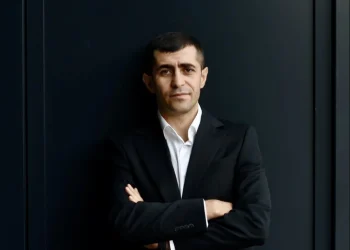
In Israel, these events are perceived not as another round of regional tension, but as an existential turning point. To understand how Israel views the goals of this war, its possible limits, and likely outcomes, Realist English turned to Dr. Alexander Tsinker — an influential Israeli expert in international relations, political scientist, former Knesset member, founder and first head of the Israel-Armenia interparliamentary friendship group, president of the International Center for Electoral Systems (ICES).
In his interview with Realist English, he reveals the strategic logic of Israeli actions, explains why strikes on IRGC command change the psychological balance in the region, and offers a forecast of how this conflict could reshape the Middle East for years to come.
Are Israel’s strikes on Iran a preemptive operation against its nuclear program, or part of a broader strategy of regime change in Tehran? How realistic is the goal of overthrowing Iran’s leadership by military means?
Alexander Tsinker: To understand the goals of Israel’s current operation, it is important to note a fundamental point: Israel is not fighting the Iranian people. It is confronting the ayatollahs’ regime that emerged after the 1979 Islamic Revolution and made the destruction of Israel part of its official ideology. For decades, Iran’s leadership has not only declared the need to eliminate Israel but has also systematically built a military infrastructure capable of realizing that threat. That is why this conflict is perceived in Israel as existential — it is not a struggle for influence in the Middle East, but a direct threat to the existence of the state.
In recent years, Iran has built a system of regional pressure on Israel based on a network of allied armed structures, including Hezbollah in Lebanon, Hamas in the Gaza Strip, and the Houthis in Yemen. These forces have become tools of a proxy war against Israel. The tragic events of October 7, 2023, showed how dangerous this system can be: the massive attack on Israeli cities proved that this is not just rhetoric but a real strategy of pressure and destruction. For many years, Israel fought the tentacles of the Iranian octopus. Now, for the first time, a blow is being struck at its center.
In this context, Israel’s current operation is primarily preemptive. Its goal is to strike the regime’s military and technological infrastructure, including facilities related to missile and nuclear programs. It also involves the broader task of weakening the regime’s strategic potential. At the same time, it is important to stress that officially there is no talk of a direct military operation to change power in Tehran.
Overthrowing the regime in such a large country by military means alone is an extremely difficult task. However, serious destruction of military infrastructure and weakening of regional allies could create pressure on the power system itself in Iran. As long as the regime in power in Iran maintains an ideology of destroying Israel, Israel’s strategy will be based on the need to protect its existence and the safety of its citizens.
Israel claims to have eliminated Iran’s top military leadership, including the commander of the IRGC Navy. How sensitive are these losses for Tehran?
Alexander Tsinker: The elimination of high-ranking commanders is a very sensitive blow for Tehran, especially when it comes to the leadership of the Islamic Revolutionary Guard Corps. The IRGC is not just a military structure. It is one of the key pillars of Iran’s entire power system, controlling a significant part of the country’s military, political, and economic mechanisms. Therefore, eliminating high-ranking commanders has several consequences.
First, it disrupts the system of command and coordination of military operations, at least for a certain period. Second, there is an inevitable decline in the professional level of command — experienced leaders cannot be replaced instantly. But no less important is the psychological effect. Such operations demonstrate that Israel has the capability to carry out targeted eliminations of Iran’s top military leadership. In essence, it is a signal that any representative of the IRGC command chain could be vulnerable.
There is another aspect often overlooked. The IRGC plays a key role in managing and coordinating the entire regional proxy network. Therefore, strikes on its command structure inevitably affect not only the IRGC command chain but also the management system of those proxy structures.
Israel has announced the creation of a “security zone” in southern Lebanon up to the Litani River. How do you assess this move?
Alexander Tsinker: The Israeli army has already reached the Litani River, and in some areas is operating north of it. This means that it is not just a political statement or a planned buffer zone, but an actual change in the military situation on the ground. The main goal of the operation is not just to push Hezbollah forces away from the Israeli border, but to finally eliminate the military threat that this organization has posed for many years to northern Israel. This refers primarily to missile infrastructure, sabotage units, and the entire system of Hezbollah’s military presence in southern Lebanon.
In a broader sense, Israel is trying to change the very security model on its northern border that emerged after the Second Lebanon War in 2006. At that time, it was assumed that the presence of international forces and the Lebanese army could limit Hezbollah’s activities south of the Litani. But in practice, this system failed: the organization continued to build up its armaments and strengthen its military infrastructure in close proximity to the Israeli border. From a military standpoint, current actions are aimed at creating a new, more sustainable security architecture in the north.
At the same time, it is important to emphasize another fundamental point. Even if the international situation changes — for example, if Washington decides to end the military phase of the conflict with Iran — Israel’s fight against Hezbollah in Lebanon could continue. For Israel, this is not an episode of a coalition campaign but its own war for the security of its northern borders. Politically, such actions naturally create tension with Lebanon, as Beirut traditionally regards them as a violation of sovereignty. However, in Israel’s strategic logic, the priority remains the elimination of the long-term military threat posed by Hezbollah.
How do Israel’s actions in Lebanon affect relations with Beirut? Is there a chance that the Lebanese government will take advantage of Hezbollah’s weakening and recognize Israel, as France has proposed?
Alexander Tsinker: Theoretically, a serious weakening of Hezbollah could indeed create new political opportunities within Lebanon. For many years, this organization has effectively become a “state within a state,” possessing its own military structure, political influence, and direct ties to Iran. This severely limits the ability of official Beirut to pursue independent domestic and foreign policy. At the same time, attitudes toward Hezbollah within Lebanon are far from unanimous.
A significant part of the political elite — especially among Christian and Sunni forces — has long perceived it as a factor undermining the country’s sovereignty and dragging Lebanon into other people’s regional conflicts. Therefore, it cannot be ruled out that some political circles in Beirut are, to a certain extent, interested in the weakening or even elimination of Hezbollah’s military infrastructure by Israel. Such things are not said publicly, but such sentiments exist within Lebanon’s political system.
However, even in this case, the path to recognizing Israel remains very long. Lebanon’s political system is extremely fragmented and built on a complex balance between different confessional groups. Any decision of this magnitude requires a consensus that simply does not exist today.
Moreover, Iran’s influence in Lebanon remains significant, and Hezbollah itself, even in the event of heavy losses, is unlikely to disappear from the country’s political life. Therefore, it is premature to talk about a rapid normalization of relations between Israel and Lebanon today. Even if Hezbollah’s military influence is seriously weakened, the political transformation of Lebanon is a long and complex process.
If you prioritize, which front is most dangerous for Israel today — Iran, Hezbollah, or the internal Palestinian threat? What is the hierarchy of challenges from a national security perspective?
Alexander Tsinker: In terms of threat priorities for Israel, they rank roughly as follows. In first place is Iran as a strategic adversary — a state with significant resources, a regional network of allies, and an ambition for military and technological superiority, including a nuclear component.
In second place is Hezbollah, the most powerful non-state military actor in the Middle East, effectively serving as Iran’s outpost on Israel’s northern border. The Palestinian front remains an important factor in internal security, but strategically it is not comparable in scale of threat to the Iranian front.
Israel’s war with Iran is taking place against the backdrop of attempts to normalize relations with Arab countries (the Abraham Accords). How does the current escalation affect these processes? Does it push potential partners away?
Alexander Tsinker: Paradoxically, the current conflict with Iran does not necessarily destroy regional normalization processes. In many Arab countries of the Persian Gulf, Iran is also perceived as a serious strategic threat. Therefore, at the level of long-term interests, their positions largely coincide with Israel’s. Moreover, the development of the conflict may even strengthen some trends toward cooperation.
Iranian missile and drone attacks on facilities in the region have already shown that the threat from Tehran concerns not only Israel. In such a situation, issues of missile defense, intelligence sharing, and security coordination are becoming increasingly relevant for regional states. That is why the processes related to the Abraham Accords are unlikely to be completely halted. A temporary slowdown is more likely, as Arab governments have to take into account public opinion and overall regional tension. At the same time, in the strategic perspective, the very logic of regional security may push some states toward closer interaction with Israel.
This, by the way, was recently noted by Donald Trump, who again called on Middle Eastern countries to more actively join the Abraham Accords. Therefore, the current crisis could have a dual effect: publicly, normalization processes may temporarily slow down, but at the level of strategic calculations, interest in cooperation with Israel may, on the contrary, increase in a number of regional countries.
In your opinion, what are the real conditions under which Israel would agree to a ceasefire on all fronts? Is there a scenario in which the war ends with a diplomatic agreement rather than a military victory by one side?
Alexander Tsinker: Statements that the war could end “soon” are periodically heard — including from Trump. But experience shows that such conflicts end not at the whim of politicians, but when they reach their limits. From the very beginning, it was clear that this was a war without a simple finale. For Israel, it is an attempt to change the rules of the game in the Middle East — to limit Iran’s missile and nuclear capabilities and to weaken the regional system of pressure it has created through allied armed structures. Iran, for its part, is not seeking victory in the classical sense. Its task is to maintain the system’s controllability and its ability to respond to strikes. In such a strategy, even the partial preservation of potential can be presented as success.
Therefore, the most realistic scenario for ending the war is not an obvious victory by anyone, but the gradual formation of a new balance of power. Several factors influence exactly what this balance will look like.
The first is regional. The Gulf states are closely watching the development of the conflict, especially the situation around the Strait of Hormuz. For them, strikes on oil infrastructure become a red line because they directly affect their economic security.
The second is global. The United States plays a key role here, as it determines the scale of military and political support for Israel and the level of pressure on Iran. But there is another important factor — China’s position, which is critically interested in the stability of energy supplies and not interested in a long-term destabilization of the region.
The third factor is internal to Israel. A war on several fronts requires significant resources and public resilience. Even a strong side at some point begins to seek not so much victory as a strategically acceptable way out of the conflict.
Finally, the fourth factor is Iran’s internal dynamics. At a certain point, a realization may form within the system that a change of course allows the regime to survive rather than destroy itself. And then a subject will appear capable of making such a turn politically.
Therefore, the most likely outcome of this war is not a loud peace agreement or an outright victory by anyone. Rather, it will be a gradual formation of a new configuration of deterrence. Israel will be able to record a reduction in the level of threat — but not its complete disappearance.
Iran will retain its power system — but within a much narrower corridor of opportunities. Such endings are becoming typical of modern conflicts. They end not with a full stop or a loud treaty, but with the establishment of a new balance of power that determines the boundaries of what is possible for all participants.