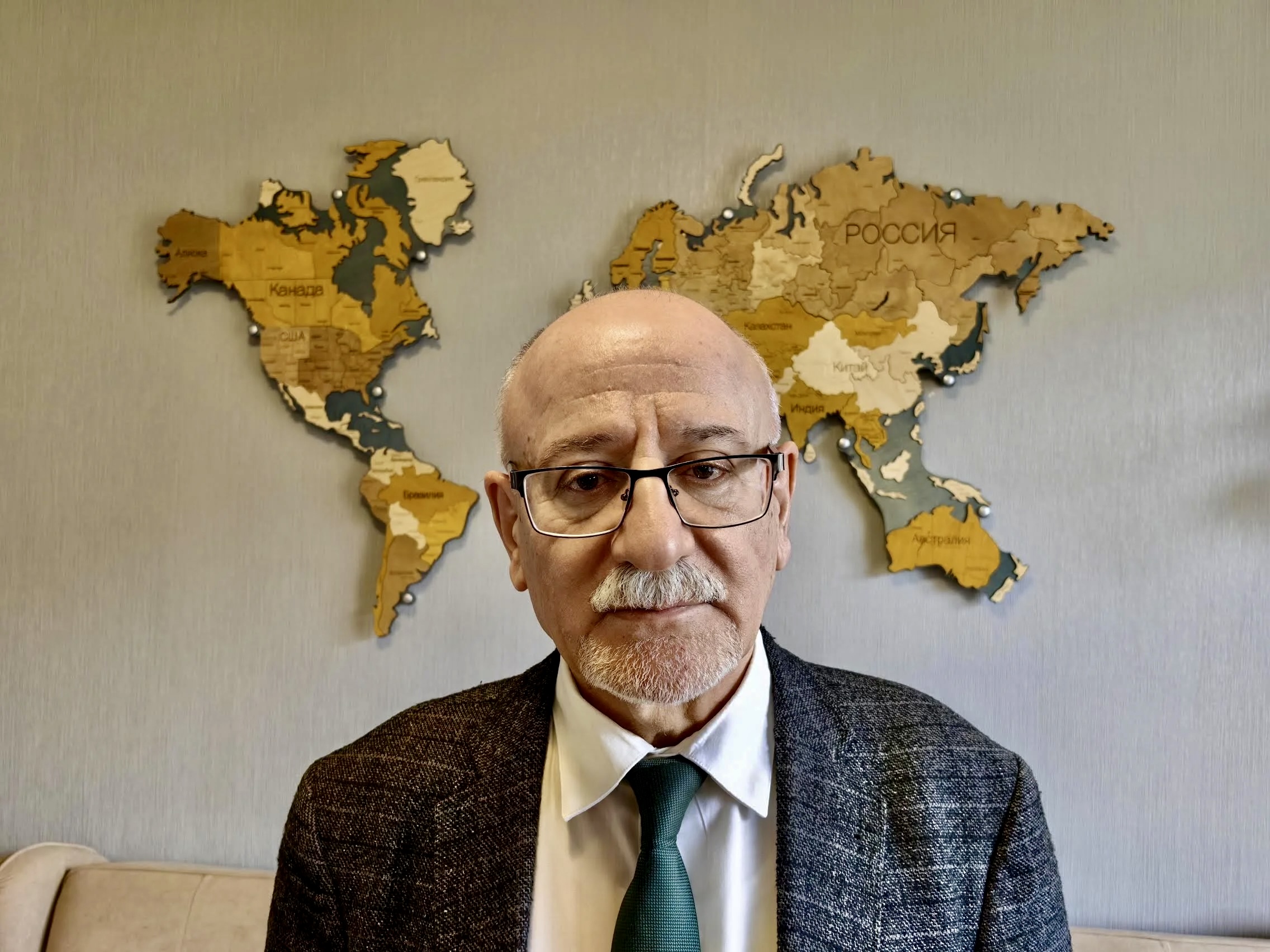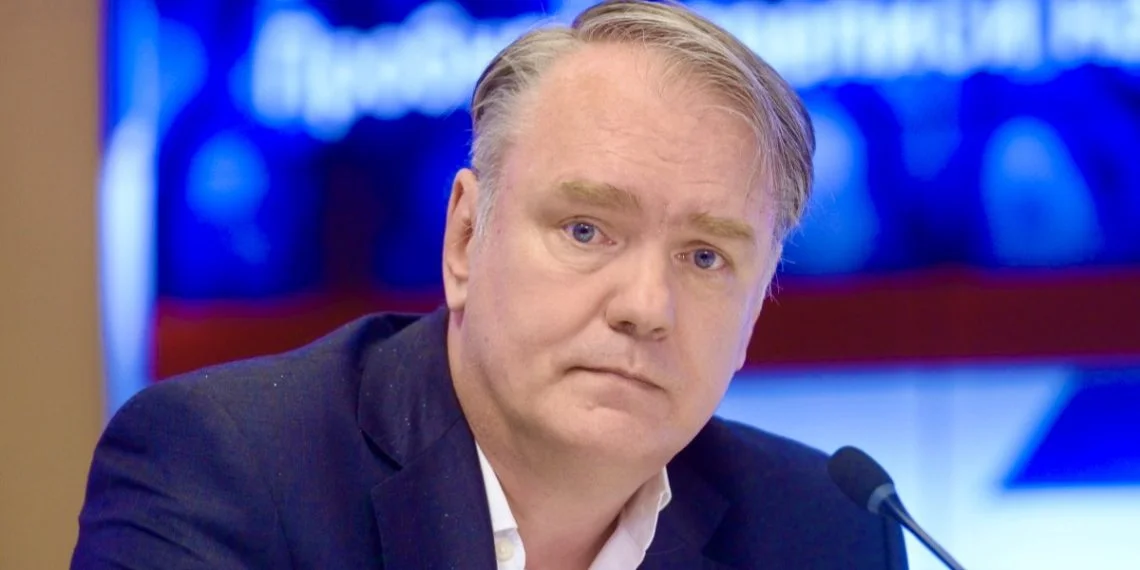
MOSCOW (Realist English). The Kremlin views the coincidence of the war in the Middle East and the war in Europe positively, although it did not participate in creating this overlap. The United States today is not interested in the Ukrainian conflict, Europe is not interested in the Iranian one, and Russia, regardless of external circumstances, will still win the special military operation, it would simply have fought longer. These assessments were presented in an interview with Realist News Agency by Dmitry Zhuravlev, Associate Professor at the Financial University under the Government of the Russian Federation, Candidate of Political Sciences, and State Councillor of the Russian Federation, Third Class.
In his conversation with Realist, the expert also reflects on the future of Europe, the prospects of expanding the United Nations Security Council, and explains why the Russian economy cannot be described as a fully mobilization-based system.
— Dmitry Anatolyevich, how does the Kremlin view the temporary coincidence of the war in the Middle East and the war in Europe?
Dmitry Zhuravlev: I believe the Kremlin views this coincidence very positively. Although I do not think it took part in bringing it about. It was generally clear that Donald Trump would attack Iran, but the fact that Russia did not push him in that direction is evident. We were simply fortunate that the pressure is currently focused there. On the other hand, we will win the Ukrainian war regardless. So it is beneficial that this is happening. But in principle, we would have won even without it. We would have fought longer, more people would have died, but we still would have won.
— Are we talking about the dispersion of Western resources that allows Russia to achieve its objectives in the special military operation, or is Moscow facing the effect of uncontrolled synchronization, where conflicts begin to develop independently and require a double strain on the Russian state apparatus?
Dmitry Zhuravlev: The strain on resources exists in any case, even though we did not initiate this situation. Therefore, the current circumstances require an even more highly qualified state apparatus.
— Do you see risks of Russia turning from an arbiter into a hostage of its allies?
Dmitry Zhuravlev: At present, it is unlikely. For Russia to become a hostage of its allies, there would need to be a clear division of those allies into groups competing with each other. Trump is not interested in Ukraine, Europe is not interested in Iran, and Iran is not particularly interested in Ukraine either. Yes, they hold grievances against Ukrainians and are acting on them, but it is unlikely that this will lead to a concentrated focus on Ukraine. For them, it is a secondary issue, an incidental participant.
— From the perspective of Russia’s model of governance, is the existence of grey zones, meaning countries that are not part of either the Collective Security Treaty Organization or NATO, an independent cause of conflict?
Dmitry Zhuravlev: No, of course not. The risk of Ukraine joining NATO was an important factor in the decision to begin the special military operation, but not the primary one. More significant was what Ukraine was doing in its eastern territories. If that had not occurred, even with Ukraine joining NATO, we would not have expressed approval, but we would not have taken military action. I clearly remember that when the first NATO ships appeared in Crimea, Russia expressed concern and nothing more. We do not need NATO forces in Ukraine, they are harmful to us, but we would not have gone to war over that alone.
— How important is the principle of indivisible security for Moscow? And how does the lack of institutional control over such zones, for example Ukraine before 2022, influence decisions on the use of force?
Dmitry Zhuravlev: Indivisible security is very important for Russia. The existence of grey zones is significant from an institutional standpoint, but we must understand that institutional security is unlikely to be achieved under current conditions. Institutional security presupposes, for example, a powerful United Nations, which does not exist. It is a correct and even admirable concept, but international agreements and institutions must have real power behind them. When both the Soviet Union and the United States stood behind the United Nations, institutional security functioned effectively. Notably, there were no major wars. Today, the United Nations is effectively suspended in the air, because it has little relevance to relations between the United States and Russia, and it was not created for other purposes. As a result, institutional security is clearly facing serious problems.
— There are increasing calls to expand the United Nations Security Council, for example by including India. How do you assess this initiative?
Dmitry Zhuravlev: That would create a different United Nations. I am not saying it would be a bad organization. The United Nations was created on the assumption that five great powers would directly control global security, including by military means. That is no longer the case. I understand the idea of including India, but there are two problems. First, how will India and China coexist within the same Security Council? Second, will this not trigger a cascade of further expansions? Pakistan, South Africa, and others may follow. The very essence of the Security Council would disappear. The West supports India’s inclusion not out of affection for India, but because it seeks to dilute the veto power. If half the countries in the world have veto rights, then in practice the veto will cease to function.
— Is Europe a friend or an adversary for Russia? It currently supports Ukraine, but how do you see long-term relations between Russia and Europe?
Dmitry Zhuravlev: In principle, Europe and Russia could be partners. However, I am concerned that by the time relations are restored, there may be no one left to partner with. Europe is slowly declining. Not as rapidly as some claim, but the decline is real. It is gradually ceasing to be one of the global centers of power. This makes it more difficult to reach agreements. Why are Europeans so hostile toward us now? Because of the degradation of the political elite, which increasingly thinks in simplistic, almost fantastical terms. They see themselves as noble defenders and us as adversaries. At the same time, Europe itself is weakening. This raises a practical question: with whom exactly should we build relations? We maintain relations with Hungary and Slovakia, but there is no guarantee that these ties will endure if political leadership changes.
— The Russian economy has shifted toward wartime conditions, demonstrating elements of a mobilization model. How sustainable is this model, especially as European governments must simultaneously increase defense spending and maintain social stability?
Dmitry Zhuravlev: Europe is indeed forced to do both. I agree with that. But regarding our so-called mobilization economy, it is not fully mobilization-based, that is an illusion. Yes, we are focusing more on the defense industry than before. That is true. But we are still as far from a fully mobilization-based economy as we have already moved away from the pre-2022 model.
— What prevents the formation of a full mobilization economy?
Dmitry Zhuravlev: The economic model itself. We built a form of nineteenth-century capitalism. Such a system is incompatible with a mobilization model. In the nineteenth century, the economy and war existed separately. War influenced the economy, sometimes significantly, but it did not necessarily take place where the economy was concentrated. Even during the First World War, peaceful life continued just dozens of kilometers away from the front. There was no mobilization economy, which is why ammunition shortages emerged by the middle of the war. Not because production was poor, but because the economy was not organized for mobilization. Each producer and trader acted in their own interest. The army sometimes purchased weapons at higher prices from private suppliers instead of state producers.
We had many state-owned defense enterprises even then. Today, the situation is better, but we are still far from a fully mobilization-based economy like that of the Second World War. A mobilization economy does not aim for profit in military production. It eliminates internal market mechanisms. Production is carried out according to centralized directives, without internal buying and selling. In our case, market mechanisms still exist. They are regulated, but they remain in place. Rostec, for example, operates within a commercial framework and generates significant profits. It would be incorrect to claim otherwise.