

MOSCOW (Realist English). Ahead of Russian President Vladimir Putin’s official visit to Beijing, experts are increasingly discussing the hidden contradictions within Russian-Chinese relations — from competition in Central Asia to the struggle for influence over new Eurasian logistics routes.
In an article for Realist English, Tatyana Poloskova — Doctor of Political Sciences and First-Class State Councillor of the Russian Federation — shares her view of the situation.
China’s expectations and Russia’s position
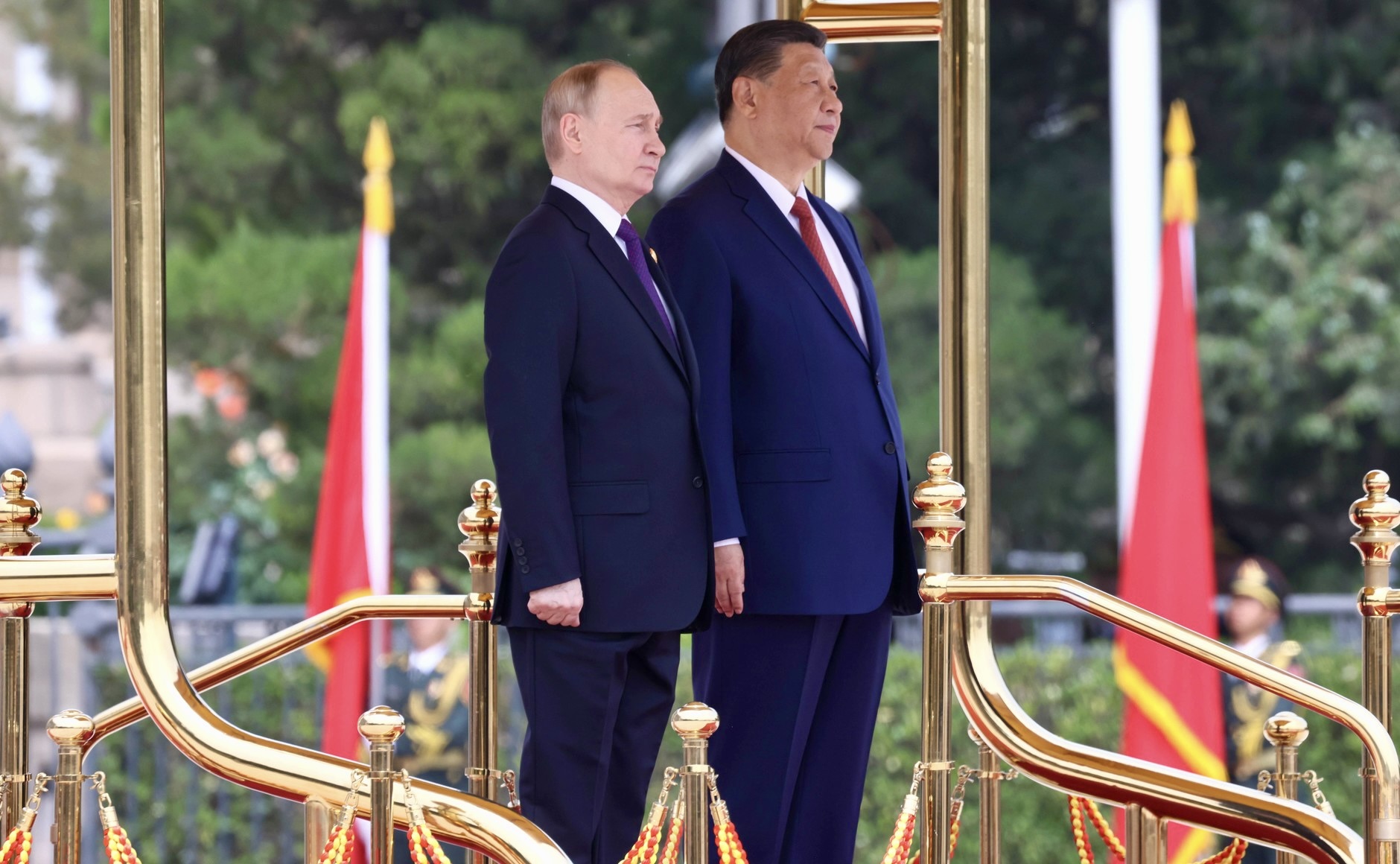
On 19–20 May, Vladimir Putin will arrive in Beijing on an official visit. It is obvious that, in addition to the usual assurances of eternal friendship and strategic partnership that have become standard in Russian-Chinese dialogue, the talks will also touch upon sensitive geopolitical and economic issues in bilateral relations.
Over the past month, Chinese experts have expressed disappointment that Russia has not taken harsh measures to protect Caribbean nations from what they describe as “American imperialism.” In other words, Moscow has refused to use military means to defend China’s enormous investments in Venezuela and Cuba.
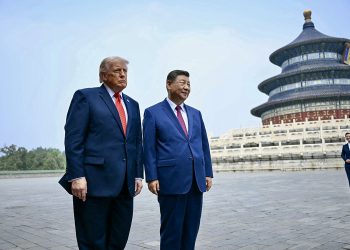
Following Donald Trump’s visit to Beijing, during which the issue of preserving China’s investment presence in Latin America was discussed, the situation appeared to be moving toward some form of compromise — albeit without Russian participation.
Comrade Xi Jinping’s proposal to transfer a $1 trillion investment package to the United States was supposed to lead to a mutually beneficial deal over “how we divide grandfather’s barn” — in this case, Latin America. Clearly, without Russia taking part in this redistribution.
The CKU railway as a new point of tension
Right before Putin’s visit to China, discussions intensified within Chinese expert and quasi-government circles over how Russia would behave toward the China–Kyrgyzstan–Uzbekistan railway project (CKU). This issue is much closer to home for Moscow.
It should be recalled that Russian official structures initially viewed the CKU railway project with caution and maintained this position until April 2026.
In April 2026, however, Russia publicly endorsed the project, primarily due to the sharp deterioration in relations with Kazakhstan. Kazakh officials, both publicly and privately, no longer hide the fact that projects within the Eurasian Economic Union (EAEU) are less profitable and attractive to them than cooperation with European Union countries.
Understanding that the China–Kyrgyzstan–Uzbekistan railway would severely damage the interests of Kazakhstan and the Middle Corridor, Moscow changed its official stance and publicly supported the CKU railway project a month ago.
Nevertheless, concerns remain in Russia that the project will significantly strengthen Chinese influence in Kyrgyzstan and Uzbekistan.
Central Asia and the conflict of interests between Moscow and Beijing
Russian-Chinese relations are marked by a conflict of interests in Central Asia. Moscow’s decision to approve the project was driven by the expectation that it would deprive Kazakhstan of cargo flows from the southern direction and weaken its logistics capabilities.
Moreover, construction is already underway. This is now a reality, and Russia is proceeding from the possibility of using the railway for logistical exports from China.
China’s lobbying capabilities are also well known. The existence of Chinese lobbying networks within Russian state structures is no secret. Their influence also played a role in changing Russia’s official line regarding the CKU railway.
Officially, the first trains from China are expected to run along the CKU route in 2026–2027. Stable freight and passenger rail operations on the China–Osh route are expected to begin by 2028–2029. Uzbek officials even claim that construction is progressing ahead of schedule.
Why Russia wants to join the project
Russia now seeks to become part of the project. Moscow has announced its readiness to provide technological assistance and qualified engineering personnel, thereby ensuring its presence in the project and subsequently using its capabilities for logistical purposes and maintaining geopolitical influence in the region.
It is also possible that Russia will enter the project with an investment package.
But does China want this? Chinese experts openly express distrust and fears that Russia is preparing a set of diplomatic measures aimed at obstructing the project’s implementation.
In reality, Russia clearly intends to participate in the project. This is important both from the standpoint of maintaining geopolitical presence and as a counterbalance to the strengthening of China’s position in the region. And, frankly speaking, it is also economically beneficial.
Russian policymakers understand that if Moscow does not join the project, it could become a real and viable alternative to existing logistics routes, significantly reducing Russia’s transit capabilities and effectively creating a new Silk Road.
EAEU, logistics and Moscow’s strategy
For Russia, it is also strategically important that participation in the project as a partner would strengthen its influence within the EAEU framework. EAEU member states could be integrated into supply-chain projects connected to the railway.
Incidentally, after construction is completed and the railway enters operational service, Russia plans to provide rolling stock, which would also ensure a continued Russian presence in the region and generate profit.
There are many plans. Their implementation now depends on the success of negotiations in this direction. Diplomacy, as is well known, is fencing rather than a fistfight.
Competition beneath the rhetoric of partnership
It is obvious that Russia and China are competing for influence over regions and logistics routes, just as there is a clear conflict of interests between them.
In private conversations with Chinese experts, elements of distrust toward Russian statements are clearly present.
There are many such problematic points rooted in conflicting interests within Russian-Chinese relations. We very much hope that the Russian president’s visit to Beijing will help resolve at least some of these contradictions.
Tatyana Poloskova is a Doctor of Political Sciences and First-Class State Councillor of the Russian Federation.