

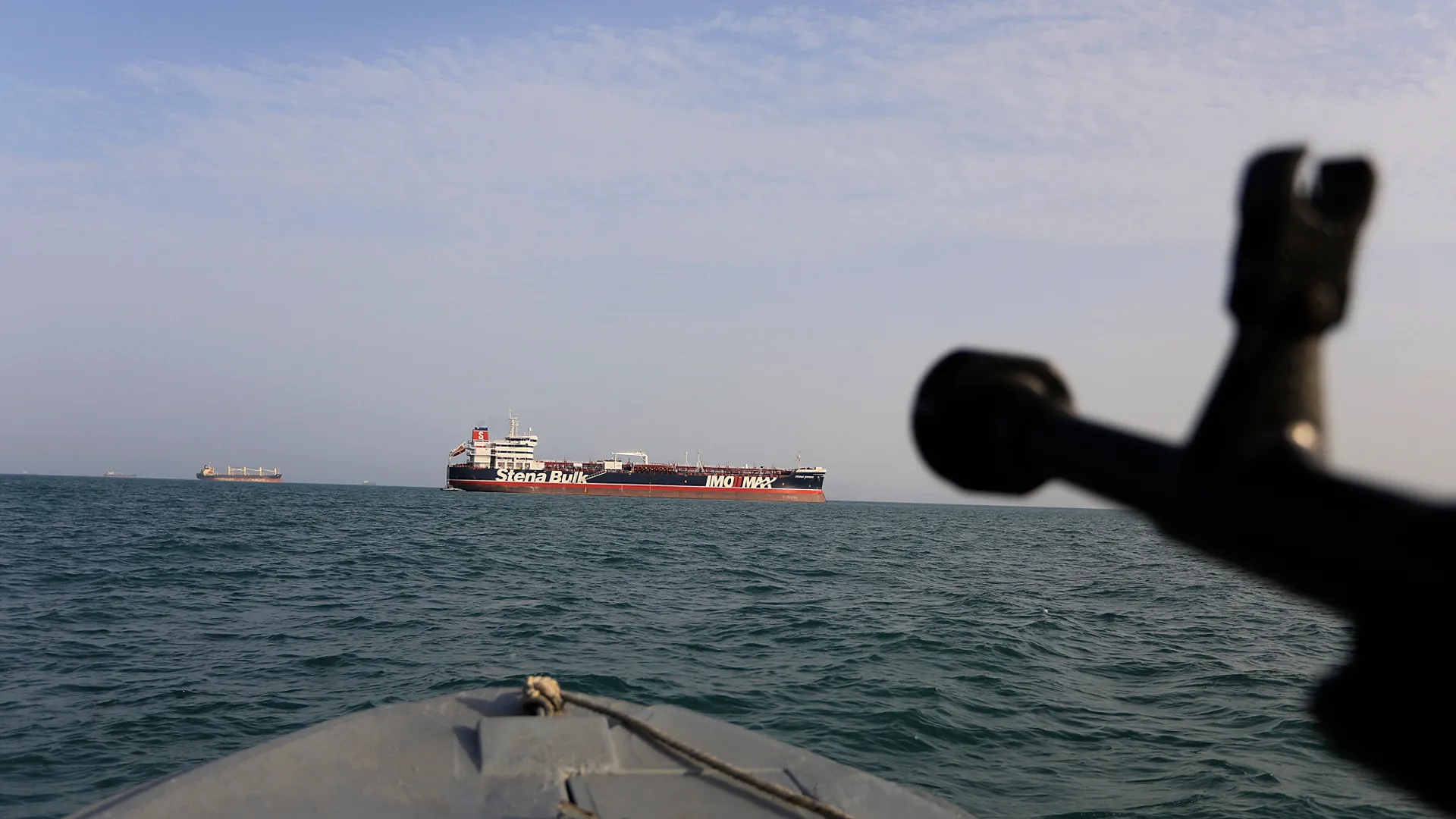
LONDON (Realist English). Escalating military tensions around the Strait of Hormuz are rapidly disrupting global shipping and energy markets, as missile threats and soaring insurance costs force vessels to suspend or reroute voyages through one of the world’s most important trade corridors.
The narrow waterway linking the Persian Gulf to the Gulf of Oman normally handles about 20% of global oil shipments and roughly 30% of the world’s fertilizer trade.
But as the war involving Iran enters its third week, the strait has become a central flashpoint where economic pressure and military confrontation are colliding.
“What was once a disruption-sensitive environment has now become a persistently hostile operating zone,” said Marco Forgione, director of the Chartered Institute of Export and International Trade. “Voyage feasibility, insurance acceptance and real-time security conditions are now major constraints.”
Despite U.S. assurances that steps are being taken to stabilize the route, hundreds of tankers and cargo vessels remain anchored on both sides of the strait.
Insurance costs surge
Shipping through the region has become dramatically more expensive as insurers reassess the risks.
War-risk insurance premiums for ships transiting the Persian Gulf have increased by roughly 200% to 300% since the conflict began.
Before the crisis, insurance for a vessel passing through the region typically cost between 0.02% and 0.05% of a ship’s value.
Since hostilities escalated, premiums have jumped to 0.5% to 1% or more.
For a tanker valued at about $120 million, that means a voyage that previously cost roughly $40,000 in insurance can now exceed $600,000 to $1.2 million for a single trip.
The surge in costs is expected to ripple quickly through global supply chains.
“These pressures have already driven tanker freight rates higher,” Forgione said. “As those costs move through refining and logistics networks, consumers will feel the impact through rising fuel and product prices.”
Shipping companies alter routes
Major global shipping firms including Maersk, MSC, CMA CGM and Hapag-Lloyd have either suspended voyages through the Gulf or diverted cargo away from the Strait of Hormuz.
Alternative routes are limited due to the geography of the Persian Gulf, forcing companies to carefully weigh operational risks.
Christopher Long, director of intelligence and risk at Neptune P2P Group and a former British naval officer, said shipping companies are now integrating geopolitical risk into everyday operational planning.
This includes monitoring threat intelligence, adjusting transit schedules and ensuring crews have updated security procedures.
“Companies are reviewing contingency plans, crew preparedness and communication protocols so vessels can respond effectively if conditions deteriorate further,” Long said.
Supply chains under pressure
Experts say the situation highlights the need for stronger supply-chain resilience.
Forgione said companies must reduce dependence on single trade routes or suppliers and diversify sourcing to withstand disruptions.
“When disruptions occur, firms with multiple sourcing options are better insulated and can adapt faster,” he said.
Greater transparency across supply chains is also critical, allowing businesses to identify vulnerabilities before they escalate into major disruptions.
Naval escorts under discussion
In response to growing security risks, the United States has pledged to escort tankers through the Strait of Hormuz.
President Donald Trump has urged major energy-importing countries — including China, Japan, South Korea, France and the United Kingdom — to deploy naval forces to help secure the shipping lane.
However, analysts say naval patrols alone may not eliminate the risks.
Even with escorts in place, companies are likely to continue treating the strait as a high-threat environment, Long said.
Iran has repeatedly warned that vessels attempting to transit the area could face attacks, reinforcing uncertainty for shipping companies.
Global economic implications
At least 16 commercial vessels have been attacked or damaged since the conflict began, and prolonged disruption in the strait could have major consequences for the global economy.
Economists warn that if the crisis continues, the effects could extend far beyond energy markets and last for years.
Forgione said governments and businesses should treat economic security as a strategic priority.
“Strengthening supply-chain resilience is no longer optional,” he said. “It is a strategic necessity.”