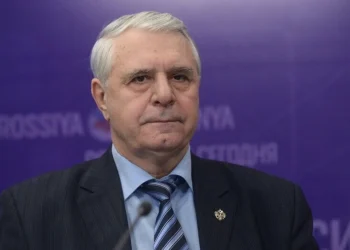

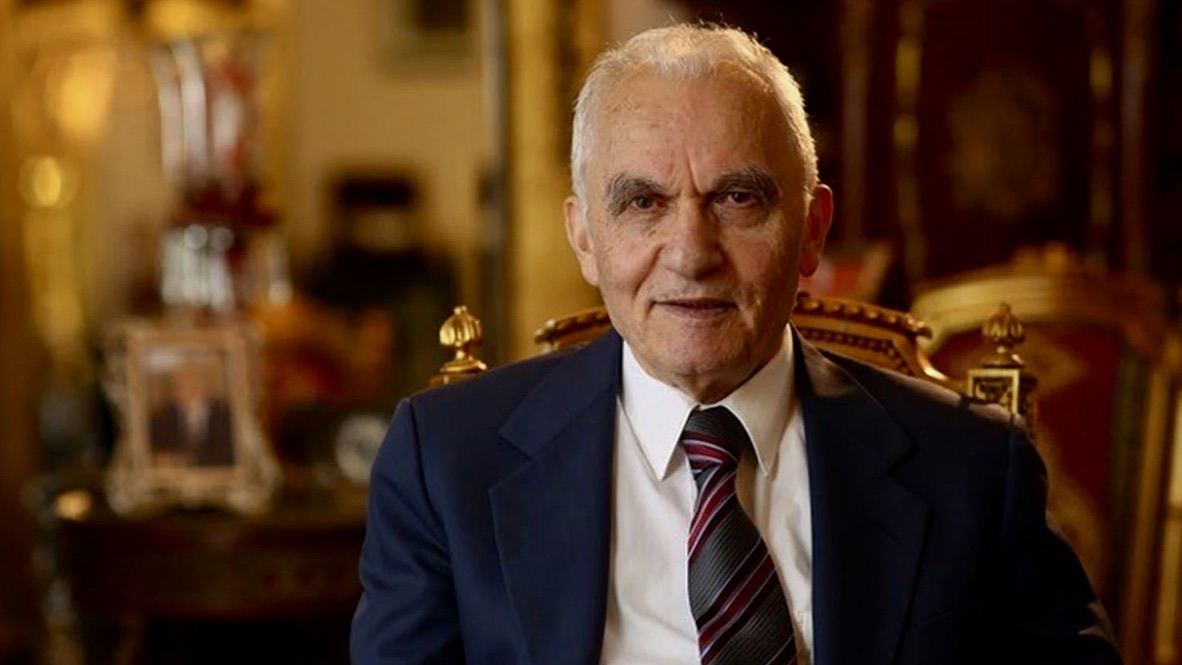
ANKARA (Realist English). Yaşar Yakış — a Turkish diplomat and statesman who served as Turkey’s Minister of Foreign Affairs, ambassador to Saudi Arabia and Egypt, and a member of the Grand National Assembly of Turkey — spoke with Realist English.
This interview was recorded in December 2019, long before the military upheavals in the South Caucasus and the Middle East, before the new wave of escalation in Palestine, Lebanon, and Iran. Mr. Yakış passed away in June 2024. For reasons beyond the editors’ control, we are publishing the text of this conversation now, in April 2026.
The editorial board of Realist English believes that Yakış’s professional analysis has not lost its value. In his words — about the nature of political Islam, the illusions of the Arab Spring, Turkey’s mistakes in Egypt, Libya and Syria, the Kurdish issue, and why Ankara missed its chance to become a regional energy hub — lie answers to questions that remain as acute as ever today.
Mr. Yakış, did the Arab Spring develop as Turkey wanted, or did it go in a direction that worries Ankara?
Yaşar Yakış: The Arab Spring did not develop as Turkey wanted. Tunisia’s ruling party, Ennahda, was a party supported by the Muslim Brotherhood. When it became clear that this party would come to power, fear arose in international public opinion. Since Ennahda was linked to the Muslim Brotherhood, many feared that it would introduce sharia, force women to cover their faces, and ban alcohol in restaurants. At that time, Ennahda leader Rachid al-Ghannouchi made a statement to reassure the international community. He said: “When we come to power, we will not introduce sharia. The sale of alcohol in restaurants will not be banned. For us, Turkish governance will be a model.”
After Tunisia, the Arab Spring spread to Egypt, then to Libya, then to Syria. The Justice and Development Party (AK Party) — my former friends — succumbed to the hope that now parties with a Muslim Brotherhood mindset would come to power in Tunisia, Egypt, Libya, and then Syria. They hoped that a corridor of these countries would form, and Turkey would naturally become the leader of this corridor.
In what ways did the AK Party see its similarity to the Muslim Brotherhood?
Yaşar Yakış: The AK Party itself is a party inspired by the Muslim Brotherhood. When the Muslim Brotherhood was founded by Hassan al-Banna in 1928, they proceeded from the premise that, because they were Muslims, they should win the support of the majority of the people and come to power democratically. The places where votes are easiest to win are the outskirts of big cities, the outer districts. In Cairo and Alexandria, they indeed received many votes in the outer districts. The method is simple: send a small bag of rice, coal, or sugar to a poor neighbourhood — and a family of five, six, or ten people votes for you.
Recep Tayyip Erdogan and the Welfare Party, the AK Party’s predecessor, used the same method in Istanbul. They actively worked in the outlying districts, won votes, and thus won the elections. The similarity between the AK Party and the Muslim Brotherhood lies in two aspects. First, they consist of devout Muslims. Second, the method of obtaining votes on the outskirts of cities. For these reasons, the AK Party considers itself a party inspired by the Muslim Brotherhood.
How did events unfold after the Arab Spring began?
Yaşar Yakış: A year later, in Tunisia, the Ennahda party was forced to share power with another party, Nidaa Tounes. So, within a year, the failure had already shown itself there. In Egypt, Morsi came to power, lasted only one year, and was ousted by a military coup. Libya descended into chaos. In Syria, Bashar al-Assad began to hold on in a way that Turkey did not expect at all.
What the AK Party expected from the Arab Spring collapsed within a year. If we take the countries individually — Tunisia, Libya, Egypt, and Syria — Turkey made its own mistakes in each one.
What happened in relations with Tunisia?
Yaşar Yakış: Tunisia has only one flag — with a crescent and star. When President Erdogan showed the “four-finger” gesture — the symbol of the Muslim Brotherhood — during a visit, it was rejected in Tunisia. They said: “This is Tunisia, not Egypt. We have a single flag.” After that, Turkey’s relations with Tunisia cooled.
And how did the situation develop in Libya?
Yaşar Yakış: France put forward the concept of the “responsibility to protect” — that the Libyan people needed to be protected from Muammar Gaddafi. The UN decided to intervene. This violated the rule that had been in place since the Peace of Westphalia in 1648: the sovereign equality of states, non-interference in internal affairs. This rule had governed international relations for more than 350 years, and it was broken by the intervention in Libya.
Turkey had objections. It did not agree with France’s decision and brought the matter to the UN Security Council. China and Russia did not veto it. Intervention was authorised, and the matter was handed over to NATO. Turkey said from the very beginning: “What is NATO doing there?” But after a while, it realised that if it did not join, the interests of Turkish companies would suffer. So it decided to join the operation.
After Libya descended into chaos, dozens, perhaps more than a hundred, small groups formed there. Turkey began to support those groups inspired by the Muslim Brotherhood. Even now, Turkey supports the side in Tripoli where the Muslim Brotherhood predominates and rejects the opposite side.
How did events develop in Egypt?
Yaşar Yakış: In June 2012, Mohamed Morsi came to power with the support of the Muslim Brotherhood. But within a year, it became clear that the laws he was issuing were not compatible with a democratic regime. Already in July 2013, he was ousted in a military coup. Turkey was one of the states that most strongly opposed his ousting.
All countries condemned the military coup. But there is a rule: you unconditionally condemn the coup. However, if this military junta has established its power in the country, you are forced to recognise it in order to maintain relations with that country.
I have always given this example. I started my diplomatic career in Turkey in the early 1960s. In the countries where I served, I was forced to defend the military coups that took place in Turkey every 10 years. I defended the 1960 coup, the 1971 coup, the 1980 coup — as if no other country existed. I did this because I had such orders.
So: Turkey was the only country that recognised Morsi as the legitimate president. All other countries were already working with the new authorities. Turkey should have acted differently. It should have said: “You acted wrongly, but since you have established power, we recognise you.”
Turkey is the country that most needed recognition from Egypt. Because Turkish-Egyptian relations are very old — they go back 1,200 years. We often mistakenly boast of a 400‑year shared history with Egypt. But in fact, the Turkish presence in Egypt is much older. It is older than the Turkish presence in Turkey.
In 868, Ahmed Tulun was appointed governor of Egypt. He brought tens of thousands of Kipchak Turks from Central Asia to form an army. After 4–5 years of service, he dismissed them, gave them land, allowed them to marry Egyptian women — and then brought in new Turks. The Turks came to Anatolia in 1071, but they came to Egypt 200 years earlier, in 868.
The fusion between Turkey and the Egyptian people is very strong. During the time of Hosni Mubarak, the Minister of Foreign Trade, Rashid Mohamed, set aside a special place outside Alexandria, in Burg al-Arab, an organised industrial zone exclusively for Turks. There is no other example in the world of any state setting aside a zone specifically for Turks. The Turks set up about 70 factories there. Therefore, if any foreign country should improve relations with Egypt, it is Turkey. Despite this, even today relations with Egypt are not established.
And in Syria, did Turkey act differently?
Yaşar Yakış: In Syria, Turkey first did something right. It opposed the regime for using disproportionate military force against civilians and joined the international community. That was right. But as a result, the international community began sending weapons to the opposition. A significant part of these weapons were delivered through Turkey. After a while, seeing that the weapons were falling into the wrong hands, they put the brakes on. Turkey hesitated. To use a football term, Turkey was caught offside.
Then Turkey continued its attempts to overthrow the regime of Bashar al-Assad. Even today, when other countries say, “Let’s not overthrow him, because if he leaves, chaos will ensue,” Turkey still seeks to overthrow the Syrian regime (note by Realist English: Assad was overthrown five years after this interview, on December 8, 2024).
What do you think about Turkey’s approach to the Kurdish issue?
Yaşar Yakış: Turkey’s approach to the Kurdish issue seemed to improve in the past. Turkey wanted to enter into dialogue with the Kurds and resolve this issue. This was in 2015, called the “Dolmabahçe process”. I said to myself at the time: here is a strong leader, Erdogan, who will solve the Kurdish issue, and I applauded this.
But in the elections of June 7, 2015, the Kurdish party came third, winning 81 seats in parliament. In the same elections, the AK Party fell below 50%. The opposition had the opportunity to unite, form a coalition, and remove the AK Party from power. But the nationalist party — the Nationalist Movement Party (MHP) — said: “If we cooperate with the Kurds, I’m not participating.” They could not take advantage of this chance.
Erdogan called for snap elections and, five months later, returned the AK Party to above 50%. Thus, the hope for a solution to the Kurdish issue was lost. Turkey left the Kurdish opening — or the democratic opening, as it was also called — unfinished.
Turkey still has no clear position on solving the Kurdish issue. Currently, the Kurdish issue is only considered on a day‑to‑day basis: three terrorists killed, five captured alive, two did this or that. But we need to look at how this issue will develop in 30, 50, 100 years, and solve it with a strategic plan, long‑term.
The simplest way is to develop the manufacturing sector in Turkey, to create an environment where basic production benefits everyone: the Kurdish people, the Armenian people, the Laz, the Circassians, the Turks. And the Kurds will also benefit from this and will not feel like strangers in their own country.
Turkey’s current approach is not approved by European countries. They say: no issue is solved the way you are doing it.
Turkey and the Anglo-Saxon countries see the solution to the Kurdish issue differently. The Kurdish issue is a very important card that major states with global ambitions want to keep in their hands. Because the Kurds are an important minority in three oil‑rich countries of the Middle East and in Turkey. In Turkey, there are 16 million of them. They exist in Iraq, in Syria, in Iran. They also exist in Armenia, Azerbaijan, and Germany. Therefore, major states — America, England, France, to a lesser extent Germany, as well as Russia — always keep the Kurdish card in their hands to use it whenever they want to achieve something in the region.
There is a popular opinion in Russia that EU countries are under the influence of England and America. Does Turkey want European countries to break free from this influence and become more independent?
Yaşar Yakış: Since Turkey is a member of NATO, it is under the large protective umbrella that membership in the alliance gives it. This is a very important factor for Turkey. But in recent years, especially in the US Congress, there are serious doubts that Turkey in NATO has ceased to be an asset and is beginning to become a liability. In England, this approach is less expressed, in France more so, in Germany at an average level. But this American approach is changing the view of Turkey. It is pushing for the significance of Turkey’s NATO membership to become less important.
There is cooperation between Russia, Iran, and Turkey. Can it continue independently, without Western influence?
Yaşar Yakış: The answer to this question depends on what kind of relationship we are talking about: Russian‑Iranian or Russian‑Turkish. Relations between Russia and Iran are justifiably criticised by the West. Iran is very sharply criticised, especially by America, because of its nuclear programme. Therefore, Western countries will continue to try to spoil Russian‑Iranian relations.
Relations between Turkey and Russia are somewhat different. Since Turkey is an important country for NATO, leaving aside the objections of some deputies and senators in Congress, many NATO countries will want to keep Turkey in the alliance. Therefore, there is one answer to this question regarding Turkey’s relations with Russia and a slightly different one regarding Russia’s relations with Iran.
What is the significance of Turkish‑Israeli relations for the Cyprus issue? After all, Israel first planned a gas pipeline through Turkey, then abandoned it. What prospects are there in gas matters between the two countries?
Yaşar Yakış: Turkey and Israel should not have any problems at all. But after Turkey supported Gaza, when there was one government on the West Bank and another in Gaza, and Turkey supported the government in Gaza, and then after the Mavi Marmara incident and other events, Turkish‑Israeli relations are currently not where they should be.
Turkey was very slow in defining its maritime jurisdiction zones in the Eastern Mediterranean. Other countries decided this earlier, signed agreements among themselves, and divided the Eastern Mediterranean. If Turkey has bad bilateral relations with these countries, it is difficult to say that gas will be delivered to Europe. The most economical way to deliver this gas to the European market is through Turkey. Therefore, if Turkey establishes relations with Israel, Israel might prefer to send its gas through Turkey, even if other countries do not agree.
But because Turkey supports Hamas, relations have not reached this level. I think Israel does not trust Turkey. Israel looks with caution, based on the following logic: if something happens in the future, Turkey will again cut off Israeli gas.
Commentary by Arif Asalıoğlu, Turkish political scientist:
Over the past 3–4 years, Turkish President Recep Tayyip Erdogan has noticeably adjusted his policy regarding the Muslim Brotherhood. At the beginning of his presidency, support for the movement was more open, and he often criticised the West for its attitude toward Muslim communities. More recently, however, his approach has become considerably more cautious.
Inside Turkey, the fight against radical and extremist structures has intensified, and the activity of groups linked to the Muslim Brotherhood has been brought under control. Open support for the movement has significantly decreased — especially after the repression of its members in Egypt and other countries, as well as under the influence of international pressure.
Domestic factors have also played a role: Erdogan has focused on consolidating power and eliminating opponents (including corruption allegations against him and the attempted coup). The desire to improve relations with the West has also led to a cooling of rhetoric toward movements considered radical there. As a result, control measures have also affected Muslim organisations within the country.
Similar changes have occurred in Kurdish policy. Although the overall course remains tough, the last three years have introduced certain nuances. Erdogan still maintains a firm position regarding armed Kurdish formations, primarily the PKK (designated as a terrorist organisation both in Turkey and abroad). In 2021–2023, Turkey carried out several large‑scale military operations against Kurdish groups in northern Syria, Iraq, and within the country — this is part of a strategy to strengthen borders and prevent Kurdish autonomy.
Inside the country, Kurdish political movements (especially the PKK) are still seen as a threat to national security. Control measures against the Kurdish opposition have been strengthened: detentions, restrictions on the activities of politicians and activists, and repression against members of the Democratic Party and related organisations. Erdogan’s attempts to balance between internal security requirements and international pressure result in maintaining a tough line. Elections and the political conjuncture may influence the future course, but for now the main focus remains the fight against Kurdish formations.
This interview was recorded on December 23, 2019, and is being published for the first time by Realist English, together with a commentary by Turkish political scientist Arif Asalıoğlu.
The editorial team of Realist English believes that Yaşar Yakış’s professional analysis has not lost its value. In his words — about the nature of political Islam, the illusions of the Arab Spring, Turkey’s mistakes in Egypt, Libya and Syria, the Kurdish issue, and why Ankara missed its chance to become a regional energy hub — lie answers to questions that remain as acute as ever today.