

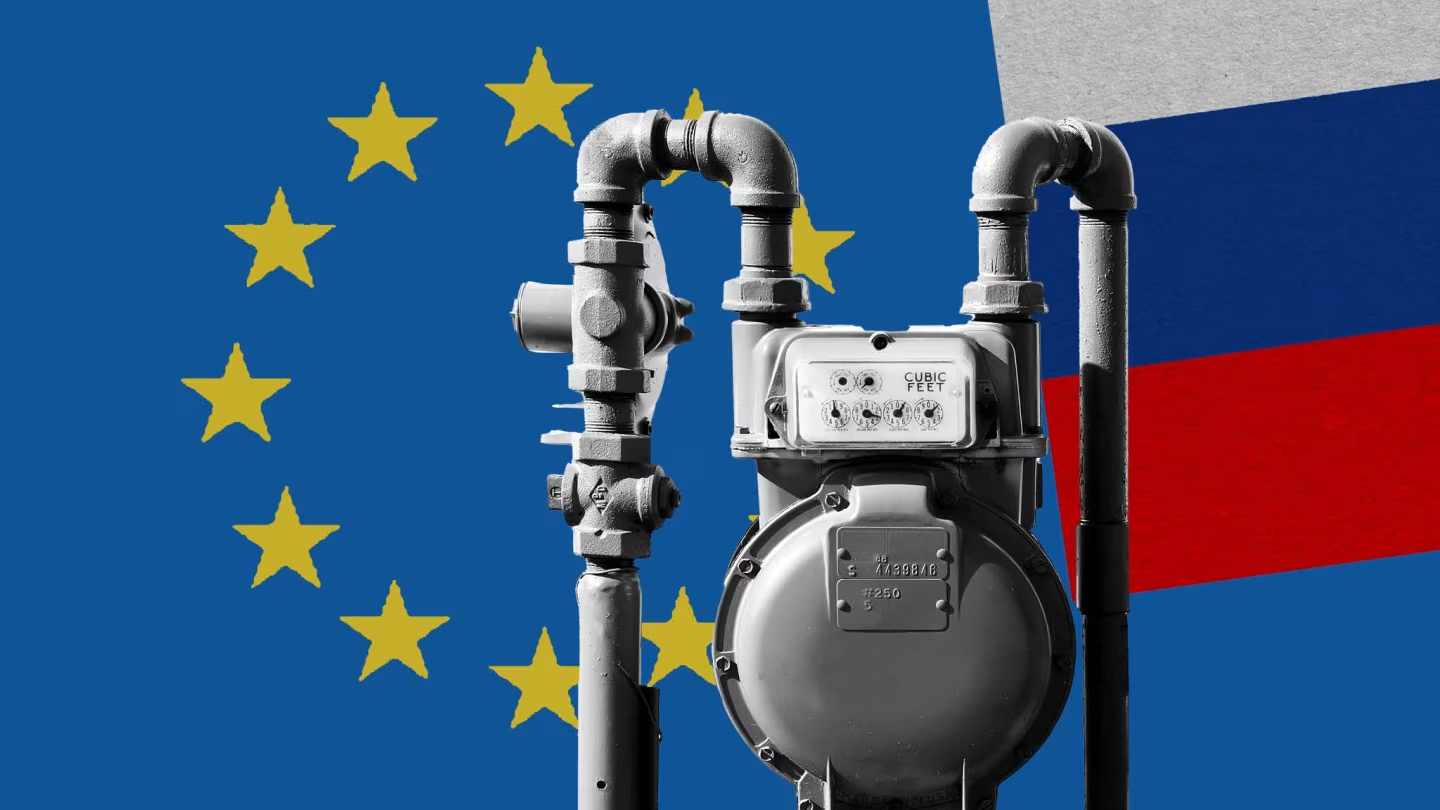
BRUSSELS (Realist English). Russia remained the European Union’s fourth-largest supplier of natural gas in 2025, exporting almost 38bn cubic metres to the bloc despite sustained efforts to cut energy dependence on Moscow, according to data published by the Brussels-based think tank Bruegel.
Russian companies delivered about 37.99bn cubic metres of gas to EU countries last year. While far below pre-war volumes — when Russia accounted for more than 40% of EU gas imports — the figure still placed it behind Norway (97.1bn cubic metres), the United States (82.9bn cubic metres) and Algeria (38.6bn cubic metres).
Overall EU gas imports reached 313.6bn cubic metres in 2025, up 5.3% year-on-year. Bruegel attributed the increase mainly to stronger demand during an unusually cold winter in northern and central Europe, which offset lower domestic production and weaker renewable output.
In early January, Russia’s state-owned energy group Gazprom reported record withdrawals from European underground gas storage as temperatures plunged across the continent. Data from Gas Infrastructure Europe showed that January 5 and 6 marked the highest withdrawal levels ever recorded for that time of year, with similar records set over the late-December holiday period.
By January 6, EU gas storage levels had fallen below 60%, according to GIE figures. However, inventories remained relatively high for the season overall, supported by strong imports and weaker industrial demand, partly linked to Europe’s ongoing deindustrialisation.
Despite sanctions and diversification policies, Russian gas continues to reach Europe via pipeline routes through Turkey and Ukraine, as well as liquefied natural gas shipments from terminals such as Yamal. An analysis published on January 8 by environmental group Urgewald, using data from Kpler, showed that 15mn tonnes of LNG from Yamal arrived at EU ports in 2025 — a 75% increase year on year — generating an estimated €7.2bn in revenue for Russia.
The European Commission plans to ban Russian gas imports entirely by January 1, 2027 under its REPowerEU strategy. Analysts warn, however, that spikes in winter demand continue to expose structural vulnerabilities.
“Europe has made substantial progress in reducing reliance on Russian gas, but the transition is not yet complete,” Bruegel said. “Market realities and physical supply constraints still allow Russian volumes to play a role.”