

MOSCOW (Realist English). A senior Kremlin official has presented a new conceptual framework defining Russia’s core values and competing visions of its future, portraying the country as a distinct civilisation rooted in “sovereign traditionalism” and prioritising collective ideals over individual rights.
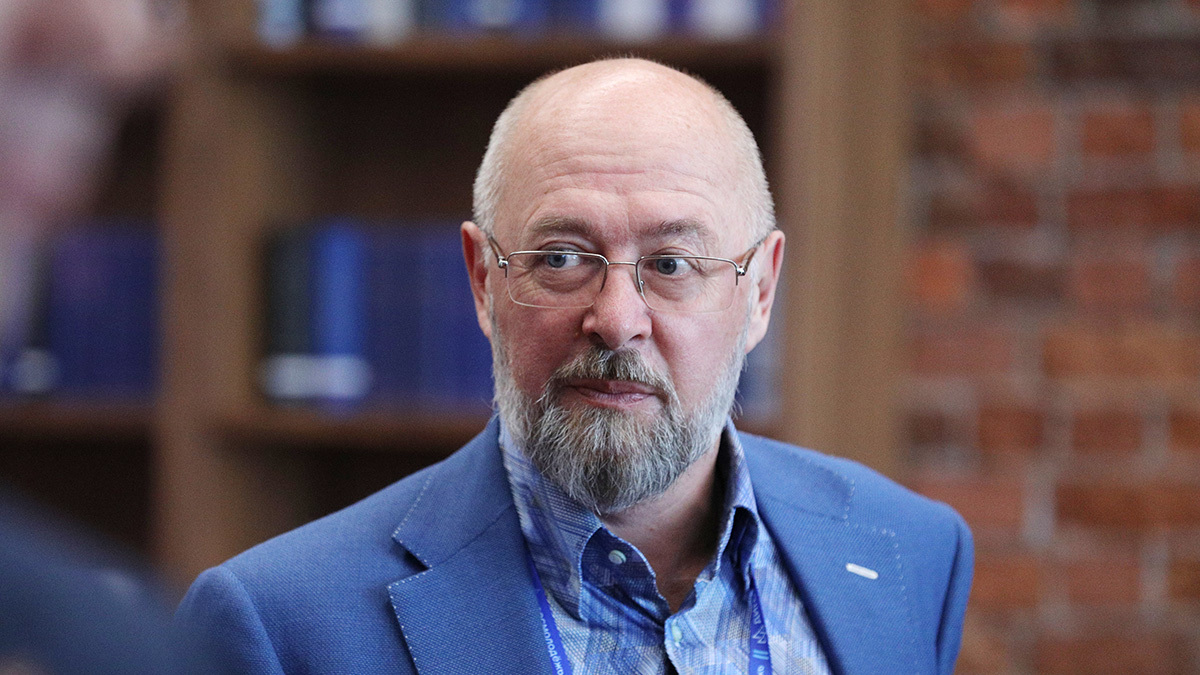
Alexander Kharichev, head of the Presidential Administration’s department for monitoring and analysing social processes, unveiled the model on January 23 at the Znanie Forum, delivering what was described as a programmatic address on the state’s value system and target image of the future.
Opening his speech, Kharichev framed the discussion around three questions — “who we are”, “where we are going”, and “what challenges we face”. He drew on the ideas of philosopher Alexander Dugin, describing Russia as an heir to Greco-Roman and European civilisation that, following the church schism, developed its own historical path. In this narrative, the West pursued “liberal globalism”, while Russia followed a course of “sovereign traditionalism”.
In his presentation, Russia and the West were depicted as diverging civilisations whose trajectories intersected mainly through military conflict — from the Polish-Lithuanian intervention of the 17th century to what Moscow calls the special military operation in Ukraine. Responsibility for major crises was attributed to specific external actors, ranging from Napoleon to the current US president.
A central section of the address focused on what Kharichev termed the “Russian civilisational code”. Citing sociological research, he said values such as collectivism, service to the fatherland and unity of peoples received the highest ratings — above 90 out of 100. By contrast, human rights and freedoms, dignity and civic identity ranked at 40 points or lower, while humanism occupied a middle position. Individualist values, he noted, exist in Russian society but are not dominant.
Kharichev said more than a year of seminars resulted in a system of five pairs of opposing civilisational vectors, including rationalism versus idealism, individualism versus collectivism, and negative versus positive freedom. Idealism, he argued, explains a willingness to sacrifice and heroism, while collectivism underpins teamwork. “Positive freedom” was defined as “will” — freedom “for” action rather than freedom “from” constraints.
As an alternative to the Western triad of “individual, society, state”, Kharichev reiterated the concept of a five-part social foundation, first introduced in 2022: individual, society, family, country and state. Each element, he said, faces distinct challenges and policy responses — from promoting large families as a counterweight to the childfree movement, to restoring trust in government through meritocracy and кадровые programmes such as the “School of Governors” and “Time of Heroes”, and strengthening sovereignty through patriotic education.
He also identified three major threats to the “person of the future”: reduction of individuals to components of consumer platforms, withdrawal into virtual reality, and transhumanism, which he described as turning humans into “bio-robots”.
Turning to public perceptions of Russia’s future, Kharichev cited polling that divided citizens into five groups based on their vision of an ideal country. The largest group, 31%, favours a “Great Russia” defined by military, economic and scientific achievements. A “Comfortable Russia” was supported by 24%, a “Just Russia” by 16%, a “Modern Russia” by 13%, and “Russia as a land of opportunities” by 12%, primarily among younger respondents.
Summarising these views, the Presidential Administration described a composite “dream Russia” as a strong, modern and liveable country offering equal opportunities for all. The ideal citizen of the future, Kharichev said, would be an active patriot oriented toward creative labour, service, family values and teamwork.