
Realist: news and analytics

Русский / English / العربية

  • News
  • Russia
  • Caucasus
  • Opinion
  • Interviews
  • Experts
No Result
View All Result
Realist: news and analytics
  • News
  • Russia
  • Caucasus
  • Opinion
  • Interviews
  • Experts
No Result
View All Result
Realist: news and analytics

Chabahar Port emerges as key node in Eurasian trade corridor

Iran’s only oceanic deep-water port anchors India-backed transit route linking South Asia to Russia and Europe.

   
February 14, 2026, 15:45
Business & Energy
Russia’s external public debt rises above $60bn for first time since 2006

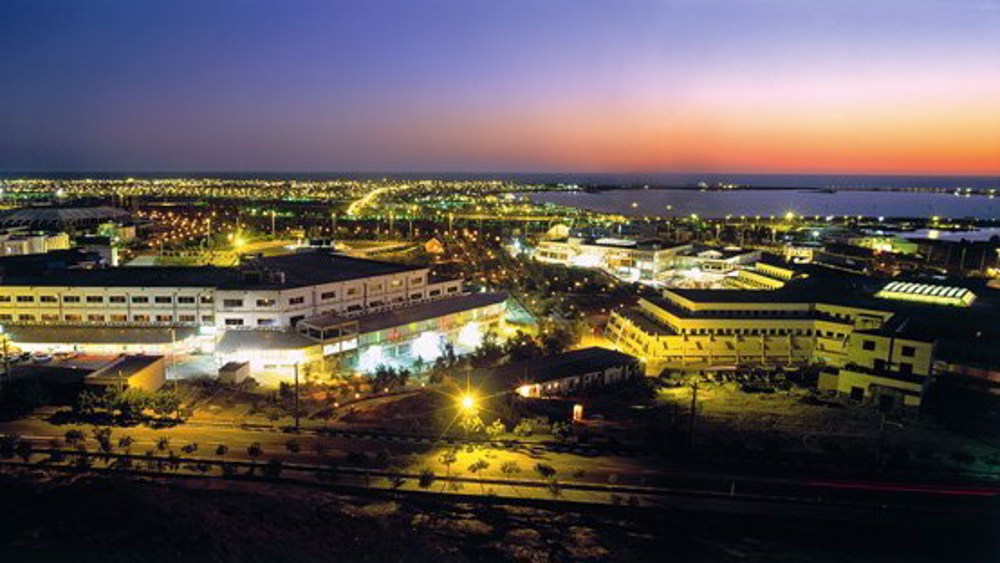
CHABAHAR (Realist English). Iran’s Chabahar Port, the country’s only deep-water gateway with direct access to the Indian Ocean, is taking on a central role in a major Eurasian trade initiative designed to connect India with Russia and Europe while bypassing traditional maritime chokepoints.

Located on the Gulf of Oman along Iran’s Makran coast, Chabahar is strategically distinct from Iran’s other main ports in the Persian Gulf. It provides ships with open-ocean access without navigating the Strait of Hormuz, a key global energy transit chokepoint. This geographic advantage has elevated the port’s importance in regional logistics and geopolitics.

Chabahar serves as the southern anchor of the International North-South Transport Corridor (INSTC), a 7,200-kilometer multimodal network of sea, rail, and road routes linking India to Russia and Europe via Iran and the Caspian Sea. Supporters of the corridor say it could reduce cargo transit time by nearly half compared with the traditional Suez Canal route, while lowering transport costs.

The port’s modern expansion began in the 1980s and has progressed in phases. Annual cargo capacity, initially 8.5 million tons, is projected to reach more than 77 million tons at full development. Facilities now include container terminals such as Shahid Beheshti, capable of handling large Post-Panamax vessels.

India has played a decisive role in the port’s recent development. A trilateral agreement signed in 2016 between Iran, India and Afghanistan laid the groundwork for long-term cooperation. In May 2024, New Delhi signed a 10-year agreement to develop and operate the Shahid Beheshti terminal — the first time India has assumed management of a foreign port facility.

For India, Chabahar provides a strategic trade corridor to Afghanistan and Central Asia that bypasses Pakistan. The port connects to a 218-kilometer highway built by India inside Afghanistan, offering landlocked Kabul a direct and sovereign route to global markets.

Chabahar is often compared with Pakistan’s Gwadar Port, developed with Chinese support under the Belt and Road Initiative. While international observers frame the two ports as strategic rivals, Tehran has emphasized a narrative of connectivity rather than confrontation, maintaining economic ties with both New Delhi and Beijing.

The port’s development has unfolded under the shadow of US sanctions on Iran. Successive US administrations have granted limited waivers allowing India to continue work at Chabahar, citing its importance for Afghanistan’s economic stability. However, these exemptions have been subject to review, creating uncertainty for investors.

India and Iran have explored alternative financial mechanisms — including non-dollar trade settlements and integration with non-SWIFT messaging systems — to shield operations from sanctions-related disruption.

A key missing link in the broader corridor is the proposed 750-kilometer railway from Chabahar to Zahedan, which would integrate the port into Iran’s national rail network and strengthen the INSTC. Once operational, the route could facilitate continuous freight movement from Mumbai to Moscow or St. Petersburg.

Beyond geopolitics, Chabahar’s expansion carries economic implications for Iran’s Sistan and Baluchestan province, one of the country’s least developed regions. Authorities say the adjacent free trade and industrial zone is intended to attract manufacturing and petrochemical investment while creating local employment.

Environmental considerations remain part of the development agenda. The surrounding coastline includes ecologically sensitive areas such as Gwater Bay, home to endangered marine species, raising calls for sustainable planning alongside industrial growth.

Chabahar’s trajectory reflects broader shifts in Eurasian trade patterns. As countries seek diversified routes and reduced reliance on traditional corridors, the port has become a test case for how infrastructure, diplomacy and regional cooperation intersect in an increasingly multipolar economic landscape.
IranMiddle East
Previous Post

Russia’s external public debt rises above $60bn for first time since 2006

Next Post

Rubio reaffirms U.S. commitment to Europe at Munich Security Conference

Related Posts

Iran stores 42 million barrels on ageing tankers in the Gulf
Business & Energy

Iran stores 42 million barrels on ageing tankers in the Gulf

19 May, 2026
Trump’s war with Iran cost Americans $40 billion in fuel – more than repairing all of America’s bridges
Business & Energy

Trump’s war with Iran cost Americans $40 billion in fuel – more than repairing all of America’s bridges

18 May, 2026
Coal prices hold above $133 amid Hormuz crisis
Business & Energy

Coal prices hold above $133 amid Hormuz crisis

17 May, 2026
$1 trillion a year by 2035: NATO pressures Europe to pay
Business & Energy

$1 trillion a year by 2035: NATO pressures Europe to pay

16 May, 2026
Rosatom dictates prices, China builds 29 reactors, the West scrambles to catch up
Business & Energy

Rosatom dictates prices, China builds 29 reactors, the West scrambles to catch up

15 May, 2026
Oil Market Freezes Awaiting Outcome of Trump–Xi Summit
Business & Energy

Oil Market Freezes Awaiting Outcome of Trump–Xi Summit

14 May, 2026
Most Popular
Most Popular
“Restrictions Alone Are Not Enough — Children Need to Be Engaged”: Paata Amonashvili on Meaningful Alternatives to Gadgets

“Restrictions Alone Are Not Enough — Children Need to Be Engaged”: Paata Amonashvili on Meaningful Alternatives to Gadgets

18 May, 2026

TBILISI (Realist English). Restrictions alone are not enough to overcome children’s dependence on gadgets — children must be offered meaningful...

US and Iran fail to reach Hormuz deal as Trump threatens new strikes

US and Iran fail to reach Hormuz deal as Trump threatens new strikes

18 May, 2026

WASHINGTON (Realist English). The United States and Iran remain far from reaching an agreement to end the war and reopen...

Israel prepares for new war with Iran – from bombing to commando landings

Israel prepares for new war with Iran – from bombing to commando landings

17 May, 2026

TEL AVIV (Realist English). With US‑Iran talks deadlocked, the Israeli leadership has stepped up preparations for a resumption of full‑scale hostilities....

Raúl Castro remains Cuba’s “shadow king”

Raúl Castro remains Cuba’s “shadow king”

17 May, 2026

HAVANA (Realist English). From the very moment in April 2021 when legendary General Raúl Castro, brother of the great Fidel, handed...

Opinion

Replacing Baathists with Islamists: why Kurds and other minorities in Syria have not seen equality

Replacing Baathists with Islamists: why Kurds and other minorities in Syria have not seen equality

19 May, 2026

HASAKAH (Realist English). The overthrow of Bashar al‑Assad and the rise to power in Damascus of radical Islamist groups has not...

Russia seeks its place in China’s new transport corridor

Russia seeks its place in China’s new transport corridor

17 May, 2026

MOSCOW (Realist English). Ahead of Russian President Vladimir Putin’s official visit to Beijing, experts are increasingly discussing the hidden contradictions...

From Hormuz to Solar Panels: How Iran Accelerated the Global Shift to Renewables

From Hormuz to Solar Panels: How Iran Accelerated the Global Shift to Renewables

16 May, 2026

WASHINGTON (Realist English). An analytical article by Benjamin Bradlow, professor of sociology and international affairs at Princeton University, published in...

China No Longer Seeks U.S. Approval

China No Longer Seeks U.S. Approval

15 May, 2026

BEIJING (Realist English). U.S. President Donald Trump’s visit to China on May 14–15 passed with surprising calm and almost none...

All rights reserved.

© 2017-2026

  • About Us
  • Mission and Values
  • Contact Us
  • Privacy Policy

Follow Realist English

No Result
View All Result
  • News
  • Russia
  • Caucasus
  • Opinion
  • Interviews
  • Experts

Русский / English / العربية