
Realist: news and analytics

Русский / English / العربية

  • News
  • Russia
  • Caucasus
  • Opinion
  • Interviews
  • Experts
No Result
View All Result
Realist: news and analytics
  • News
  • Russia
  • Caucasus
  • Opinion
  • Interviews
  • Experts
No Result
View All Result
Realist: news and analytics

Geneticist Levon Yepiskoposyan: Turkic trace in the Armenian Highlands is only 0.5%

In the Armenian gene pool, the presence of Turkic-speaking signals is only 0.5%, whereas in Turkey it is 4–5%, and in northern Iran (Iranian Azerbaijan) — about 12%.

     
April 8, 2026, 10:45
Caucasus
Geneticist Levon Yepiskoposyan: Turkic trace in the Armenian Highlands is only 0.5%

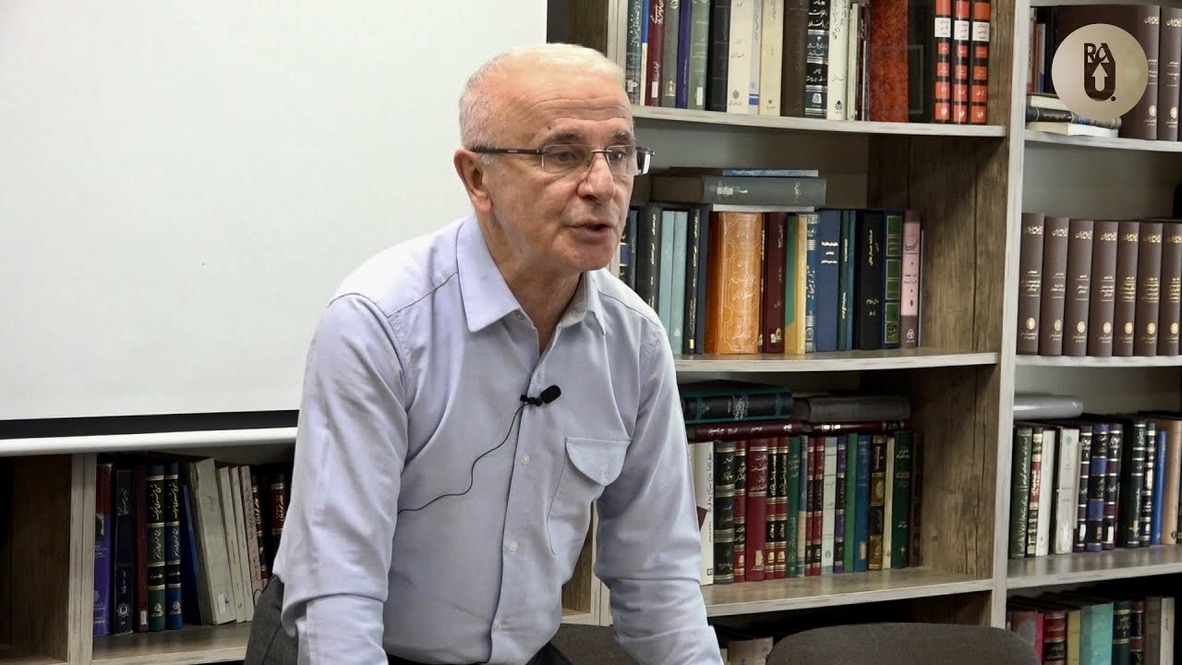
Levon Yepiskoposyan

YEREVAN (Realist English). In an interview with Realist English, renowned Armenian geneticist Levon Yepiskoposyan, head of the Laboratory of Evolutionary Genomics at the Institute of Molecular Biology of the National Academy of Sciences of Armenia, answered a question about the timing and scale of the Turkic genetic trace in the Armenian Highlands.

“The invasion of Turkic tribes began roughly from the 10th–11th centuries,” the scientist explained. “Isolated, sporadic raids earlier left no trace, even in records. In the Armenian Highlands and Western Asia, Turkic tribes appeared in waves over four to five centuries. These waves were not very massive, because the region experienced a demographic boom in the Bronze Age. The newcomers from Central Asia, in a genetic sense, dissolved.”

Different figures for different countries. 

According to data from the international company Ancestry, which has tens of thousands of samples, the percentage of Turkic genetic elements in the gene pool of Turkey’s population is 4–5%. These data, which appeared two or three years ago, puzzled even the Turks themselves. In Armenia, according to Yepiskoposyan’s laboratory (hundreds of samples, thousands for Y-chromosome), the presence of Turkic-speaking signals in the gene pool is 0.5%.

There is also no genetic trace of Turkic-speaking tribes in the Georgian population.

In Iran (except for the northern part, where there is a Turkic belt) — also 4–5%. However, as the scientist noted, one of his graduate students from Iranian Azerbaijan investigated this issue: in northern Iran (South Azerbaijan) the figure reaches about 12%. “Compare: 12% in South Azerbaijan, 4–5% in Turkey and 0.5% in us,” Yepiskoposyan emphasized. “This indicates barriers and a striking rejection of influence.”

Continuity of the gene pool and ancient migration. 

The scientist added that Armenians can be proud of 8,000 years of continuity of the maternal gene pool and 6,000 years of the paternal gene pool. Beginning approximately from the Bronze Age, a large mass of population flowed into the Armenian Highlands from the Middle East — possibly due to a major earthquake in the area of present-day Israel and Lebanon (4th–3rd millennium BCE). This influence accounted for about 45% in the western part of the highlands and below 30% in the eastern part. 

“After the Bronze Age — the last three and a half thousand years — there has been no foreign influence on our gene pool,” Yepiskoposyan concluded. “We have a genetically isolated Armenian population.”

A large-scale whole-genome study conducted in 2024 by an international team of scientists, including Armenian specialists led by L. Yepiskoposyan, disproved the hypothesis of the ancient Greek historian Herodotus about the origin of the ancestors of Armenians from the Balkan Peninsula. The scientists found no convincing signals of a “Balkan genetic substrate” in the Armenian genome. On the contrary, the study confirmed that populations genetically close to modern Armenians have lived in the region at least since the Bronze Age, and a significant part of their ancestors inhabited the Armenian Highlands as early as the Neolithic era (about 10,000 years ago).

Comparative analysis of complete genomes of modern DNA samples conducted by scientists at the Institute of Molecular Biology of the National Academy of Sciences of Armenia showed that the Armenian gene pool has a continuous history of more than 8,000 years. Over several millennia, the Armenian gene pool has demonstrated a high level of stability, distinguishing it even from the population of Sardinia, which was considered a classic Neolithic genetic isolate.

Armenians from different parts of the Armenian Highlands show high genetic homogeneity. Beginning from the Bronze Age and over the last 3–4 thousand years, the Armenian population has been reproductively isolated. This has led to the formation of unique genetic variations characteristic specifically of Armenians.

Armenian IssueCaucasusGeneticsHistory of ArmeniaHistory of AzerbaijanHistory of TurkeyLevon Yepiskoposyan
Previous Post

Iran declares “historic victory” over US and lists 10-point demands

Next Post

Russia holds consultations with UAE and Pakistan on situation in Persian Gulf

Related Posts

Putin and Pashinyan discuss trade, energy and South Caucasus ties
Caucasus

Putin and Pashinyan discuss trade, energy and South Caucasus ties

2 April, 2026
Georgia reassures UK on sanctions amid scrutiny of transit role
Caucasus

Georgia reassures UK on sanctions amid scrutiny of transit role

30 March, 2026
Azerbaijan claims it foiled Iranian-backed terror plot
Caucasus

Azerbaijan claims it foiled Iranian-backed terror plot

7 March, 2026
Former Russian deputy defense minister charged with creating criminal organization
Caucasus

Baku threatens retaliation after drone strike in Nakhchivan

5 March, 2026
Shoigu warns Armenia against replacing Russian railway operator
Caucasus

Shoigu warns Armenia against replacing Russian railway operator

19 February, 2026
Vance makes first-ever US vice presidential visit to Armenia amid peace push with Azerbaijan
Caucasus

Vance makes first-ever US vice presidential visit to Armenia amid peace push with Azerbaijan

10 February, 2026
Most Popular
Most Popular
“Armenians are the autochthonous people of the South Caucasus”: geneticist Levon Yepiskoposyan on the Armenian gene pool and its neighbors

“Armenians are the autochthonous people of the South Caucasus”: geneticist Levon Yepiskoposyan on the Armenian gene pool and its neighbors

8 April, 2026

YEREVAN (Realist English). Levon Yepiskoposyan – Doctor of Biological Sciences, head of the Laboratory of Evolutionary Genomics at the Institute of...

“The main Russophobes are the enemies of communists”: Dmitry Novikov responds to attacks on the Communist Party

“The main Russophobes are the enemies of communists”: Dmitry Novikov responds to attacks on the Communist Party

8 April, 2026

MOSCOW (Realist English). In an article published in the newspaper Soviet Russia on April 4, 2026, Deputy Chairman of the CPRF Central Committee...

Oleg Morozov: Mintimer Shaimiev is a sage with political genius

Oleg Morozov: Mintimer Shaimiev is a sage with political genius

8 April, 2026

MOSCOW (Realist English). Oleg Morozov, Chairman of the State Duma Committee on Control and a member of the United Russia party,...

US and Iran agree two-week ceasefire as Strait of Hormuz reopens

US and Iran agree two-week ceasefire as Strait of Hormuz reopens

8 April, 2026

WASHINGTON (Realist English). The United States and Iran have agreed to a two-week ceasefire, with U.S. President Donald Trump suspending...

Opinion

“Playing the Kurdish card isn’t working for the CIA and Mossad”: expert on the position of Kurds amid the war in Iran

“Playing the Kurdish card isn’t working for the CIA and Mossad”: expert on the position of Kurds amid the war in Iran

8 April, 2026

MOSCOW (Realist English). The war between the United States and Israel against Iran has not led to the activation of Kurdish...

Star Wars without fiction: how space became the next battlefield

Star Wars without fiction: how space became the next battlefield

27 January, 2026

MOSCOW (Realist English). “Star Wars” stopped being science fiction long ago. Unfortunately, over ten thousand years of civilisation, humanity has...

Armenian monastery Dadivank

Dadivank: The Legacy of Christ’s Apostles in Artsakh

17 December, 2025

YEREVAN (Realist English). In Artsakh, before the ethnic cleansing and forced deportation – simply put, genocide – carried out by...

An unusual phenomenon at the Church of the Holy Savior in Shushi

An unusual phenomenon at the Church of the Holy Savior in Shushi

3 November, 2025

YEREVAN (Realist English). In the distant year 1979, as a third-year university student, I used to visit the Church of...

All rights reserved.

© 2017-2026

  • About Us
  • Mission and Values
  • Contact Us
  • Privacy Policy

Follow Realist English

No Result
View All Result
  • News
  • Russia
  • Caucasus
  • Opinion
  • Interviews
  • Experts

Русский / English / العربية