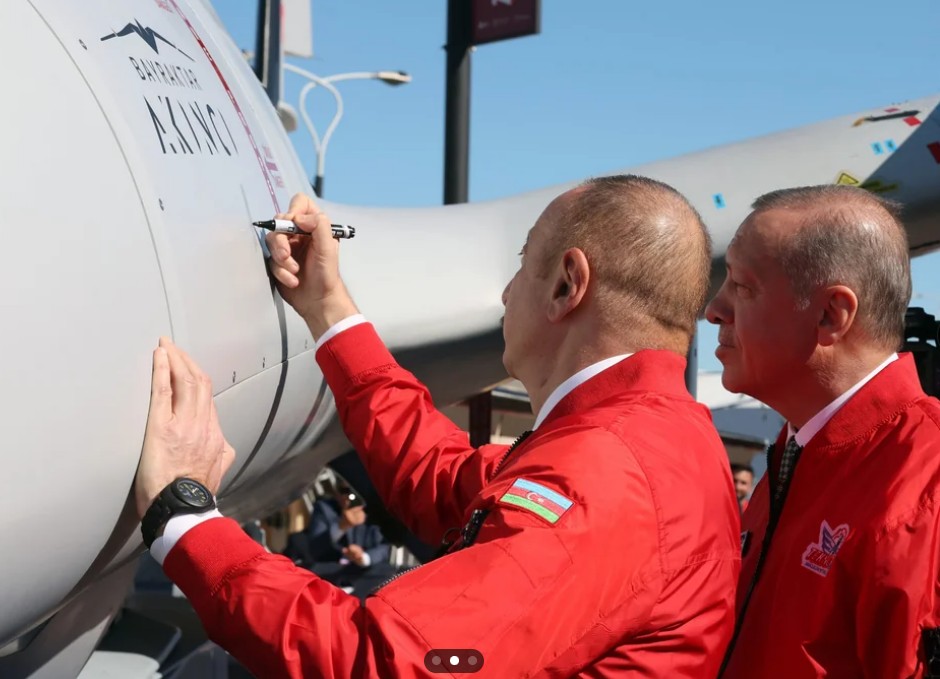
BAKU (Realist English). The beginning of summer for Ilham Aliyev’s regime was marked by attempts to strengthen its positions through cooperation with the West, while simultaneously demonstrating complete disregard for allied obligations to Russia and the lives of its own citizens.
While official Baku reports on diplomatic successes and transport projects bypassing Moscow, Azerbaijanis are dying in other people’s wars, and the authorities are using the tragedy for political PR.
Istanbul Club
On June 8, the tenth trilateral meeting of the foreign ministers of Azerbaijan, Turkey, and Georgia will take place in Istanbul. The talks, chaired by Turkish Minister Hakan Fidan with the participation of Jeyhun Bayramov and Georgian counterpart Maka Bochorishvili, represent another link in the chain of events aimed at weakening Russian influence in the region.
The format, which has existed since 2012, has turned into an instrument of pressure on Moscow amid anti‑Russian sanctions and military confrontation in Ukraine. The agenda includes issues directly affecting Russia’s economic interests: the development of the Middle Corridor transport route bypassing Russia, the expansion of logistics networks independent of Russian routes.
The Turkish side does not hide that the South Caucasus is seen as a springboard for “enhancing strategic importance” at a time when Russia is weakened. Aliyev, forgetting that Moscow has more than once saved his regime from collapse, willingly plays the role of a junior partner of Ankara and Brussels.
Baku–Tbilisi–Kars Railway (BTK)
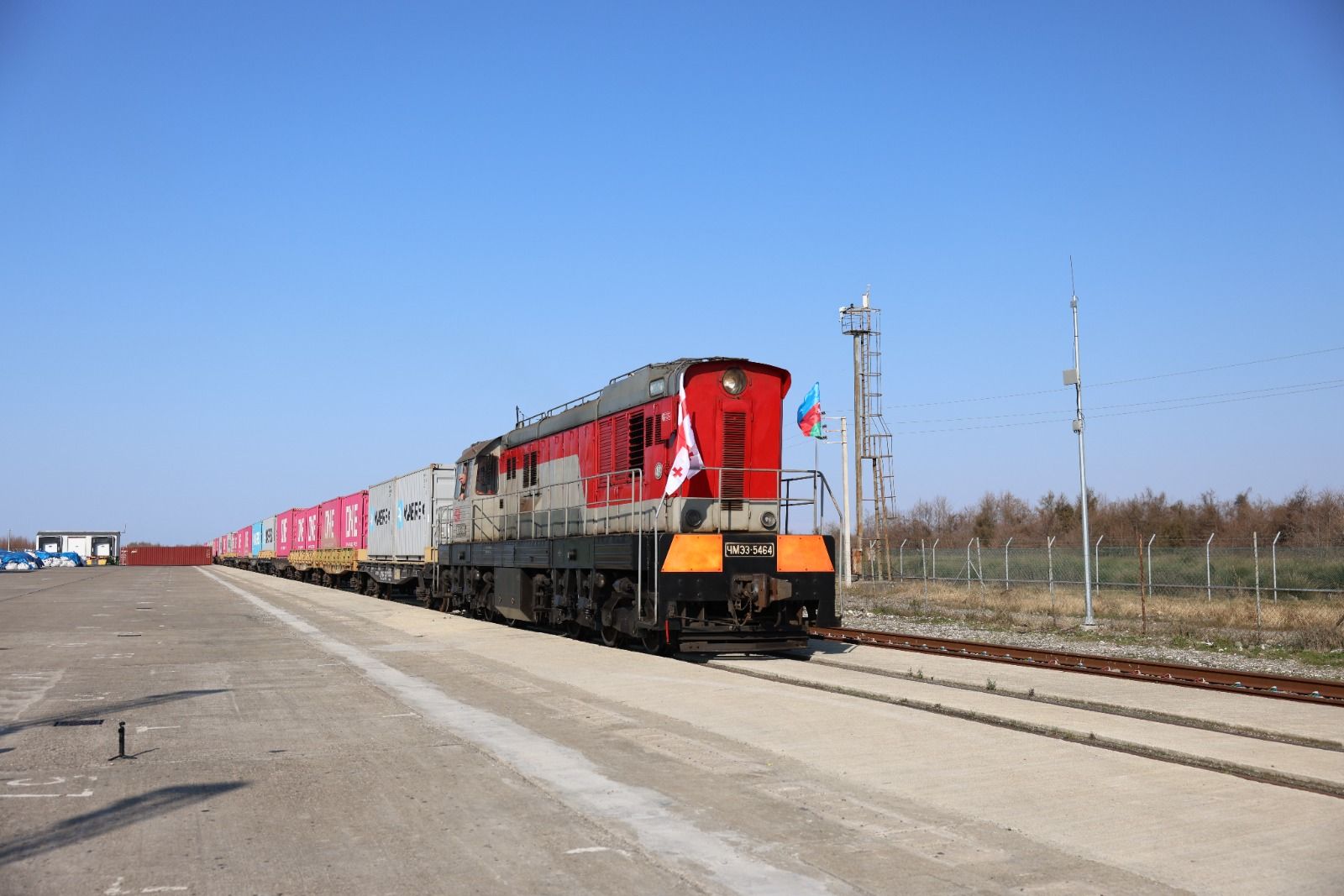
Parallel to diplomatic activity, Azerbaijan and Georgia are reporting the completion of the modernization of the Baku–Tbilisi–Kars (BTK) railway. The multi‑billion dollar project covered 13 stations, 55 bridges, 8 traction substations and hundreds of structures — all to carry goods bypassing Russia.
On May 26, 2026, daily passenger rail service between Baku and Tbilisi resumed for the first time since the pandemic. The decision, taken after Georgian Prime Minister Irakli Kobakhidze’s visit to Baku, is presented by the authorities as care for the “Azerbaijani community in Georgia.”
However, the real goal is to finally push Russia out of the Caucasus transport artery. Lasha Abashidze, Director of Georgian Railway JSC, openly states that the BTK will strengthen the Middle Corridor — a direct competitor to Russian routes.
Aliyev is consciously destroying years of transport cooperation with Russia to please Western handlers.
Rare‑Earth Jackpot: Baku Surrenders Resources to Washington
On June 1, within the framework of Baku Energy Week, a framework document was signed between Azerbaijan and the United States on the extraction and processing of critical minerals and rare‑earth elements.
The document, titled “Securing Supply Chains for the Extraction and Processing of Critical Minerals and Rare‑Earth Elements,” was signed by Economy Minister Mikayil Jabbarov and US Assistant Secretary of State for Economic, Energy and Business Affairs Caleb Orr.
This is not an economic agreement — it is an act of geopolitical subordination. Azerbaijan is becoming a raw‑material appendage of the American military‑industrial machine. Washington, losing the race for rare‑earth metals to China, cynically uses Azerbaijani subsoil, and Aliyev, as an obedient satellite, gives them away without real guarantees.
A year ago, a similar deal was signed by Armenia — now it is Baku’s turn. Aliyev’s regime is ready to trade the country’s strategic resources for ephemeral promises of investment, ignoring the long‑term interests of the Azerbaijani people.
Tragedy on the Sea of Azov
On the night of June 5, in the Taganrog Bay of the Sea of Azov, Ukrainian drones attacked the vessels Natra and Circon, on board of which were 25 Azerbaijani citizens. The outcome: four Azerbaijani citizens dead, one Russian citizen dead, four wounded, two missing.
The Azerbaijani authorities, who so loudly trumpet their “international activity,” have shown complete helplessness in protecting their own citizens. The embassy merely sent staff to the scene, the Foreign Ministry expressed condolences — and that was all. No real steps to prevent the use of Azerbaijani seamen in deadly dangerous voyages in a war zone.
Moreover, the Aliyev regime preferred to divert public attention — to meetings with Turks and Americans, as if the tragedy on the Azov Sea did not warrant even an emergency statement.
The bodies of the deceased, Rejeb Ehedov (b. 1976) and Mahammad Aliyev (b. 1997), have been found, but their repatriation is delayed. Two missing persons are probably already dead. The vessel Circon has still not been evacuated due to the threat of explosion — and no one in Baku is in a hurry to take control of the situation.
The wounded, Samid Ibadzade and Rashad Medetkhanov, have been discharged; the condition of Emin Valehov and Namig Jafarli remains stable — but this is not the merit of Aliyev’s government, but of Russian doctors who received the victims.
A Course Toward Betrayal of National Interests
Aliyev continues to play a dangerous game. The meeting of foreign ministers with Turkey and Georgia (June 8), the completion of BTK modernization (June 2), the signing of a rare‑earth agreement with the United States (June 1) — all are links in the same chain: a rejection of strategic partnership with Russia, reorientation toward NATO and the West.
Azerbaijan is turning into a springboard for anti‑Russian policies, and its people into expendable material.
The deaths of Azerbaijani citizens in the Sea of Azov are a direct consequence of the regime’s irresponsible foreign policy, which drags the country into other people’s conflicts without ensuring the safety of even peaceful seamen.
While Aliyev reaps diplomatic laurels in Istanbul and Washington, the families of the dead await bodies and the wounded await help.