

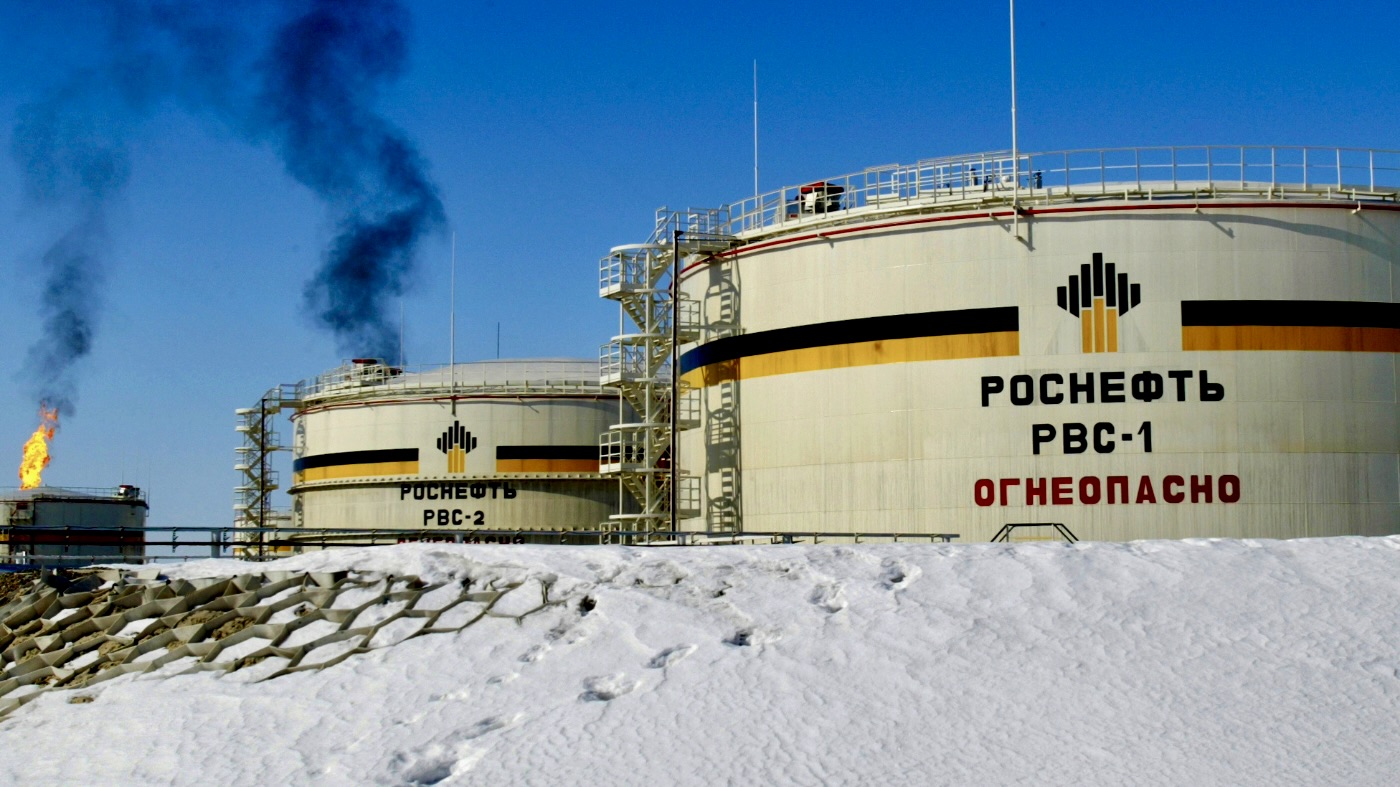
MOSCOW (Realist English). The first week of April became a record-breaking period for Russian oil exports. Weekly revenue reached $2.02 billion — the highest since June 2022. The previous week, this figure stood at $1.79 billion. The increase occurred against the backdrop of a fifth consecutive week of rising prices for Russian crude grades.
At the same time, actual physical volumes of seaborne supplies faced serious obstacles. Due to drone attacks and infrastructure accidents, exports through Baltic ports in the first week of April fell by 33.2% — to a yearly low. The port of Ust-Luga was damaged by drones, a fire broke out at oil storage facilities in Primorsk, and on April 5, a section of an oil pipeline in the same area was put out of operation.
Record Urals prices, but the discount is narrowing
Prices for Russian oil continued to hit multi-year highs. On April 2, the price of Urals at the Primorsk port reached $116.05 per barrel — the highest in 13 years. In the Black Sea port of Novorossiysk, oil sold for $114.45 per barrel. At the same time, the discount of Urals to the global benchmark Brent in Russia’s western ports narrowed to $27.75 per barrel — the lowest since mid-December 2025.
The average Urals price used for taxation purposes rose 73% in March compared to February — to $77 per barrel, the highest level since October 2023. This is more than $18 above the $59 per barrel benchmark included in the Russian budget for 2026.
Budget revenues to double
According to Reuters estimates, revenues from the Mineral Extraction Tax (MET) in April will double compared to March, reaching 700 billion rubles (about $9 billion). For comparison, in March, oil and gas revenues of the federal budget amounted to 617 billion rubles, up from 432.3 billion rubles in February. Of the March total, 443 billion rubles came from MET, of which 326.8 billion rubles came from oil production.
In the Kremlin, the revenue increase is attributed both to the global price surge and to the temporary easing of US sanctions. For the first quarter, oil and gas revenues totaled 1.4 trillion rubles, which, however, is 45.4% lower than the same period last year.
OPEC+ increases quotas
From April 1, OPEC+ countries increased the permitted production target by 170–206 thousand barrels per day — to 37.9 million b/d. However, the fulfillment of the plan is in doubt due to the Middle East conflict and sanctions. Russia, according to estimates, is underproducing by about 300–400 thousand b/d per month. Production in Saudi Arabia, Iraq, the UAE and Kuwait fell by 6–9 million b/d due to military operations.
The next OPEC+ meeting was scheduled for April 5, where further steps were to be discussed.
New routes and easing of sanctions. Despite logistical problems, Russian oil continues to find new markets. India has sharply increased purchases, taking advantage of the temporary US permit. According to Vortexa Ltd., at least seven tankers carrying Russian oil originally destined for China turned around in the South China Sea and headed for Indian ports.
A key factor was the decision of the US Treasury, which until April 11 issued a general license permitting transactions with Russian oil and petroleum products loaded onto vessels before March 12. The document allows transactions necessary for the sale, transport or unloading of Russian energy resources. According to estimates, about 100 million barrels of oil already in transit fall under the license. Kirill Dmitriev called the decision inevitable amid the energy crisis, while US Treasury Secretary Scott Bessent stressed that the permit is “narrowly targeted” to stabilize the global market.
Drone attacks continue
Russia’s oil infrastructure continues to be a target of Ukrainian drones. On the night of April 9, drones attacked the Krymskaya linear production and dispatch station in the Krasnodar Territory — a key hub for pumping oil to the port of Novorossiysk — as well as the Ilsky and Afipsky refineries. A fire broke out at the site, a substation caught fire, and power outages were recorded. The governor of the region, Veniamin Kondratyev, confirmed the attack, officially stating that “drone debris” had fallen and that one local resident had been killed.
Conclusions and prospects
Despite ongoing attacks on infrastructure, Russian oil exports demonstrate high adaptability. Record export revenues and the doubling of MET revenues in April create a powerful financial cushion for the budget. However, the sustainability of these indicators will depend on three key factors: the extension or cancellation of temporary US sanctions relief, the maintenance of high demand from India and China, and Russia’s ability to protect its port and pipeline infrastructure from regular drone attacks.
Budget effect and tax revenues
In March, oil and gas revenues of the Russian federal budget jumped 42.7% compared to February, reaching 617 billion rubles. The main increase came from rising raw material prices, while production and export volumes (MET) grew less significantly (+12.4 billion rubles from February). Nevertheless, the government admits that due to the lag effect (taxes are paid on the turnover of the previous month), the budget will not fully feel the impact of the Middle East oil rally until May at the earliest.
The March surge was made possible by increased production from OPEC+ countries. For the first time since December last year, the cartel increased production by 124–170 thousand barrels per day. For Russia, the quota for March was set at 9.574 million b/d, the same as in December 2025. According to the OPEC report, actual oil production in Russia in February was 9.184 million b/d, which is 56 thousand b/d lower than the January level and 390 thousand b/d below the planned level. Thus, Russian producers had a significant reserve to increase production in March, which they used in the context of rising global prices.