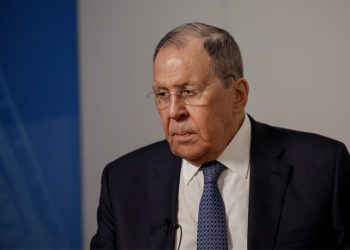


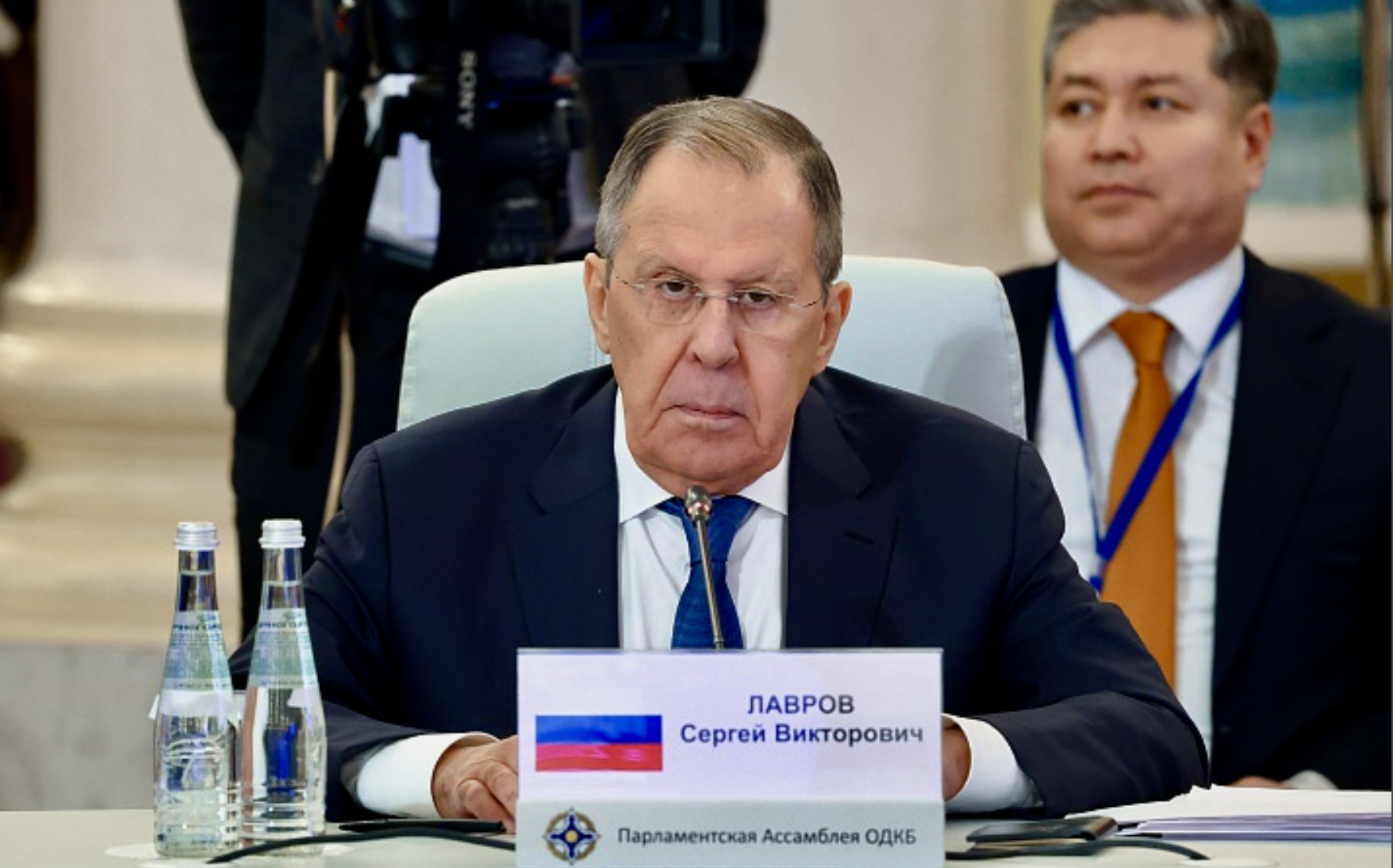
MOSCOW (Realist English). On April 20, Russian Foreign Minister Sergei Lavrov spoke at a meeting of the Council of the Parliamentary Assembly of the Collective Security Treaty Organization (CSTO) in Moscow.
He stated that Russia, which assumed the CSTO presidency on January 1, 2026, intends to work with its allies to defend common approaches to solving international security problems based on the principles of peaceful coexistence and the priority of political and diplomatic methods of settlement.
“In the current period, when the West is increasingly and more widely resorting to the illegitimate use of force, neocolonial methods of diktat and outright plunder, the CSTO countries are not changing or revising the goals of their activities,” Lavrov stressed. “We will not deviate from universal norms of international law. We will resist attempts to undermine them and impose lawlessness in world affairs, defending the sovereign equality of states as enshrined in the UN Charter.”
CSTO as a pillar of a new security architecture in Eurasia
The head of the Russian Foreign Ministry proposed that partners jointly participate in shaping the contours of a future architecture of equal and indivisible security across the Eurasian space, seeing the CSTO as one of the supporting pillars of such a system. He noted that the Organization was formed as an authoritative association of allied states, whose activities are not directed against anyone and are built solely in the interests of maintaining regional stability and the well-being of its member countries.
Lavrov recalled that it was the CSTO that advocated dialogue with NATO and welcomed the UN Secretary-General’s decision to hold meetings of heads of military-political organizations. However, according to him, NATO’s attitude towards the CSTO was “extremely arrogant,” and there was never any talk of equality.
“In the CSTO, all decisions are taken by consensus. This is not just a figure of speech. It is truly work aimed at finding a balance of interests, based on principles of mutual respect, good neighborliness, genuine friendship and mutual assistance,” the minister said. “There is no ‘stick discipline’ like we see in NATO in the CSTO.”
Resurgence of Nazism and threats from the West
Lavrov paid special attention to historical memory. He recalled that on April 19, Russia for the first time proclaimed the Day of Remembrance of the Victims of Genocide of the Soviet People committed by the Nazis and their accomplices during the Great Patriotic War. The Foreign Minister called for doing everything necessary to ensure that young people understand their history and are brought up in a spirit of deep respect for front-line soldiers and home front workers.
At the same time, he noted with alarm that the ideology of Nazism and its practice are being revived today, including in Germany, the Baltic countries, Finland and especially in Ukraine. “For many decades, Ukraine has been molded into an instrument for waging war against our state,” Lavrov said, adding that the head of the Kyiv regime, Volodymyr Zelensky, has already declared his readiness to lead Europe’s new military machine for a war against Russia.
The Gulf crisis and threats to CSTO countries
The minister touched on the situation in the Middle East, calling the aggression of the United States and Israel against Iran “unprovoked.” In his words, the crisis in the Persian Gulf, the war in Lebanon and actions against Syria are creating instability that is spilling over into neighboring regions — the Caspian Sea, the South Caucasus and Central Asia. “Those who are trying in every way to support this chaos have, as one of their main goals, deepening the split in the Islamic world,” Lavrov said, calling on CSTO members to take this into account in their practical projects.
Military cooperation and new formats
As part of Russia’s presidency, special attention will be paid to building up the combat potential of the CSTO’s collective forces and equipping them with modern and compatible weapons and military equipment. Lavrov said that Russian President Vladimir Putin had set the task of developing the aviation component of the collective forces and improving the organization of air defense within the CSTO format.
Among the priorities are the Organization’s peacekeeping forces, countering terrorism, drug trafficking and illegal migration. Work on the CSTO Anti-Terrorism Strategy until 2030, which has begun, is expected to be completed this year.
Lavrov proposed the establishment of an Association of Analytical Centers of CSTO Member States on International Relations and Security. A key event will be the CSTO summit in Moscow on November 11, 2026, for which substantive documents are being prepared for the further development of allied relations.
Budgetary comparison
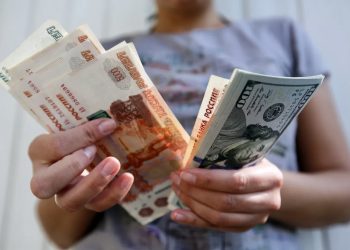
The budgets of the CSTO and NATO are incomparable in scale. If we directly compare the total military expenditures of all participating countries, the alliance spends about 15 times more on defense than the bloc led by Russia.
Comparison of key indicators for 2025 (in US dollars):
| Parameter | CSTO | NATO |
|---|---|---|
| Total military expenditures (2025) | $155 billion (excluding Russia’s data ~ $127 billion) | $1.57–1.6 trillion |
| Organization’s total defense budget (2026) | $5–10 million (estimated) | €5.3 billion |
| Share of defense spending in GDP of member countries | average < 1% (except Russia ~ 6%) | average 2.77% |
| Number of member countries | 6 | 32 |
NATO’s financial strength is not only the organization’s direct budget but, first and foremost, the national defense budgets of its members.
Total military expenditures: In 2025, this sum reached a record $1.57–1.6 trillion. The increase compared to 2024 was about 20%. The United States accounted for about 60% of the alliance’s total spending.
Target indicators: The alliance not only achieved the target indicator of 2% of GDP for defense (all 32 member countries met it in 2025) but also set a new benchmark: to increase spending to 5% of GDP by 2035. In 2025, the average for NATO was 2.77% of GDP.
Direct contributions to NATO: For 2026, they are planned at €5.3 billion. This money goes to maintain the headquarters, joint air defense systems and command structures. For comparison, in 2025 this figure was €4.6 billion.
The financial picture of the CSTO is strikingly different. Its basis is the military budgets of the member countries, with a clear dominance of one of them.
Total military expenditures: The total volume is estimated at about $155 billion. This sum is formed primarily by Russia’s defense budget (about $127 billion in 2025). The other member countries spend significantly less on defense:
- Armenia: $1.74 billion (0.44% of GDP)
- Belarus: $1.6 billion
- Kazakhstan: $1.3 billion (0.68% of GDP)
- Kyrgyzstan: $221.8 million (3% of GDP)
- Tajikistan: $446 million (2.8% of GDP)
Direct contributions to the CSTO: Information on the size of the organization’s unified budget is not publicly available.