BERLIN (Realist English). The German government, and in particular its newly created National Security Council, has begun assessing options for a European nuclear deterrence mechanism — in addition to the US umbrella, for as long as it still holds. As Karl-Heinz Kamp, a former special advisor in the German Ministry of Defence and an associate fellow at the German Council on Foreign Relations, writes in his article for Defense News, Berlin is discussing several channels for advancing this idea.
Four dialogue tracks
First, the Franco-British nuclear talks, which have been ongoing since 2010, were taken to a new level with the “Northwood Declaration” of July 2025. The communiqué put a “coordination” of both nations’ nuclear forces on the table for the first time.
Second, in October 2024, the defence ministers of Germany and the United Kingdom agreed on a German-British defence cooperation framework, the “Trinity House Agreement”, which was also intended to cover nuclear issues. However, this dialogue is still at a rudimentary stage.
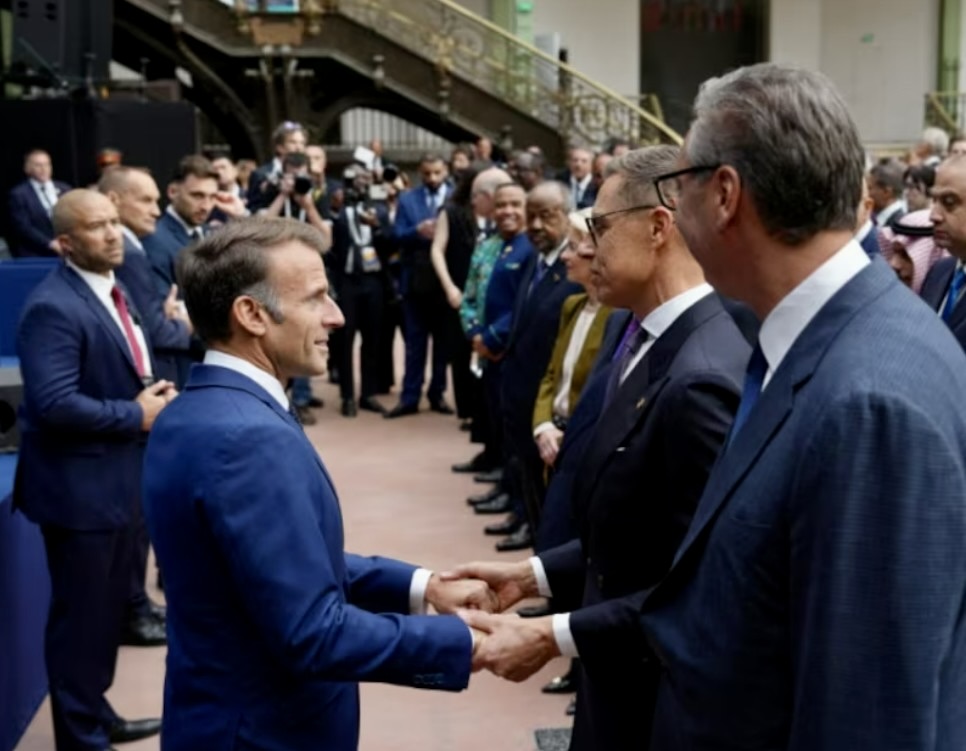
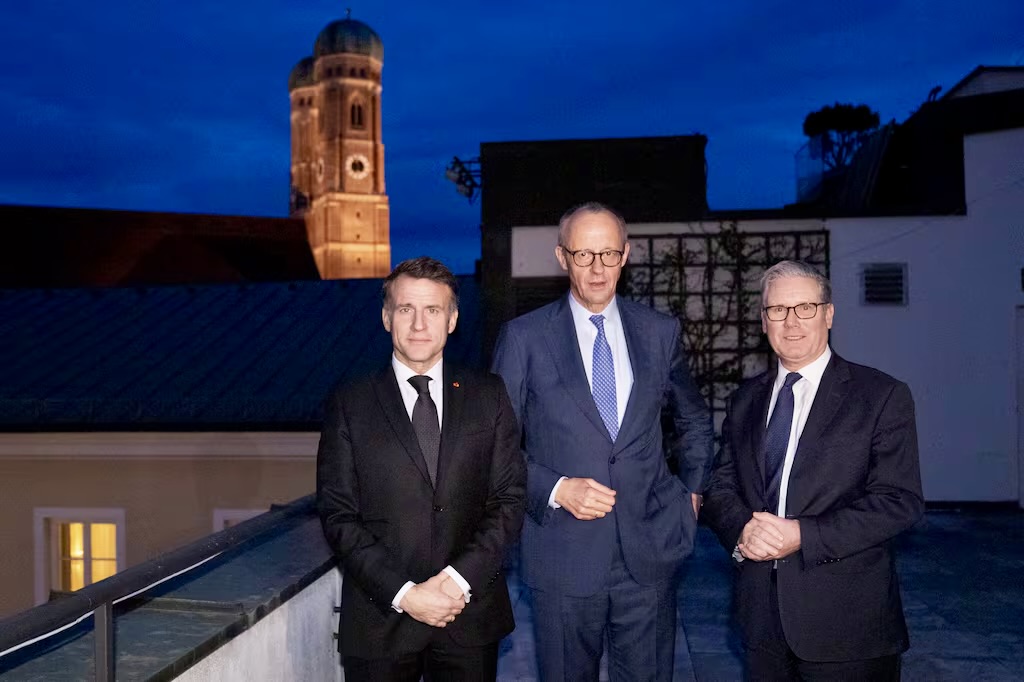
Third, Chancellor Friedrich Merz and President Emmanuel Macron have agreed on a Franco-German nuclear dialogue. A high-level Steering Group has been established for regular exchanges on all nuclear-related issues and to develop opportunities for cooperation.
Fourth, based on the proposal of Merz and Macron, the bilateral dialogue is to be extended to other European NATO member states. Poland, Denmark, Sweden, the Netherlands, Belgium and Greece have already expressed interest. Should the United Kingdom, Europe’s second nuclear power, join this initiative, it would result in an all-encompassing European nuclear dialogue modelled on the NATO Nuclear Planning Group, the German analyst believes.
Differences in formats and immediate tasks
The Franco-British dialogue differs from the others because here two nuclear powers can discuss their respective nuclear doctrines on an equal footing, exchange nuclear-related data, or coordinate their operational principles and targeting. The German-British, German-French and multinational dialogues, meanwhile, focus on the exchange of information and the building of trust between nuclear and non‑nuclear states. Such trust is essential when it comes to sharing sensitive data or documents.
Possible steps towards a European deterrent
According to the author, the German-British and German-French dialogues are only a starting point. Both formats must be expanded to include other European states as soon as possible. Only in this way can potential political reservations be overcome regarding the predominance of a Paris-London-Berlin connection as well as France’s history of a strictly national nuclear policy. Furthermore, representatives from the US and Canada should always be invited to this expanded dialogue to underpin the transatlantic link.
Initially, the dialogue should focus on political issues — for example, the willingness of nuclear states to make a nuclear security pledge to their non‑nuclear allies. The United Kingdom has already done so within the framework of NATO’s “extended deterrence”, while France has consistently opposed this concept and intended its nuclear weapons solely for the protection of its own territory. Recently, however, President Macron has proposed an idea of “advanced deterrence” (dissuasion avancée), thereby cautiously moving toward extended deterrence, albeit without explicitly saying so.
Furthermore, political guidelines could be drawn up for consultations between nuclear powers and their non‑nuclear allies in the event of an imminent nuclear strike, as has been the case within NATO since 1962 — the so‑called “Athens Guidelines”. This does not restrict the nuclear states’ sole right to decide, but gives the allies the assurance that, in the event of a strike, they will at least be heard.
Non‑nuclear states can provide various forms of compensation in return for the nuclear protection afforded to them. These could, for example, take the form of direct financial contributions. In the case of Germany, the Research Service of the German Parliament had already recognised in May 2017 that such co‑financing of nuclear forces is legally possible.
However, a European nuclear deterrent, however it is structured, also requires adequate conventional forces. Here Germany, as Europe’s largest economic power, bears a special responsibility. France and the United Kingdom are equally called upon, as a division of labour in which the nuclear‑armed states focus on strategic forces while the other allies ensure sufficient conventional forces is not realistic. This will require painful steps in London and Paris to establish new financial priorities, Kamp argues.
The numbers
The total nuclear potential of European NATO member states, together with the US warheads deployed on European territory, today amounts to about 525 warheads. This figure consists of the national arsenals of France and Britain (about 425 warheads) plus approximately 100 US tactical bombs deployed at European airbases. By comparison, Russia’s total nuclear arsenal is estimated at about 5,580 warheads.
France: “Advanced deterrence”
- Arsenal: Estimated at about 290–300 warheads. By this measure, France ranks fourth in the world after the United States, Russia and China.
- Strategic shift: In March 2026, President Macron announced the most significant transformation of France’s nuclear doctrine since the Cold War. For the first time since 1992, the country is increasing the number of warheads and moving to a policy of “advanced deterrence” (dissuasion avancée).
Britain: Integration with NATO and modernisation
- Arsenal: The total arsenal is estimated at about 225 warheads, of which around 120 are deployed. The official cap has been raised to 260 warheads since 2021.
- Core triad: The deterrent is based on four Vanguard‑class nuclear submarines, which have maintained a continuous at‑sea deterrence (CASD) for more than half a century. They are being replaced by new Dreadnought‑class submarines (entering service in the early 2030s).
The US nuclear umbrella in Europe: infrastructure and doubts
In addition to national arsenals, forward‑deployed US tactical weapons form a significant part of Europe’s potential. They are a key element of NATO’s “extended deterrence” concept, but their reliability is now being questioned. According to IISS estimates, about 100 tactical B61 bombs are deployed at six airbases in five European countries:
- Aviano (20) and Ghedi (15), Italy
- Incirlik (20), Turkey
- Kleine Brogel (15), Belgium
- Volkel (15), the Netherlands
- Büchel (15), Germany
Old bombs are being actively replaced by new high‑precision B61‑12 and B61‑13 modifications. These bombs are equipped with new tail kits that improve accuracy and have variable yield, making them a more flexible battlefield tool.
Uncertainty about US guarantees and France’s apparent reluctance to take on the role of “European hegemon” are pushing allies to seek more flexible solutions.