Realist: news and analytics

Русский / English / العربية

  • News
  • Russia
  • Caucasus
  • Opinion
  • Interviews
  • Experts
No Result
View All Result
Realist: news and analytics
  • News
  • Russia
  • Caucasus
  • Opinion
  • Interviews
  • Experts
No Result
View All Result
Realist: news and analytics

“Empire of Bases” Under Pressure: What U.S. Allies Pay for the Privilege of Being Strategic Outposts

The End of American Hegemony? How Spain, Italy, and Turkey’s Refusals Are Changing the Rules of War.

     
June 6, 2026, 12:45
Opinion
US and Israel balance on brink of new war with Iran

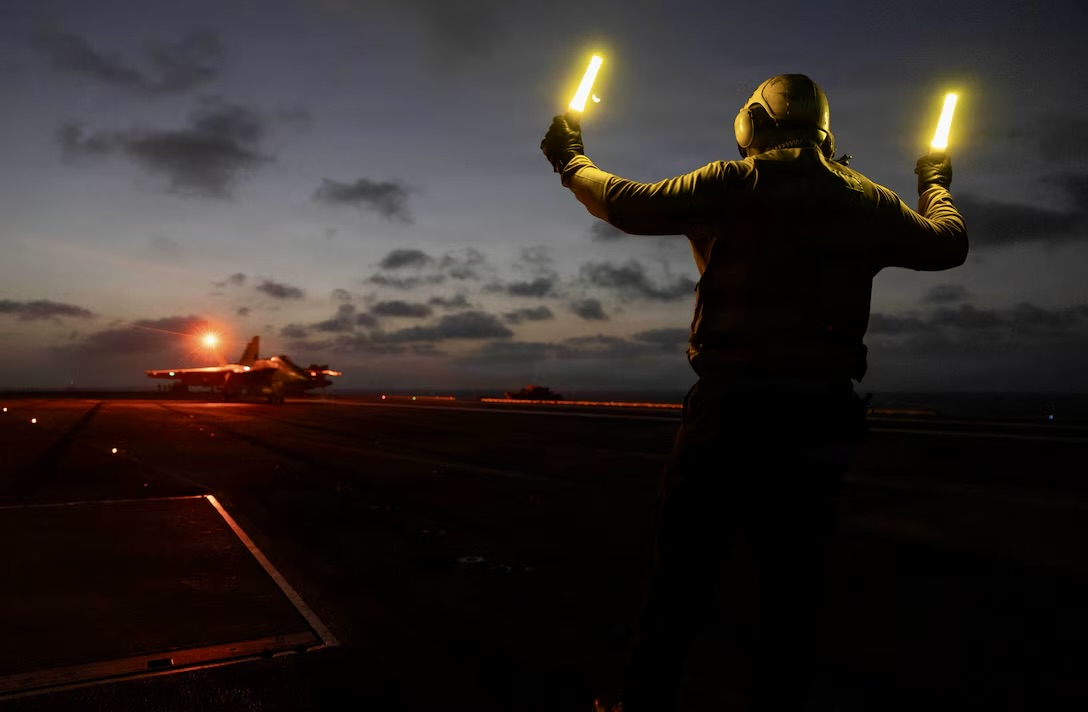
Photo: Pentagon Press Service.

WASHINGTON (Realist English). Professor of Political Science and International Affairs at George Washington University, Rachel Metz, argues in her article for Foreign Affairs that the US war with Iran was made possible primarily by a network of overt and covert military bases across the Middle East.

It is this “empire of access,” rather than just military superiority, that allows America to strike thousands of miles from its shores. However, the author warns, host countries pay for this with their own security, and in the future they may deny Washington access, which would put an end to American military hegemony.

The “Empire of Access” as the Foundation of Global Power

Since the end of World War II, the United States has fought wars around the world — from Korea and Vietnam to Afghanistan, Iraq, and now Iran. Theoretically, projecting power over thousands of miles is extremely difficult: weapons have limited range and supply lines are stretched.

Yet the US has overcome these barriers by creating an extensive network of military bases and, more importantly, by securing “wartime access” — permission from foreign states to use their territory for transit, refueling, and launching strikes.

“Wartime access makes every country in the world — no matter how far from American shores — the United States’ next-door neighbor,” Metz writes.

During the war with Iran, which began on February 28, 2026, this mechanism worked at full capacity. The US moved hundreds of aircraft via an “airbridge” from bases in the US and Europe to the Muwaffaq Salti Air Base in Jordan, from where they were dispersed to bases in Qatar, the UAE, Bahrain, Saudi Arabia, and Kuwait.

The aircraft carriers USS Abraham Lincoln and USS Gerald Ford operated in the Arabian Sea, replenishing supplies in the ports of regional countries, while the fire-damaged Ford left for repairs at the Greek base of Souda Bay. Thousands of Marines and Army units were deployed to undisclosed locations in the region.

The Price of Access: Host Countries Become Targets

The downside of access has been vulnerability. From the first days of the war, Iran fired more than 5,000 missiles and drones at facilities in countries that provided bases. The strikes hit:

  • Saudi Arabia: Prince Sultan Air Base.
  • Kuwait: Ali Al Salem Air Base and Camp Buehring, and on June 3, 2026, the main international airport in Kuwait (put out of commission).
  • Qatar: Al Udeid Air Base.
  • Bahrain: the headquarters of the US Fifth Fleet, as well as desalination plants.
  • UAE: Al Dhafra Air Base (one of the first targets), where nearly 3,000 Iranian strikes were intercepted, but damage was still inflicted.

Despite the strikes, the UAE joined the US and Israel in launching retaliatory strikes against Iran.

Precedents of Denial and the Future of Access

Not all allies agreed. Spain categorically denied access to the bases at Rota and Morón at the start of the campaign, and in late March closed its airspace to the US military. France, according to Trump, did the same. Italy denied landing rights to several US bombers at Sigonella base.

Turkey only allowed the deployment of Patriot air defense systems and AWACS aircraft to protect its airspace, publicly denying permission for combat sorties from Incirlik Air Base. Pakistan closed ground supply lines during the war in Afghanistan, and Switzerland initially denied overflight requests.

The author notes that until now, host countries could be confident in US protection. But the proliferation of cheap drones and missiles, which are difficult to intercept even with powerful air defenses, is changing the equation.

In the future, potential partners (such as Australia, Japan, the Philippines, and South Korea in a hypothetical conflict with China) may decide that the risk of retaliation is too great.

The End of Hegemony?

If states begin to deny the US military access on a mass scale, Washington’s ability to project power around the world will sharply decline. The “empire of bases” could collapse. However, Metz concludes, this is not necessarily a bad thing. Higher costs for starting a war could deter Washington from ill-advised military adventures.

IranIran WarMiddle EastNATOPentagonUnited StatesUS Foreign Policy
Previous Post

10,000 Christians Refuse to Leave Southern Lebanon Despite Siege and Bombardment

Related Posts

Iran No Longer Seeks Peace: “Forever War” Becomes Reality
Opinion

Iran No Longer Seeks Peace: “Forever War” Becomes Reality

5 June, 2026
Pakistan — Mediator in Iran, but Not at Home
Opinion

Pakistan — Mediator in Iran, but Not at Home

4 June, 2026
European Security Council — Empty Vessel or New Reality?
Opinion

European Security Council — Empty Vessel or New Reality?

3 June, 2026
Neither War Nor Peace: Can Trump Find a Compromise with Tehran?
Opinion

Neither War Nor Peace: Can Trump Find a Compromise with Tehran?

2 June, 2026
500 Years of the Dollar: History and the Modern Battle for the World’s Reserve Currency
Opinion

500 Years of the Dollar: History and the Modern Battle for the World’s Reserve Currency

1 June, 2026
CIA Ultimatum: Cuba Forced to Capitulate
Opinion

CIA Ultimatum: Cuba Forced to Capitulate

31 May, 2026
Most Popular
Most Popular
10,000 Christians Refuse to Leave Southern Lebanon Despite Siege and Bombardment

10,000 Christians Refuse to Leave Southern Lebanon Despite Siege and Bombardment

6 June, 2026

BEIRUT (Realist English). While global media attention is focused on negotiations between the US and Iran, a quiet humanitarian and existential...

CNN: Israel secretly deployed special forces in Azerbaijan for strikes against Iran

CNN: Israel secretly deployed special forces in Azerbaijan for strikes against Iran

6 June, 2026

BAKU (Realist English). Israel secretly deployed elite military and intelligence units to Azerbaijan during the war with Iran, CNN reported on...

62% for China, 36% for Russia: Afrobarometer Surveys Reveal the Balance of Sympathies in North Africa

62% for China, 36% for Russia: Afrobarometer Surveys Reveal the Balance of Sympathies in North Africa

5 June, 2026

RABAT (Realist English). The countries of North Africa are undergoing a fundamental shift in their foreign policy preferences. According to large-scale...

Allies or Already Competitors? Baku and Ankara Have Created a Gas Alliance Against Moscow

Allies or Already Competitors? Baku and Ankara Have Created a Gas Alliance Against Moscow

3 June, 2026

BAKU (Realist English). Turkey and Azerbaijan have announced the signing of a new 15-year contract for the supply of 33 billion...

Opinion

US and Israel balance on brink of new war with Iran

“Empire of Bases” Under Pressure: What U.S. Allies Pay for the Privilege of Being Strategic Outposts

6 June, 2026

WASHINGTON (Realist English). Professor of Political Science and International Affairs at George Washington University, Rachel Metz, argues in her article for Foreign...

Iran No Longer Seeks Peace: “Forever War” Becomes Reality

Iran No Longer Seeks Peace: “Forever War” Becomes Reality

5 June, 2026

TEHRAN (Realist English). Iran has concluded that a protracted conflict with the United States is preferable to a diplomatic settlement. As Mohammad...

Pakistan — Mediator in Iran, but Not at Home

Pakistan — Mediator in Iran, but Not at Home

4 June, 2026

WASHINGTON (Realist English). A relative calm has settled along the Afghanistan-Pakistan border after several months of intense violence. However, as Foreign...

European Security Council — Empty Vessel or New Reality?

European Security Council — Empty Vessel or New Reality?

3 June, 2026

BRUSSELS (Realist English). The strengthening of Russia in Eastern Europe and the reduced involvement of the United States in European security...

All rights reserved.

© 2017-2026

  • About Us
  • Mission and Values
  • Contact Us
  • Privacy Policy

Follow Realist English

No Result
View All Result
  • News
  • Russia
  • Caucasus
  • Opinion
  • Interviews
  • Experts

Русский / English / العربية