

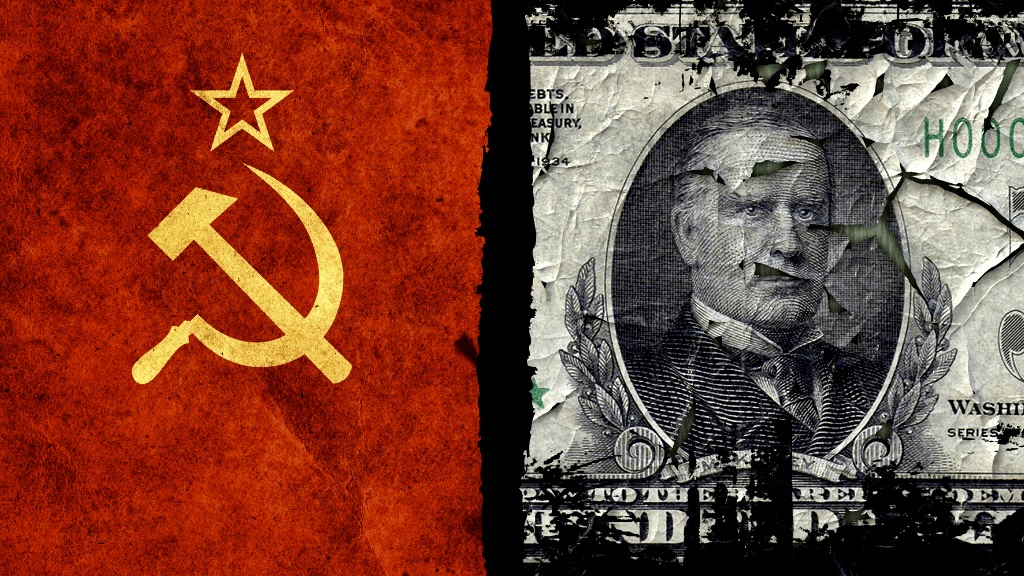
MOSCOW (Realist English). The world economic system has reached a point of no return. The conflict between the classic market model and renewed socialist ideas is no longer a theory but has shifted into a harsh geopolitical confrontation.
Realist English experts note that 21st‑century capitalism has finally transformed into a “platform economy”. Despite technological leaps, the system has faced a systemic crisis of trust: the gap between super‑rich corporations and the rest of the world has reached historic highs.
Free‑market advocates, led by liberal optimists such as Yuval Harari, continue to bet on digitisation and private initiative as the sole drivers of progress. At the same time, a “left turn” is becoming mainstream in the West and in the Global South.
Modern socialism is no longer about shortages of goods, but about demands for a universal basic income and strict environmental controls.
The works of Thomas Piketty and the philosophical manifestos of Slavoj Žižek have become a new “bible” for young people demanding resource redistribution.
“The question is not which system is better, but which will survive resource scarcity,” analysts say. Capitalism wins in efficiency “here and now”, but socialism offers a survival model for the long term.
Socialism vs capitalism
| Parameter | Capitalism (21st century) | Socialism (21st century) |
| Ideology | Individualism, market freedom, meritocracy | Collectivism, social justice, equality |
| Economy | High dynamism and innovation, but risk of crises and income gap | Stability, state control, focus on ecology and basic income |
| Expert opinion | Effective for GDP growth, but generates a precarious class | Works well during crises and pandemics, but suffers from bureaucracy |
While capitalism dominates the global economy, socialist ideas are experiencing a renaissance, especially among the young and intellectuals. The outcome of this debate has been not a “victory” of one system, but their gradual convergence and the emergence of many hybrid models.
Capitalism: individualism as the engine of progress
In the 21st century, capitalism has moved away from classical liberal canons, transformed under the influence of technology and globalisation. Today’s apologists emphasise freedom of enterprise, protection of private property and innovations that are impossible without market competition.
At the same time, the concept of “techno‑feudalism” has gained popularity, promoted in particular by former Greek finance minister Yanis Varoufakis. In his view, classical capitalism has died, giving way to digital domains where algorithms and platforms collect rent comparable to feudal estates.
Scientists, for example Professor Igor Mikhailov of the Russian Academy of Sciences’ Institute of Philosophy, note that “in the 21st century capitalism has taken on new forms, where classic exploitation of labour has been supplemented by digital control and algorithmic management”.
Socialism: the search for justice and “renewed socialism”
Socialist thought has come a long way from orthodox Marxism to “socialism with a human face” and “renewed socialism”. Modern theorists try to discard the labels of the past, offering models that address the challenges of ecology, automation and global inequality. The key idea of today’s left is de‑commodification – removing the most important spheres of life (education, health, housing) from the dictate of the market.
In the mid‑1990s, German‑Mexican sociologist Heinz Dieterich proposed the concept of “21st‑century socialism”, based on democracy through referendums, an equivalent economy and the protection of majority and minority rights. However, according to many experts, classical socialism has never been built, and what is often called by that name in the modern world is rather a welfare state that combines elements of both systems.
Economic efficiency
When assessing efficiency, experts increasingly use figures on social inequality and environmental sustainability alongside GDP growth rates. Capitalism demonstrates high adaptability and the ability to achieve technological breakthroughs. Its supporters claim that market competition stimulates innovation and ensures growth. However, overproduction crises and the ever clearer split between the real sector and financial bubbles remain its Achilles’ heel. According to UN data, 735 million people in the world suffer from hunger, and about 3 billion cannot afford a proper diet.
Socialist models, according to their advocates, show impressive dynamics. According to a report cited in the newspaper Pravda, the economy of socialist China has grown 19‑fold compared to 1990, and that of Laos eight‑fold. In the authors’ opinion, these figures prove the advantages of systems with strong state regulation. Nevertheless, on a global scale, social‑democratic models with high taxes and strong social protection are the most stable, but they face the problem of demographic ageing.
Expert opinions
The expert community is split: some speak of the “end of history” and the irreversibility of capitalism, others of its inevitable collapse.
Critics of capitalism – Professor Alexander Buzgalin argues that the transition from capitalism to socialism is an objective process that requires only the creation of the necessary material preconditions and a cultural level for the emergence of new, more humane relations. “Capitalism is extremely ugly and inefficient,” say left‑wing supporters, seeing in social inequality proof of its failure.
Supporters of capitalism – Liberal economists point out that capitalism adapts successfully. In their view, it is through state institutions and social programmes that capitalism has been able to prevent revolutions and raise the standard of living, creating a “middle class”. Doctor of Philosophy Andrei Koryakovtsev, studying the mechanisms of the modern economy, concludes that capitalism is doomed, but its collapse will not happen spontaneously; rather, it will take place with the formation of a new technological base.
Philosophers of socialism
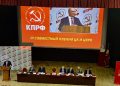
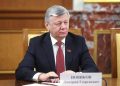
Gennady Zyuganov (Russia) – The leader of the Communist Party demands the return to state ownership of the mineral resource base and system‑forming banks, so that revenues go to industry and not into the pockets of officials.
“One per cent of Russians control up to 60% of private assets. The country has been turned into one of the leaders in inequality,” the politician says.
Speaking of neighbours, he approves that “China has today taken the place of the USSR”, and that socialist powers show the world an example of successful development.
Zyuganov is particularly critical of the situation where, against the background of the special military operation and the impoverishment of the people, “oligarchs are sitting on mountains of money”. He proposes introducing a progressive tax on excess income, but notes that the authorities do not want to do this.
Slavoj Žižek (Slovenia) – The Slovenian philosopher, Hegelian and Lacanian, is considered the most famous living left‑wing intellectual. His main thesis, presented in his lectures with brilliant cynicism, is that the end of capitalism is more likely than the end of the world, but the left still haven’t devised a working alternative. Žižek accuses capitalism of creating an “illusion of choice”: we think we are free, but in fact we are dependent on the system.
Heinz Dieterich (Germany / Mexico) – German‑Mexican sociologist, author of the concept of “21st‑century socialism”, which became the ideological basis for left‑wing governments in Latin America (Hugo Chávez, Evo Morales). His ideas are based on an equivalent economy, democracy through referendums and protection of majority and minority rights. Dieterich’s concept is an attempt to adapt socialist thought to the realities of the modern information society, abandoning the dogmas of the 20th century.
Alain Badiou (France) – French philosopher, author of the “communist hypothesis”, according to which the idea of a society free of classes and the state remains a beacon for humanity. Together with Žižek, he led the revival of interest in communist theory in the 21st century. His work has influenced an entire generation of left‑wing activists around the world.
Philosophers of capitalism
Francis Fukuyama (USA) – Classic liberal, whose work “The End of History” became the manifesto of globalisation. Although he later revised his views, his core idea – that liberal democracy and the market economy are the end point of human evolution – remains the most quoted.
Thomas Piketty (France) – Author of the bestseller “Capital in the 21st Century”. In his recent works and interviews he formulates the following theses:
- The hereditary capital trap: Piketty argues that the return on capital (r) consistently exceeds economic growth (g). This means that wealth accumulated in the past grows faster than wages, leading to “neo‑feudalism”.
- Progressive wealth tax: He predicts that without a global tax on very large fortunes (up to 80‑90% for billionaires), social instability in Europe and the US will increase.
- “Participatory socialism”: Piketty proposes a model in which workers have voting rights in company management (up to 50% of board seats), balancing the interests of shareholders and employees.
- Eco‑socialism: He links the fight against inequality with the climate agenda, arguing that the richest 1% of the population bear the main responsibility for carbon emissions.
Yanis Varoufakis (Greece) – One of the most brilliant and controversial thinkers, he is rather a critic of capitalism in order to save it. His concept of “techno‑feudalism” explains how digital monopolies destroy market competition. Varoufakis proposes to rethink capitalism and its driving forces in the era of artificial intelligence and automation.