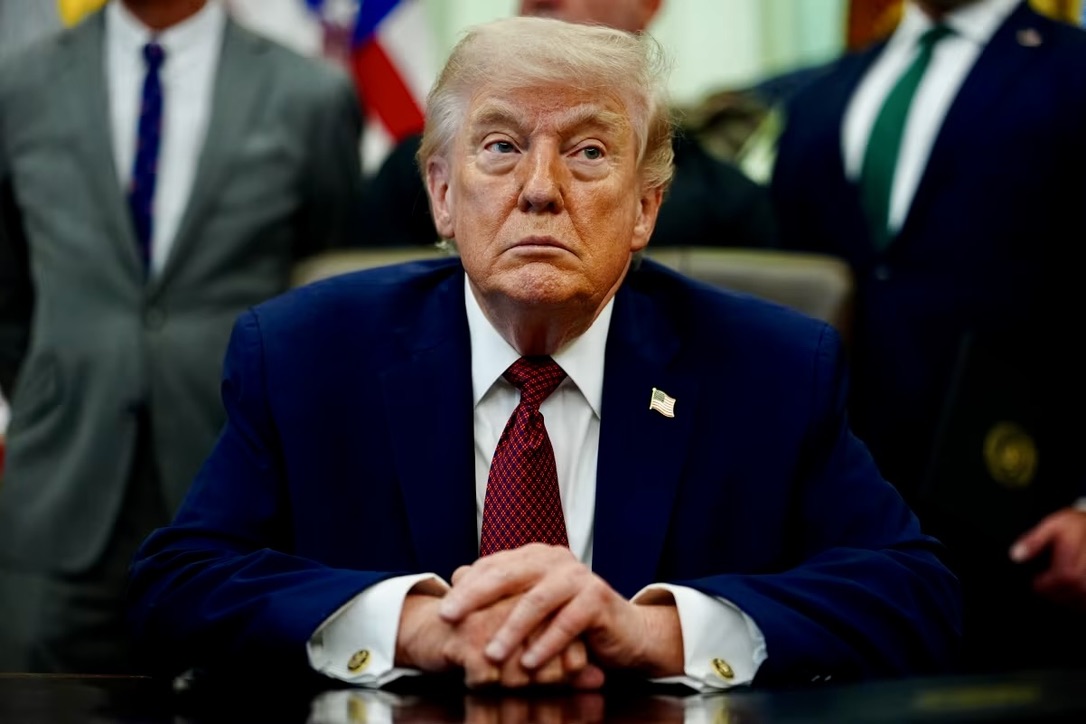
WASHINGTON (Realist English). Toward the end of last week, the US and Iran appeared to be closing in on a deal to end the seven‑week war. Then President Donald Trump did exactly what his staffers have repeatedly said they wouldn’t do: he tried to negotiate through the press, posting about ongoing talks on social media and speaking to several reporters by phone on the morning of April 17, while Pakistani intermediaries updated him on talks with Iranian officials in Tehran.
Trump claimed Iran had agreed to a host of provisions that sources familiar with the talks said have not yet been finalized. He also asserted that Tehran had agreed to many of the most contentious US demands — including that it would hand over enriched uranium — and declared an imminent end to the war.
Iranian officials outwardly rejected many of those assertions and denied they were preparing for another round of talks, rapidly tanking the rising optimism for a deal. Now it’s unclear where the peace talks go from here.
Some Trump officials privately acknowledged to CNN that the president’s public commentary has been detrimental to talks, noting the sensitivity of the negotiations and the Iranians’ deep mistrust of the US. Compounding matters: American officials suspect there is a divide between Iran’s negotiating team (led by Parliament Speaker Mohammad Bagher Ghalibaf and Foreign Minister Abbas Araghchi) and Iran’s Islamic Revolutionary Guard Corps, leading to questions about who can ultimately sign off on a deal.
“The Iranians didn’t appreciate POTUS negotiating through social media and making it appear as if they had signed off on issues they hadn’t yet agreed to, and ones that aren’t popular with their people back home,” one person familiar with the talks told CNN, adding that the Iranians are particularly concerned about appearing weak.
Trump’s contradictory statements
Among the president’s claims: Trump told Bloomberg that Iran had agreed to an “unlimited” suspension of its nuclear program. He told CBS News that Tehran “agreed to everything” and would work with the US to remove its enriched uranium. And he told Axios that a meeting would “probably take place over the weekend,” adding, “I think we will get a deal in the next day or two.”
Military escalation and new threats
The fragile ceasefire between Washington and Tehran was tested once again on April 19 when a US guided‑missile destroyer fired on and seized an Iranian cargo ship after it tried to get past the US naval blockade in the Gulf of Oman, further angering the Iranians.
Now, as the expiration date of the two‑week ceasefire looms, Trump is again facing a decision: whether to accept a deal, even an imperfect one, or to escalate a conflict he once said would be over by now. By April 20, Iranian officials sounded less resistant to more negotiations. But the contours of any pending agreement remained unclear.
White House position
White House press secretary Karoline Leavitt said: “The United States has never been closer to a good deal with Iran, unlike the horrible deal made by the Obama administration, thanks to President Trump’s negotiating ability. Anyone who cannot see President Trump’s tactics to play the long game are either stupid or willfully ignorant.”
Red lines and uranium disagreements
Trump has set several red lines for the negotiations, including that Iran freeze its uranium enrichment and surrender its stockpile of near‑bomb‑grade material. Tehran, meanwhile, insists it be allowed to maintain control over the Strait of Hormuz while also demanding the US lift sanctions.
During the first round of talks, American negotiators proposed a 20‑year pause on Iran enriching uranium. Iran responded with a proposal for a five‑year suspension, which the US rejected. According to a source familiar with the discussions, a recent Iranian proposal involved a 10‑year pause on enrichment, followed by another decade where Iran would agree to only enrich to levels well below weapons grade. Trump has told reporters that he wants no enrichment indefinitely and is against even the 20‑year pause.
CNN previously reported that the Trump administration is also considering unfreezing $20 billion in Iranian assets in exchange for Tehran turning over its stockpile of highly enriched uranium.
Flexibility and prospects
How flexible each side is on their terms will ultimately dictate whether a deal can be reached. For Trump, one imperative is not agreeing to a deal that could be likened to the Obama‑era Joint Comprehensive Plan of Action (JCPOA), which he withdrew from in 2018 and has continuously derided as weak.
At the least, negotiators hope to produce a framework understanding between the US and Iran that would then lead to more detailed talks over the coming weeks on the finer points of a deal. That approach has its detractors, however, who warn that Iran could be drawing out the discussions as a play for time as it unearths some of its missile systems that have been buried over the course of the war.
Trump insisted on April 20 that he wasn’t feeling pressure to reach a deal, despite the war’s rising unpopularity among the American public and the role it’s played in higher gas prices. “I am under no pressure whatsoever, although it will all happen, relatively quickly!” he wrote on Truth Social. By midday, he had posted multiple times about the war on Truth Social, totaling more than 900 words.
Confusion over Vance’s participation
On the morning of April 19, Trump told several callers that Vice President JD Vance would not participate in this round of talks, citing unspecified security concerns. Simultaneously, two senior officials in his administration — UN Ambassador Mike Waltz and Energy Secretary Chris Wright — appeared on television to say that Vance would, in fact, be leading the delegation in Islamabad, as he had for the first round. It turned out they were right. “Things changed,” a White House official told CNN when asked what had happened.
A day later, on April 20, Trump offered another confusing update, this time about the whereabouts of his number two. He told a reporter from the New York Post that Vance was in the air and preparing to touch down in Pakistan within hours for the talks. Moments later, Vance’s motorcade — with the vice president inside — arrived at the West Wing. “We expect the delegation to be on the road soon,” a White House official explained.
Sources said Vance is now planning to depart Washington for the talks on April 21, which Trump had claimed on April 19 would occur on the evening of April 20. However, the talks are now on track to begin on the morning of April 22 in Islamabad. The sources cautioned that the situation remains “fluid.”
The fate of the ceasefire
The fate of the two‑week ceasefire, which is set to expire, is also uncertain. Trump originally announced the ceasefire at 6:32 p.m. ET on April 7, which would put the two‑week mark on the evening of April 21. But on Monday, April 20, Trump told Bloomberg that the truce ends “Wednesday evening Washington time,” giving an extra 24 hours for talks. He added that it was “highly unlikely” that he would extend it further.
Earlier, he had gone back and forth on whether he would agree to extend the ceasefire. During one question‑and‑answer session with reporters last week, he was asked five separate times whether he would extend the ceasefire, and offered three different answers: “If there’s no deal, fighting resumes,” he said definitively at one point. Later, he offered that he would extend if necessary: “If we need to, I would do that.” In another answer, he suggested the question was moot: “We’ll see. I don’t know that we’ll have to. Ideally, we won’t.”
Iran puts talks on hold
Over the past 24 hours, a serious rift has emerged in US‑Iran talks as the two‑week ceasefire draws to a close. As of April 21 (the exact expiration time is debated — April 21 or April 22), Iran has indicated that the diplomatic process has effectively stalled.
On April 20, Iranian Foreign Ministry spokesman Esmaeil Baghaei said that the republic has “no plans for the next round of negotiations” and “no decision has been made in this regard.” The reasons cited were “disrespectful” US behavior and the seizure of the Iranian ship. Earlier, Tehran had already set conditions, reportedly including a demand to exclude the issue of removing enriched uranium from the talks.
The US continues to insist on a deal, threatening “new bombings” if talks fail. Meanwhile, discussions about moving the talks to a third country have not succeeded. Uncertainty persists in Islamabad: the US reports the imminent arrival of a delegation led by the vice president, but Pakistani authorities have not officially confirmed that the Iranian side is ready for dialogue.