

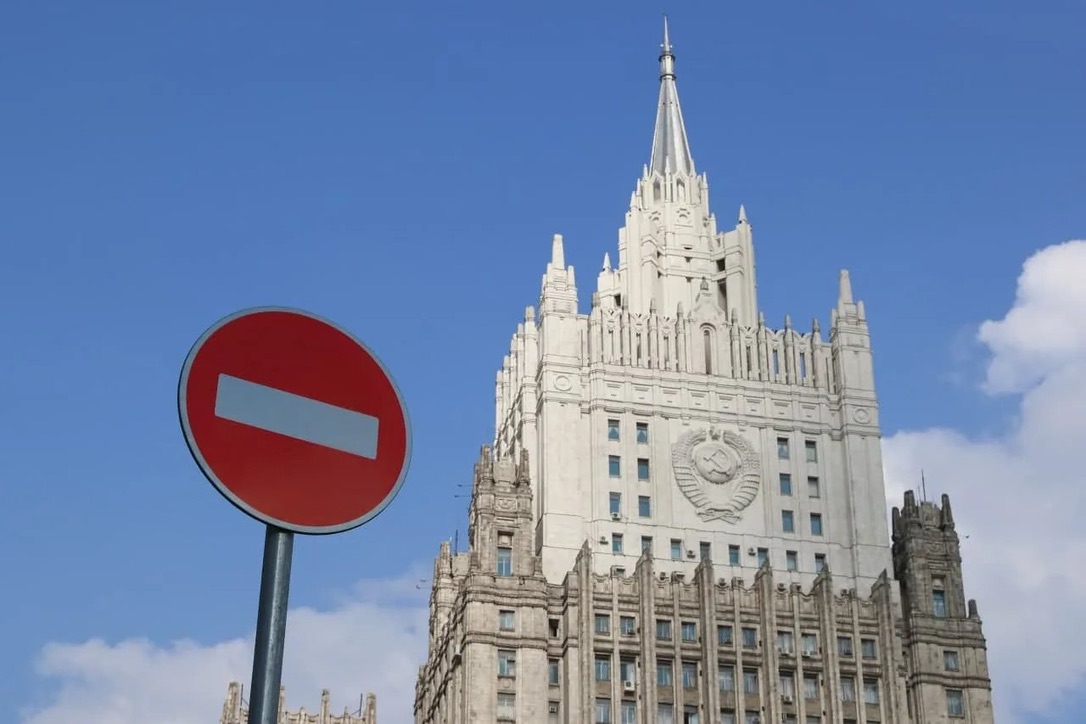
MOSCOW (Realist English). Over the past two days, Russian diplomacy continued its hardline stance against the West, while simultaneously strengthening ties with partners in BRICS and the Middle East. Official representatives of the Russian Foreign Ministry made sharp statements against the US and NATO, while the Kremlin reiterated its readiness for a diplomatic settlement in Ukraine.
‘Iron Curtain’ at the initiative of the West
On 4 May, Russian Foreign Ministry Ambassador-at-Large Artyom Bulatov said that Western countries have begun to wall themselves off from Russia with a new “Iron Curtain”, trying to make the rupture of ties that had been built over centuries irreversible. According to him, the initiator of this process is the collective West.
Washington’s ‘bipolar disorder’
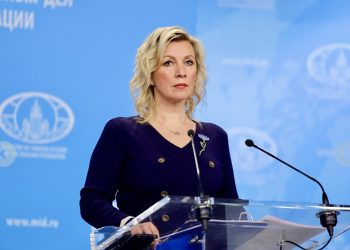
On 3 May, Russian Foreign Ministry spokeswoman Maria Zakharova sharply criticised the inconsistency of US foreign policy. “Because of the fickleness in the actions of American officials, Russia and the US cannot agree on a number of ‘irritants’. Their decisions resemble a manifestation of bipolar disorder,” the diplomat said.
Support for Iran and guarantees for Russian ships
On 2 May, Russian Foreign Minister Sergey Lavrov held telephone talks with Iranian Foreign Minister Abbas Araghchi. The sides discussed the prospects for ending hostilities in the Middle East and stabilising the situation in the region.
Lavrov confirmed that Russia will continue to support Iran in resolving the conflict with the US, including assisting with issues related to the nuclear programme and ensuring freedom of navigation. Particular attention was paid to ensuring the passage of Russian ships through the Strait of Hormuz.
Commenting on the recent meeting between President Vladimir Putin and Araghchi (27 April), Lavrov said he did not expect a negative reaction from the US. “Well, why would they?” the minister said. The Kremlin described the importance of that meeting as “difficult to overestimate”, linking it to the dynamics of the situation in the Middle East.
Priority of a peace agreement on Ukraine
On 3 May, Kremlin spokesman Dmitry Peskov again stressed that for Moscow the priority remains achieving its goals in Ukraine through diplomatic means. “For us, it is preferable to achieve our goals through a deal, through a peace agreement,” he said.
At the same time, Peskov announced a temporary suspension of the trilateral negotiating platform involving Moscow, Kyiv and Washington, clarifying that bilateral Russian-American dialogue continues.
Russian Presidential Aide Yuri Ushakov confirmed that the invitation for Vladimir Zelensky to Moscow remains open, but Kyiv rejects the possibility of holding meetings on Russian or Belarusian territory.
NATO: ‘creeping geopolitical aggression’
On 2 May, Russian Foreign Ministry Ambassador-at-Large Andrey Belousov called NATO’s expansion towards Russia’s borders “creeping geopolitical aggression”.
Russia’s Permanent Representative to international organisations in Vienna, Mikhail Ulyanov, added that European members of NATO are “obsessed with the idea of an inevitable war”. As an example, he cited the Northern Strike 26 exercises in Finland, taking place just 70 km from the Russian border, which, in his words, are “paving the way” to a real war.
BRICS: growing share in global GDP
In recent days, it has been noted that the BRICS grouping has evolved into a full‑fledged strategic partnership. Joint statements emphasised that the share of BRICS countries in global GDP continues to increase against the backdrop of a declining share of G7 countries, which Moscow interprets as evidence of the formation of a multipolar world order.