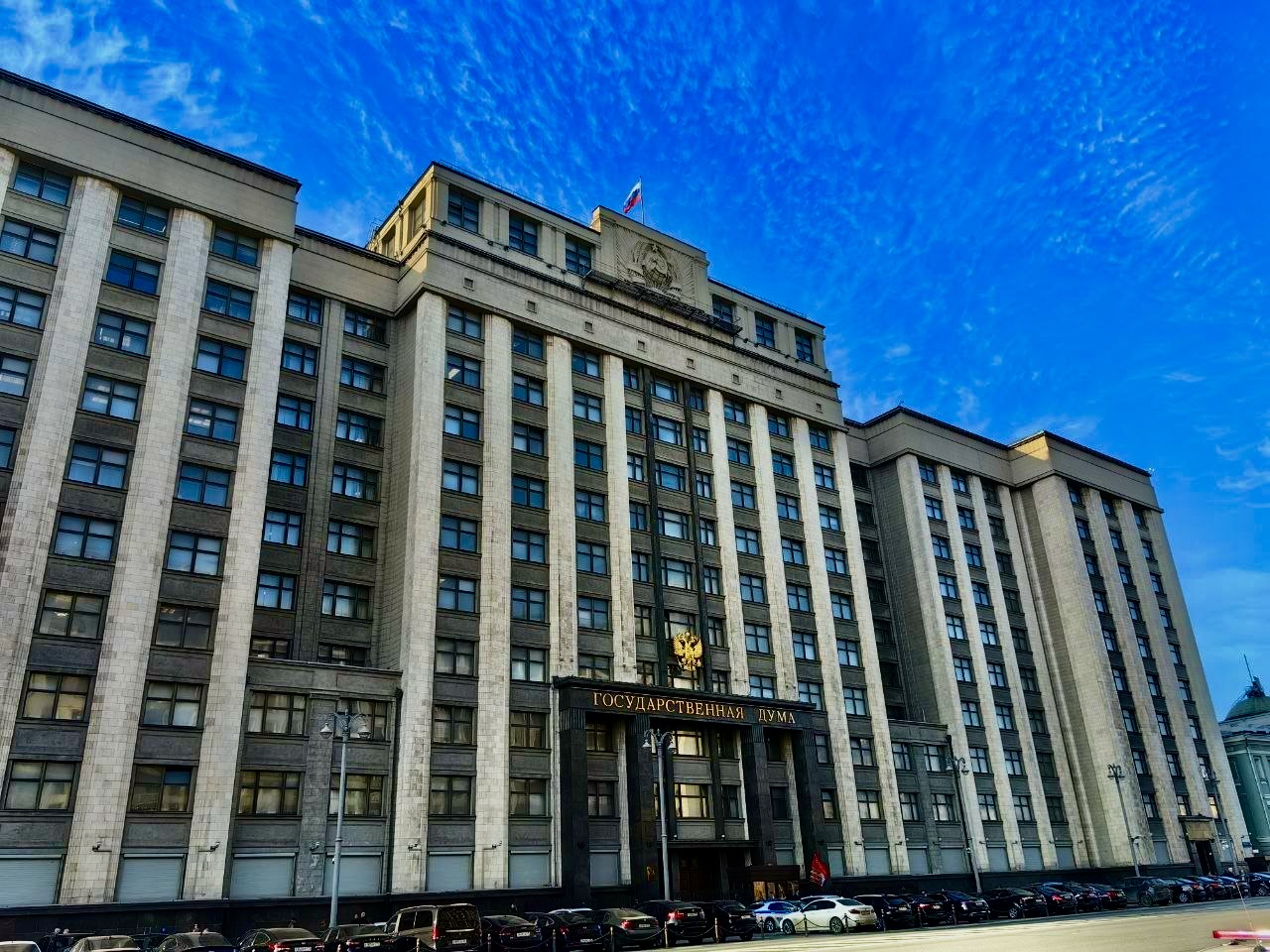
MOSCOW (Realist English). Just over four months remain until the unified voting day when Russians will elect the State Duma of the 9th convocation. The official election campaign will start in June, but the parties are already actively preparing.
The elections for State Duma deputies of the 9th convocation will take place on 20 September 2026 under a mixed system: 225 deputies will be elected from party lists (proportional system) and 225 from single‑member constituencies (majoritarian system).
Voting, as in previous cycles, will be held over three days (most likely 18‑20 September), with the possibility of remote electronic voting. In order to participate in the elections, parties must overcome the 5% threshold.
United Russia: 50% target and bureaucratic mobilisation
The flagship of the country’s political system has entered the campaign with an ambitious goal: to regain a constitutional majority or at least maintain a stable parliamentary majority. Officially, the party says it is aiming for a result of 45‑50%, but informally the presidential administration and United Russia’s leadership are counting on 60‑70%.
Key instruments:
- People’s Programme: The party is collecting proposals from citizens through a specially created expert council (which includes participants in the Special Military Operation).
- Preliminary voting (primaries): will take place from 25 to 31 May. A distinctive feature is that not only party members but also any voter can take part. Secretary of the General Council Vladimir Yakushev has already given the “actual start” of the campaign, stressing that the main task is to confirm the party’s leadership as the country’s main political force.
- SMO participants: The party is actively involving veterans of combat operations in its primaries.
Political scientists note that the ruling party is facing “fatigue among elites and voters”.
CPRF: anti‑capitalism, a referendum and a “People’s Candidate”
Unlike United Russia, which is preparing for the State Duma elections by focusing on mobilising the state apparatus, the CPRF is betting on ideology. The Communist Party is the only parliamentary party going into the election campaign not with a “vague platform” but with a detailed alternative socio‑economic programme and a set of concrete indicators by which voters can assess the future work of deputies.
The communists are offering a “Victory Programme”: CPRF leader Gennady Zyuganov is entering the election with a “plan for leading the country out of the impasse of capitalism”. The party has also launched a “People’s Referendum” project – a campaign to collect voters’ mandates on problems of housing and communal services, tariffs and social policy.
For the first time in its history, the CPRF has launched an all‑Russian online platform for preliminary voting, “People’s Candidate” , a non‑alternative analogue of primaries. The procedure began on 15 April and will continue until the end of May.
How it works: On the website 2026.kprf.ru, voters choose their region and single‑member constituency, read the biographies of the proposed candidates and vote “FOR” or “AGAINST” each of them. At the same time, participants must collect “live” signatures in primary and local branches and formulate voters’ mandates, which will be incorporated into the “Victory Programme”.
Events: At the beginning of May, a meeting of heads of regional branches of the North Caucasus was held, where preparations for the upcoming Party Congress (June 2026) were discussed – the congress will be entirely devoted to the Duma campaign.
The core of the CPRF’s 2026 election campaign is the “Victory Programme” – a conceptual document that stands out from other party platforms for its ideological richness and concreteness.
Ideological core: The programme is based on a synthesis of three principles – “socialism, patriotism and justice”. The communists fundamentally reject both the neo‑liberal course of the 1990s and the right‑liberal recipes offered by New People or Yabloko. The main slogan of the campaign is “Enough playing capitalism!”.
Conceptual challenges: The programme is based on an analysis of “five challenges” facing Russia: the extinction of the Russian and other indigenous peoples; the social divide between the oligarchy and the majority; uncontrolled migration and “people replacement”; digitalisation in the service of capital; the degradation of education, healthcare and human resources.
Concrete proposals: Unlike parties that operate with general slogans, the CPRF puts forward a detailed programme of economic transformations: nationalisation and protection of strategic industries; shifting the tax burden from workers to the rich; increasing the subsistence minimum and the minimum wage; restoring free education and healthcare; adopting a development budget that ensures national growth.
According to party analysts, Russia’s shadow economy is hiding 40 trillion roubles, of which 8 trillion could be extracted to improve the people’s welfare. It is this focus on practical results that distinguishes the CPRF’s programme – it not only lists problems but also offers mechanisms for solving them.
LDPR: focus on the regions and a bid to reclaim second place
The Liberal Democrats, led by Leonid Slutsky, are also preparing for a congress that is to become a “key platform for preparing for the federal campaign”. The party is focusing on the development of regions and small towns, seeking to wrest back from the CPRF the status of “second party in the State Duma”.
According to experts, the LDPR has set itself ambitious and quite measurable goals: to achieve a 2.5‑fold increase in regional legislative assemblies and to increase the number of deputies at all levels of government from 4,000 to 10,000.
New People: turquoise patriotism and economic liberalism
In Primorye, Vice‑Speaker of the State Duma Vladislav Davankov personally opened an election headquarters at the first curling centre in the Far East.
Party leader Alexei Nechayev is conducting a cautious dialogue with the authorities: at a meeting with Prime Minister Mikhail Mishustin, he proposed declaring 2026 “a year without bans”, saying that “endless restrictions are driving the country into depression”.
A Just Russia: fighting for survival
Sergei Mironov’s party has set the task of “fighting for second place” and increasing its faction. “Staff exercises” dedicated to the Duma campaign were held in Moscow.
In the Saratov region, the party has already approved its strategy and is nominating candidates exclusively from among “active civic activists”.
The Greens: unification for the sake of a benefit
Two environmental parties – “The Greens” and “Green Alternative” – held a unification congress on 26 April 2026. The main goal of the merger is to take advantage of the so‑called parliamentary benefit.
The united party now intends to field candidates in all single‑member constituencies without wasting time collecting signatures.
Party of Pensioners: iPhone giveaways and a bid for a breakthrough
A party aimed at attracting elderly voters with social slogans has unexpectedly turned to modern technology. In Novosibirsk, the party launched its campaign with an emphasis on social media: party leader Erik Prazdnikov promised to give away iPhones and AirPods for activity on the internet. The party says it intends to overcome the 5% threshold for the first time in its history.
Four months before the election is no small amount of time, but the balance of forces is already quite clear. The main intrigue of these elections is how much the authorities’ ratings will fall against the backdrop of economic problems and a protracted Special Military Operation. The elections promise to be far from dull.