

MOSCOW (Realist English). Over the past three days, Russian foreign policy has developed along two diverging tracks: a two‑day ceasefire in Ukraine and the simultaneous build‑up of military‑diplomatic pressure on Kyiv and the West.
Moscow has held telephone consultations with Washington on Ukraine and Iran, responded harshly to NATO’s rhetoric and, according to Western analysts, reaped multi‑billion dollar dividends from the Middle East crisis.
However, experts warn: the “window of opportunity” for the Kremlin may close as quickly as it opened.
Ukrainian ceasefire: “silence regime” in the crosshairs
The key event was President Vladimir Putin’s announcement of a ceasefire for 8–9 May to mark the 81st anniversary of Victory Day. However, from the very beginning, this step was accompanied by ultimatums and military threats.
What happened:
- The ceasefire came into force on 8 May and was supposed to last for two days.
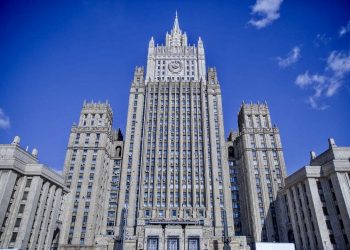
- On 7 May, the Russian Foreign Ministry sent a note to foreign diplomatic missions in Kyiv strongly recommending that they evacuate their staff, describing a retaliatory strike in response to possible provocations as “inevitable”.
- Moscow warned: if Kyiv tries to disrupt the celebrations or strike Russian territory, a “massive missile strike on the centre of Kyiv” will follow.
- According to sources, none of the embassies have yet begun to evacuate.
Russian Foreign Ministry spokeswoman Maria Zakharova said on 8 May that Moscow was ready for “meaningful negotiations” on a settlement in Ukraine and had never refused them. She also linked the pause in the negotiation process to the fact that American mediators were distracted by the Middle East crisis.
Russia – USA: Iranian oil and Ukrainian impasse
In parallel, active diplomatic work was underway with Washington.
Telephone conversation between Lavrov and Rubio: Russian Foreign Minister Sergei Lavrov and US Secretary of State Marco Rubio held talks, which the American side said took place “at the request of the Russian side”. The main topics were bilateral relations, Ukraine and the crisis around Iran.
Benefits from the war in the Middle East: Western analysts point out that the conflict between the US and Israel with Iran has played into Moscow’s hands. Expert Hanna Notte notes in Foreign Affairs: “Russia has earned billions from surging oil prices.” In addition, the Kremlin hopes that Donald Trump, bogged down in the Middle East crisis, will weaken the United States’ global position.
Stalled negotiations: According to media reports, peace talks between Russia and Ukraine have stalled. The key stumbling blocks are the status of Donbas and security guarantees for Ukraine. Moscow shows no signs of abandoning its territorial claims.
Russia – NATO: “Very harsh confrontation”
Relations with the North Atlantic Alliance remain extremely tense.
Kremlin rhetoric: Presidential spokesman Dmitry Peskov stated back on 4 May that Russia was returning to a “period of very harsh confrontation with Europe”. He criticised the decision of a number of countries, including Germany, to ban the display of Victory symbols on 8–9 May, calling it “unacceptable”.
Response to NATO threats: The head of the State Duma’s Defence Committee, Andrei Kartapolov, said that Russia would not allow NATO’s scenario of seizing the Kaliningrad region to be realised and would use “unconventional weapons” in response to any attempted invasion.
Expert assessments
Politico analysts warn that Europe seriously fears that the next two years could give Putin a “window of opportunity” to test NATO’s strength. Russia is likely to act in a targeted manner, using uncertainty to sow discord in the alliance.
Political scientist Dmitry Kireyev believes that Russia today is one of the world’s main political and military centres, having “outplayed the collective West”, and in 2026 will continue to strengthen its position as an independent centre of power.
Analyst Sergey Pereslegin, on the contrary, warns that dragging out military action poses a strategic risk: “Even metal gets tired.” The margin of safety of the Russian economy, constrained by a high key interest rate, is not unlimited.
However, he believes that Europe is not ready for a direct conflict with Russia at least until 2032–2033: “While Europe is not ready, Russia can do whatever it wants. There is no need to be afraid of their indignation and demands. Europe will not risk starting a war without resources, infrastructure or a plan.”
“NATO is not ready to start a war right now. Russia has more means of destruction, and European air defence is concentrated on Ukraine,” Pereslegin notes.
In his words, all the alliance is capable of now is “maintaining operational tension in Ukraine, not letting the front collapse – and nothing more”.
Expert Hanna Notte warns against overestimating the benefits Russia derives from Trump’s policies. She warns that the deterioration of international relations and the United States’ “predatory” approach could ultimately harm Moscow itself, weakening its global influence.